
Travel Guide
Vietnam
Hanoi | Halong Bay | Hoi An | Da Nang
Ho Chi Minh City | Phu Quoc
Food · Landscape · History · Five-Star Luxury at Half the Price

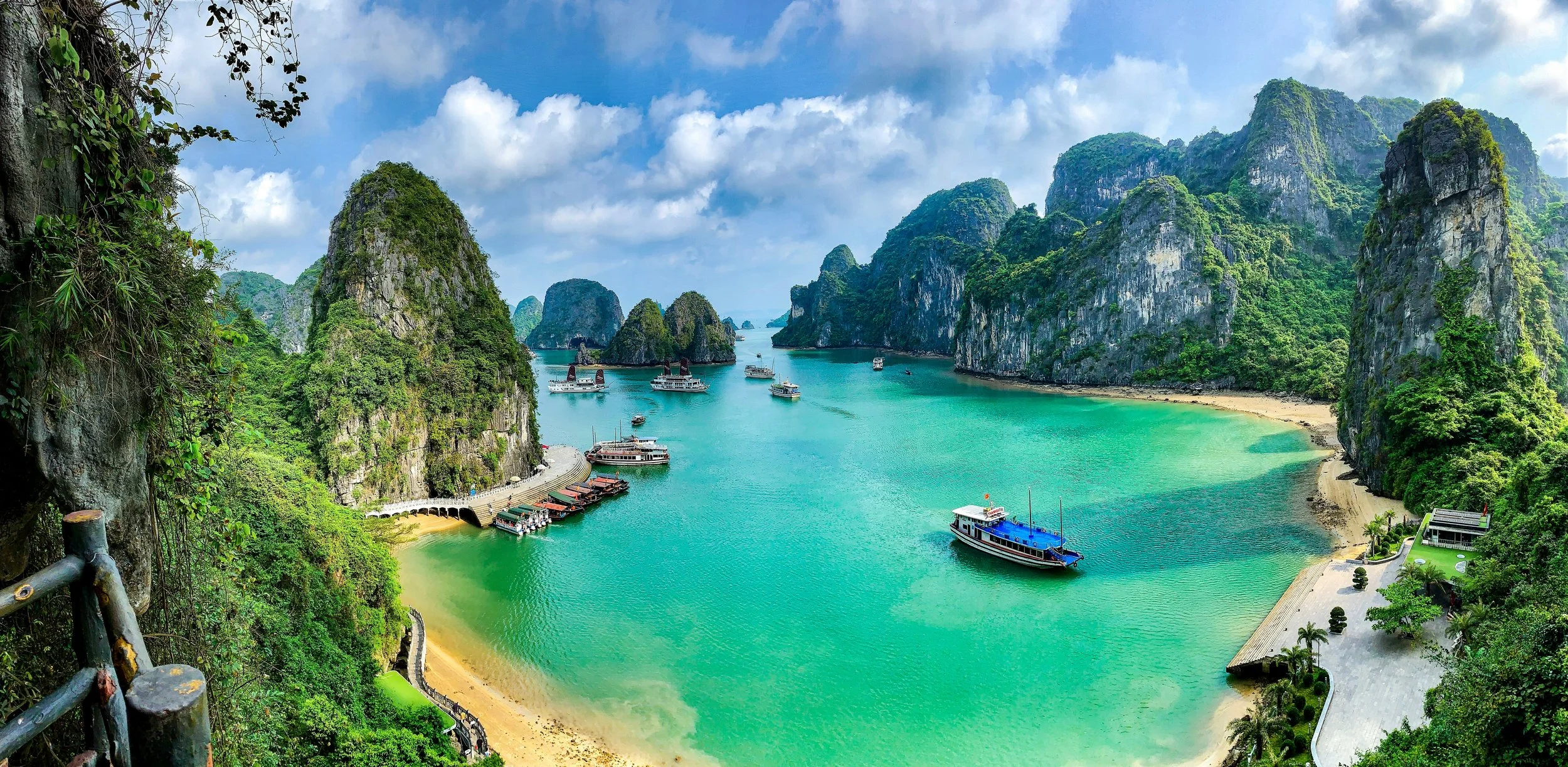
Welcome to Vietnam — The Country That Rewards Every Sense
Vietnam is one of the great travel surprises of the world — a country that stretches 1,650 kilometres from north to south, encompassing everything from the misty limestone mountains of the north to the emerald delta of the south, with a coastline of extraordinary beaches, a string of ancient towns and imperial cities in between, and a food culture that many serious eaters consider the finest in Southeast Asia.
The luxury proposition here is singular: the Four Seasons Nam Hai in Hoi An — consistently ranked among the top ten resorts in the world — costs roughly half what a comparable property in the Maldives or Bali would charge. The InterContinental Halong Bay, set on a private island in the middle of the bay, offers experiences that would command four times the price in the Caribbean. Vietnam has arrived as a world-class luxury destination while somehow retaining prices that reflect its emerging market status, and that window will not stay open forever.
This guide takes you north to south through six of Vietnam's most rewarding destinations — Hanoi's ancient Old Quarter, Halong Bay's UNESCO-listed limestone archipelago, the lantern-lit Ancient Town of Hoi An, Da Nang's luxury beach resort corridor, the frenetic energy of Ho Chi Minh City, and the emerald island of Phu Quoc. Together they represent the full spectrum of what Vietnam offers — and a compelling argument for making it your next great journey.
Best Time to Visit
- February – April: The finest window for central and southern Vietnam. Warm, dry, and clear across Hoi An, Da Nang, and Phu Quoc. Hanoi is cool and occasionally drizzly but manageable. The best time to do the full north-to-south journey.
- November – January: Excellent for the south (Ho Chi Minh City, Phu Quoc). Hanoi and Halong Bay are cool and atmospheric. Hoi An receives some rain in November but is generally good from December.
- May – August: Hot and dry in the south and central regions. Halong Bay and the north are warm and mostly clear — this is peak season for Halong Bay cruises.
- September – October: Typhoon season for central Vietnam (Hoi An, Da Nang). Avoid the central coast. The south and Phu Quoc are generally fine. Hanoi is lush and green.
- Vietnam's length means weather varies dramatically by region — always check conditions for each specific destination on your itinerary rather than treating the country as a single climate zone.
- Tet (Vietnamese Lunar New Year, late January or February) is the most important celebration in Vietnam. Domestic travel surges, prices spike, and many restaurants and shops close for a week. Book months ahead if visiting during Tet — or avoid entirely unless experiencing the festival is the point.
- Halong Bay is best May–August for clear skies. November–April brings some mist and occasional rain but the atmosphere is extraordinary.
- Phu Quoc's dry season is November–April. The west coast beaches are calm and swimmable; the east coast is protected year-round.
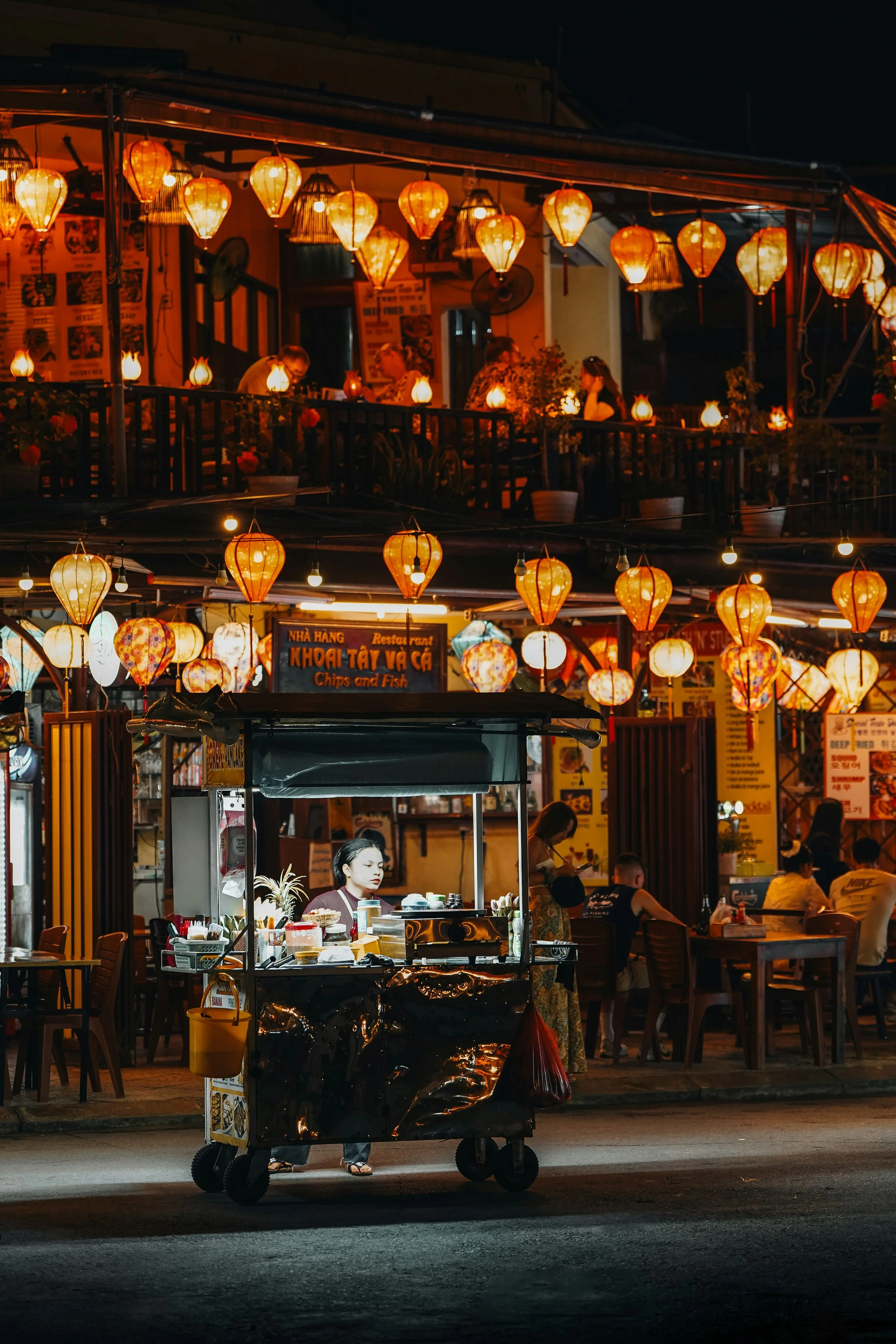
Vietnam rewards those who eat at street level — a plastic stool, a bowl of pho at 6am, the city waking up around you, and the understanding that this is what great food has always looked like
Vietnamese Food — The Essential Briefing
Vietnamese food is one of the great cuisines of the world — lighter than Thai, more herb-driven than Chinese, more complex than most people expect from a country whose food they think they already know from the restaurants back home. The real thing, eaten in its place of origin, is in a completely different category.
Must Try by Region: In Hanoi — pho bo (beef noodle soup, the original, eaten for breakfast), bun cha (grilled pork with rice noodles and dipping broth — the dish Anthony Bourdain ate with Barack Obama in 2016), banh mi from a street cart, and cha ca La Vong (turmeric-marinated fish with dill, eaten at the restaurant that invented it since 1871). In Hoi An — cao lau (thick noodles with pork crackling, unique to Hoi An and made with water from a specific local well — impossible to replicate elsewhere), white rose dumplings, and the Hoi An specialty banh mi (different from Hanoi's — richer, with more fillings). In Ho Chi Minh City — banh mi Huynh Hoa (the finest in the south), com tam (broken rice with grilled pork and egg — the definitive HCMC breakfast), and bun bo Hue (spicy beef noodle soup from the imperial city).
The Ancient Capital — 1,000 Years of History, Street Food & the World's Best Pho
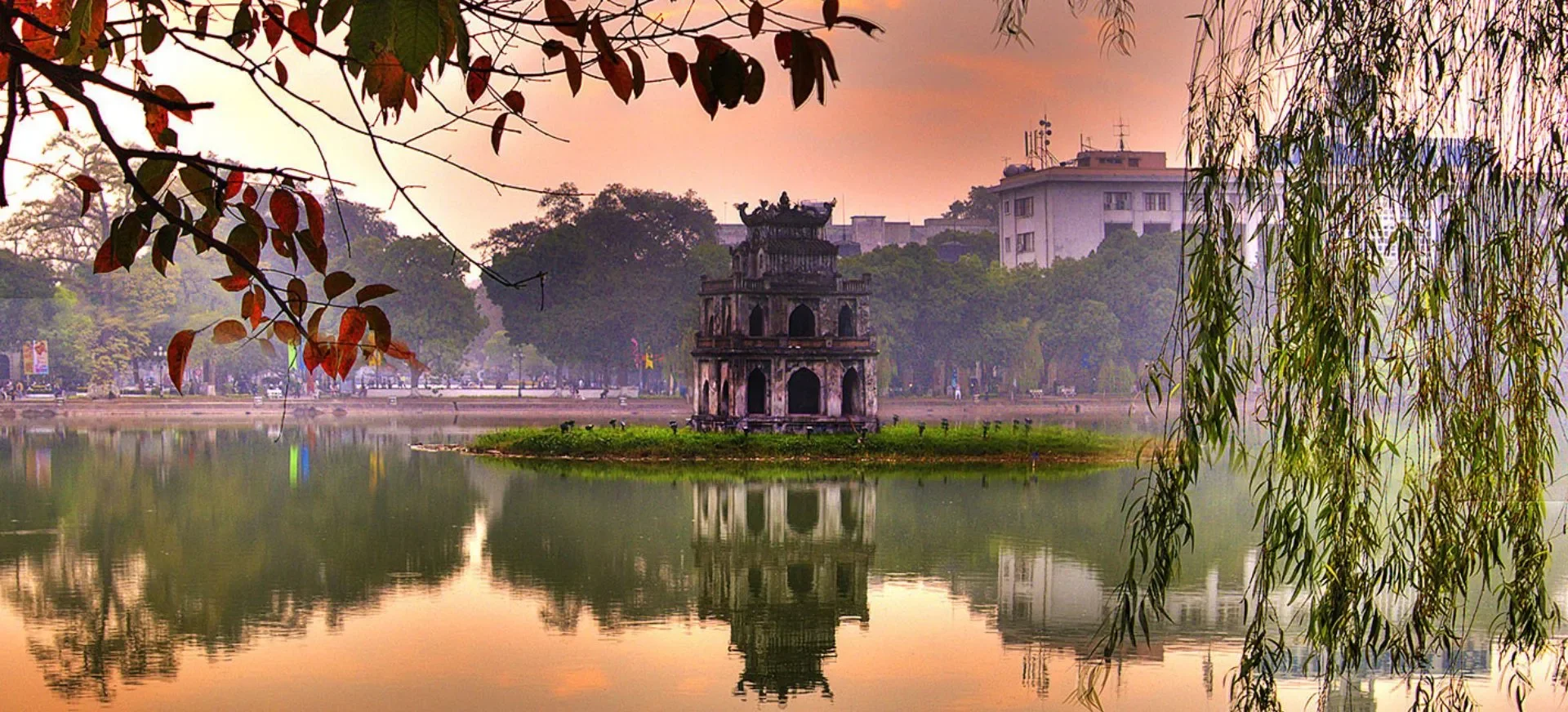
Hoan Kiem Lake at dawn, Hanoi: the Turtle Tower rising from the mist on the small island at the lake's centre, the city still quiet around it — the most peaceful hour in one of Southeast Asia's most energetic capitals
Culture & Vibes
The Old Quarter — Hanoi's ancient commercial heart, where each of the 36 streets traditionally sold a single product (Tin Street, Paper Street, Silk Street, Silver Street) — is one of the most atmospheric urban environments in Asia. It is dense, noisy, and magnificent: narrow shophouses five or six storeys tall, motorbikes moving in an apparently choreographed chaos, street food carts operating from the same spot for three generations.
Hoan Kiem Lake sits at the Old Quarter's southern edge — the spiritual and physical centre of the city. Walk around it at dawn when Hanoians do their morning exercise and the city feels briefly still. The Temple of Literature (Van Mieu) — Vietnam's first university, founded in 1070 — is one of the finest examples of traditional Vietnamese architecture in the country and is consistently less crowded than it deserves to be. The Ho Chi Minh Mausoleum complex (where Ho Chi Minh's embalmed body lies in state) is open Tuesday through Thursday and Saturday through Sunday mornings — respectful dress and silence are required.
Food
Pho Thin (13 Lo Duc) is the benchmark bowl — a dark, deeply concentrated broth, thinly sliced beef, and the particular quality of noodle that only comes from decades of doing one thing. Open from 6am and closed when sold out, usually by 10am. Bun Cha Huong Lien is where Barack Obama ate with Anthony Bourdain in 2016 — the table is preserved. Cha Ca Thang Long for the turmeric fish with dill. Banh Mi 25 for the finest banh mi in the Old Quarter. And the egg coffee (ca phe trung) at Cafe Giang — an invention of the 1940s, made with egg yolk whisked with condensed milk and poured over strong coffee, which sounds alarming and tastes extraordinary.
Experience Snapshot
UNESCO World Heritage — 1,969 Islands, Limestone Karsts & Luxury on the Water
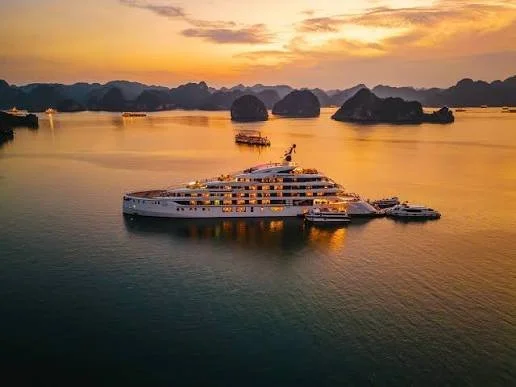
Halong Bay at dawn: 1,969 limestone islands and islets rising from the emerald Gulf of Tonkin, a landscape so improbable it has inspired Vietnamese mythology for two thousand years — and still stops you completely the first time you see it
The Bay & The Cruises
Halong Bay's 1,969 islands were formed over 500 million years by the same geological forces that created the karst landscapes of southern China — limestone seabeds pushed upward and eroded by rain and sea into the extraordinary formations that now rise up to 100 metres from the water. The bay is divided into several sections: the main Halong Bay area (most visited), Bai Tu Long Bay (to the northeast — quieter, less-visited, and accessible only to longer cruises), and Lan Ha Bay (to the south, near Cat Ba Island — the least visited and most pristine section).
The quality of Halong Bay cruise operators varies enormously — from budget wooden junks to extraordinary floating boutique hotels. The premium operators — Heritage Line (Ylang), Indochine Sails, Paradise Elegance, and the InterContinental Halong Bay (a fixed hotel on a private island accessible only by boat) — offer experiences that rival the finest river cruise ships in the world at a fraction of the European price.
Heritage Line Ylang — The Finest Cruise in the Bay
Heritage Line's Ylang vessel is widely considered the finest overnight cruise experience in Halong Bay — a boutique ship of 20 suites with a spa, two restaurants, and a carefully designed programme of activities including Tai Chi at dawn on the sun deck, cooking classes, kayaking through sea caves, and village visits. The Ylang operates exclusively in Bai Tu Long Bay — the quieter, less-visited northeastern section — where the landscape is more pristine and the anchorages are almost entirely private. Book 3–6 months in advance.
Experience Snapshot
The Ancient Town — Lanterns, Tailors, the World's Best Banh Mi & Four Seasons on the Beach
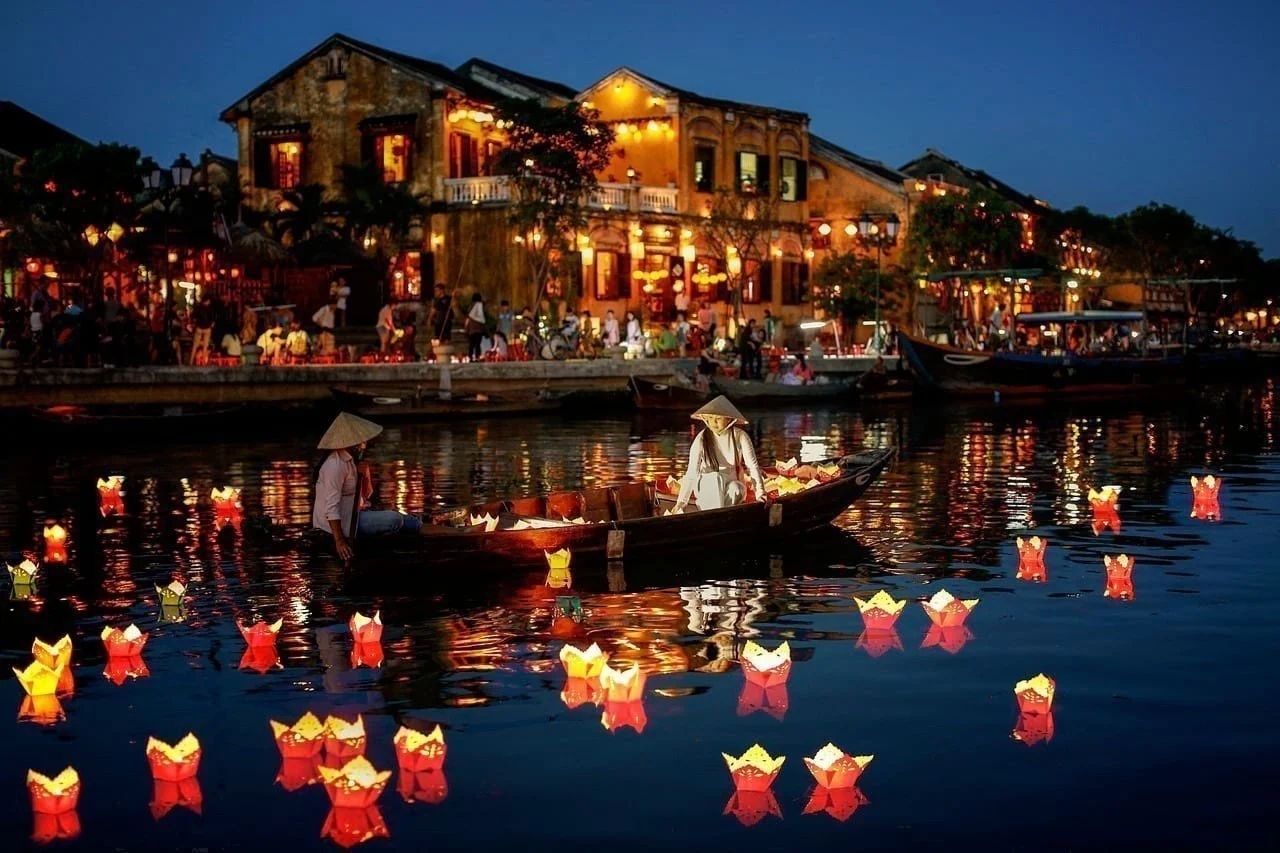
Hoi An Ancient Town at night: a UNESCO-listed trading port of the 15th–19th centuries, its centuries-old merchant houses draped in coloured lanterns that reflect in the Thu Bon River — one of the most beautiful small towns in Asia
The Ancient Town
Hoi An's Ancient Town is one of the best-preserved examples of a Southeast Asian trading port in the world — the Japanese Merchant's Bridge (1593), the Chinese Assembly Halls, the 200-year-old merchant houses still occupied by the same families — a living urban museum that is also a functioning town of cafés, tailor shops, and restaurants. The Full Moon Lantern Festival, held on the 14th day of each lunar month, is when electric lights are turned off across the town and the streets are lit entirely by candlelight and lanterns — one of the most beautiful evenings in Vietnam.
The tailors of Hoi An are its other great attraction — over 400 tailor shops operate in and around the Ancient Town, capable of reproducing any garment from a photograph with extraordinary accuracy in 24–48 hours. Yaly Couture, Bebe Tailor, and A Dong Silk are the most reliable for quality. Bring photographs of what you want and allow at least two fittings.
Food
Cao lau — the noodle dish unique to Hoi An, made with thick rice noodles, pork crackling, fresh herbs, and a soy-based broth, traditionally prepared with water drawn from a specific Ba Le Well — is impossible to find outside the town and is one of the finest bowls in Vietnam. Banh Mi Phuong (described by Anthony Bourdain as "a symphony in a sandwich") opens at 6am and operates until sold out — arrive early. White rose dumplings (banh bao vac) are another Hoi An-specific dish — delicate steamed rice dumplings with shrimp filling, shaped like white roses. The Morning Glory restaurant and cooking school is the best formal dining option in the Ancient Town.
Experience Snapshot
The Beach City — My Khe, the Marble Mountains & Vietnam's Fastest-Growing Luxury Coast
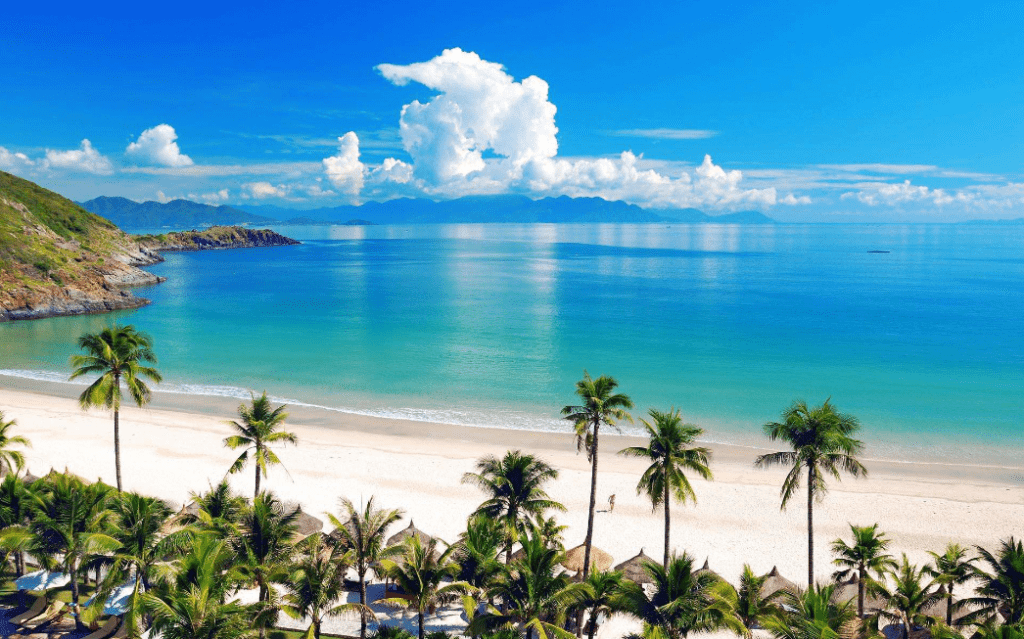
My Khe Beach, Da Nang: 30 kilometres of white sand backed by the Son Tra Peninsula, consistently rated among the finest urban beaches in Asia — and the anchor of Vietnam's fastest-growing luxury resort corridor
The City & Coast
Da Nang's My Khe Beach — 30 kilometres of clean white sand with warm water and consistent waves — is one of the finest urban beaches in Asia. The Marble Mountains (five limestone and marble hills containing Buddhist sanctuaries, caves, and shrines, 9km south of the city) are one of central Vietnam's most undervisited attractions — climb Am Phu Cave to Vong Hai Dai viewpoint at dawn for the finest view on the central coast.
The Dragon Bridge — a 666-metre bridge in the shape of a golden dragon — breathes real fire and water on Saturday and Sunday evenings at 9pm. It is simultaneously magnificent and completely absurd, and is one of the defining Da Nang experiences. The Ba Na Hills cable car (the world's longest non-stop single-track cable car, climbing 1,400 metres to a French village and amusement park on a mountain summit) is one of the most dramatic engineering experiences in Southeast Asia — worth the kitsch.
Experience Snapshot
The City That Never Stops — Saigon's Energy, History & the South's Greatest Food

Ho Chi Minh City at dusk from the rooftop: the Saigon River bending through the city, the colonial-era Post Office and Notre-Dame Cathedral catching the last light, and 9 million motorbikes beginning the evening rush
Culture & History
The War Remnants Museum is one of the most important museums in Southeast Asia — a frank and often difficult account of the Vietnam War from the Vietnamese perspective, with photographic evidence that requires time and emotional preparation. It is not comfortable. It is essential. The Reunification Palace — the former Presidential Palace of South Vietnam, captured on April 30, 1975, and preserved exactly as it was on that day — is one of the most extraordinary historical sites in Asia. The Cu Chi Tunnels (40km northwest of the city) — 250km of underground tunnels used by Viet Cong fighters during the war — are extraordinary in their ingenuity and claustrophobic in the best possible sense.
The French colonial architecture of District 1 — the Central Post Office (designed by Gustave Eiffel), Notre-Dame Cathedral, the Hotel de Ville, the Rex Hotel — represents one of the finest concentrations of colonial-era buildings in Asia. Walk the district between 6 and 8am before the motorbikes arrive in force.
Experience Snapshot
The Emerald Island — Vietnam's Finest Beaches & Luxury at Remarkable Value
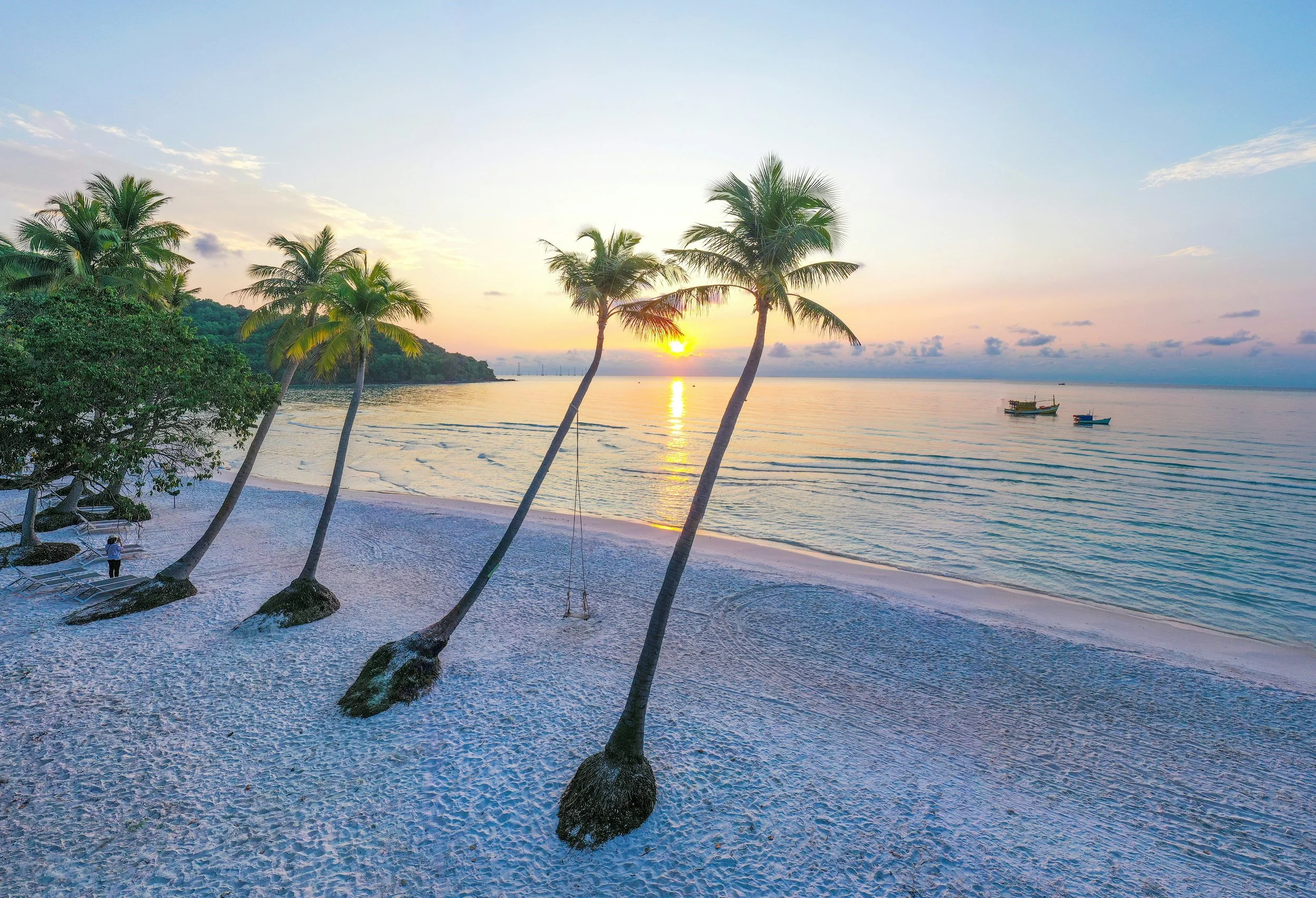
Sao Beach, Phu Quoc: white sand, shallow turquoise water, and a string of beach bars serving fresh seafood and cold Saigon beer — one of the finest beaches in Southeast Asia and still at a fraction of Maldives prices
The Island
Phu Quoc is 50 kilometres long and covered in national park jungle, with the resort development concentrated on the southern and western coasts. Long Beach (Bai Truong) on the west coast is the longest beach, with the best sunset views and the highest concentration of resorts. Sao Beach (Bai Sao) on the east coast is the most photogenic — shallow turquoise water, powdery white sand, and a string of low-key beach bars serving fresh seafood and cold beer.
The Phu Quoc Night Market in Duong Dong town is the finest food market in southern Vietnam — seafood, spring rolls, grilled corn, and the local speciality pepper (Phu Quoc black pepper, grown on the island, is the finest in Vietnam). The Phu Quoc fish sauce (nuoc mam) produced here — made from local anchovies fermented in giant wooden barrels — is considered the finest in the world and is the foundation of Vietnamese cuisine. A visit to a fish sauce factory is one of the most educational and aromatic experiences in Vietnam.
Experience Snapshot
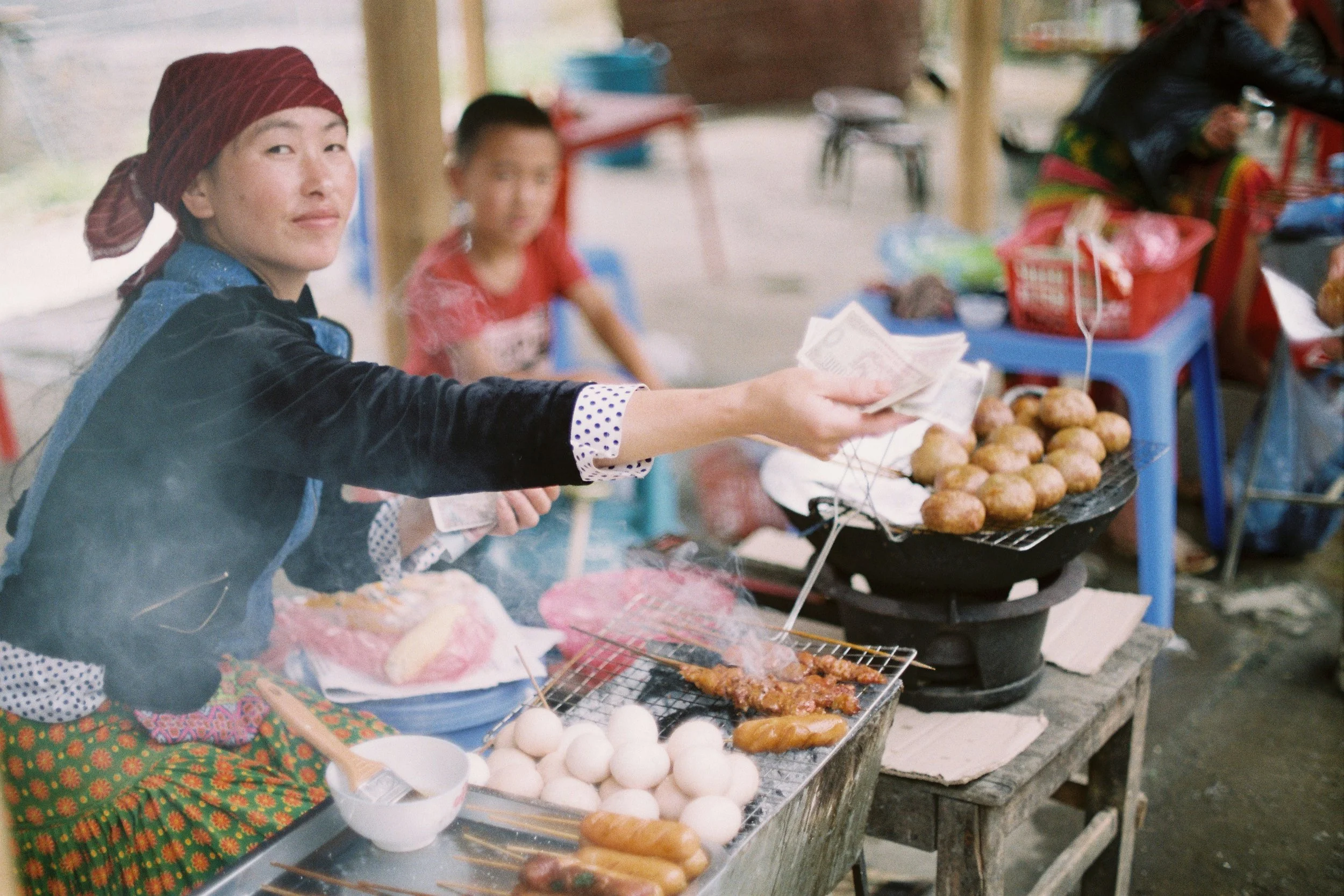
Vietnam rewards those who eat at street level — the finest food in the country is always on a plastic stool, always cheap, and always made by someone who has been doing exactly this for thirty years
Getting Around
International Entry: Noi Bai International Airport (Hanoi) and Tan Son Nhat International Airport (Ho Chi Minh City) are the main entry points. Da Nang and Phu Quoc both have international airports with increasing direct connections from Asian hubs. Most nationalities can obtain an e-visa online before departure (approximately $25 USD, valid 90 days, multiple entry) — strongly recommended over visa on arrival.
North to South: Vietnam Airlines, VietJet, and Bamboo Airways run frequent domestic flights between all major cities — Hanoi to Da Nang is 1 hour, Hanoi to Ho Chi Minh City is 2 hours, Ho Chi Minh City to Phu Quoc is 1 hour. Book domestic flights through the airlines directly or via Traveloka (the regional aggregator). The Reunification Express train from Hanoi to Ho Chi Minh City (33 hours in total) is one of the great train journeys in Southeast Asia — take the SE3 or SE5 sleeper for the most scenic routing through the Hai Van Pass.
Within cities: Grab (Southeast Asia's ride-hailing app) is the correct way to take taxis throughout Vietnam — always use Grab rather than street taxis. In Hanoi and Ho Chi Minh City, the app is essential. In Hoi An and Da Nang, rental bicycles and electric bikes are the best way to explore.
Visas, Currency & Money
The e-visa (valid 90 days, multiple entry, approximately $25 USD) can be obtained at evisa.xuatnhapcanh.gov.vn before departure. The Vietnamese Dong (VND) is the currency — the exchange rate (approximately 25,000 VND to 1 USD) produces numbers that require recalibration. 500,000 VND for a bowl of pho sounds alarming; at $20 USD it is reasonable; at the street cart it should be 30,000–50,000 VND ($1.20–2.00 USD). ATMs charge withdrawal fees — use Wise or Revolut for best exchange rates. Cash is still widely used for street food, markets, and cyclos.
Health & Safety
Vaccinations: Hepatitis A and B, typhoid, and tetanus are standard recommendations. Japanese encephalitis is recommended for longer stays or rural travel. Consult your physician at least 6 weeks before departure. Water: Bottled water only throughout Vietnam. Ice in premium hotels and restaurants is generally safe — use judgment at street level. Traffic: Crossing the street in Hanoi and Ho Chi Minh City requires a specific technique — walk at a steady, predictable pace and let the motorbikes flow around you. Do not stop suddenly or run. It works, universally, and becomes natural within 24 hours.
Vietnam is the country that surprises everyone who thought they knew it.
A bowl of pho at 6am in the Old Quarter. Limestone islands rising from jade water at dawn.
Lanterns on the Thu Bon River at night. A suite at the Four Seasons that costs less than a mid-range hotel in Paris.
The surprise is not that Vietnam is extraordinary. The surprise is the price.