
Travel Guide
Thailand
Bangkok | Chiang Mai | Pai | Koh Lanta
Khao Sok | Chiang Rai
Temples · Jungle · Islands · The Thailand Most Travelers Never Find

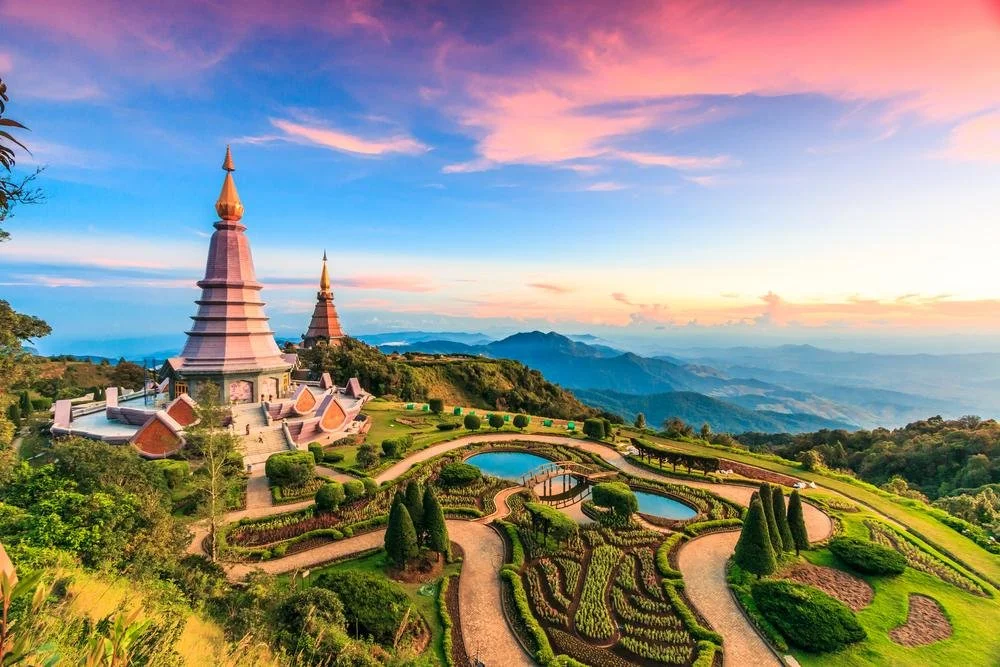
Welcome to Thailand — The Kingdom Behind the Brochure
Thailand is one of the most visited countries in the world, and it has earned every one of those visitors — the temples are extraordinary, the food is among the best on earth, the people are genuinely warm, and the landscape ranges from jungle-covered limestone mountains in the north to perfect island beaches in the south. The problem is not Thailand. The problem is that most people see the same small slice of it.
This guide is built around the proposition that the Thailand most worth experiencing is not the one in the brochure. Not the full-moon party beach. Not the elephant-riding photo opportunity. Not the rooftop bar in the tourist district that charges European prices for Thai cocktails. The Thailand worth seeking is the one where you wake up to mist rolling across a mountain valley in Pai and feel like you have found somewhere the world has not yet systematised. Where you eat pad see ew from a street cart at midnight in Bangkok for 60 baht and understand immediately why the Michelin inspectors keep awarding stars to the cooks who do one thing for forty years. Where you float in a canoe through ancient rainforest on Cheow Lan Lake at Khao Sok at dawn, surrounded by limestone karsts the size of skyscrapers, and see a hornbill land directly in front of you.
These six destinations represent the full spectrum: Bangkok for the magnificent urban overload, Chiang Mai for the cultural depth of the north, Pai for the unhurried mountain alternative, Koh Lanta for the island experience without the chaos, Khao Sok for one of the most extraordinary natural landscapes in Southeast Asia, and Chiang Rai for the temples and hill tribe villages that most visitors drive past on the way to somewhere more famous.
Best Time to Visit
- November – February (Cool Season): The finest window for the entire country. Temperatures are manageable (25–32°C), humidity is lower, and skies are clear. This is peak season — book accommodation well in advance, particularly for islands and Chiang Mai.
- March – May (Hot Season): Extremely hot and dry (35–40°C). Songkran water festival (April 13–15) is one of the great public celebrations in Southeast Asia — book months ahead if you want to experience it in Chiang Mai or Bangkok.
- June – October (Monsoon Season): The Gulf of Thailand coast (Koh Samui, Koh Tao) receives heavy rain June–October. The Andaman coast (Koh Lanta, Phuket) receives heavy rain May–October. The north (Chiang Mai, Pai, Chiang Rai) is lush and green — and far less crowded. Khao Sok is magnificent in the wet season.
- Koh Lanta's best season is November–April (Andaman coast). Most resorts close May–October. Plan accordingly.
- Khao Sok's floating bungalows are open year-round. The lake is most dramatic in the wet season when the water level rises and the jungle is at full intensity.
- Pai is at its most beautiful October–February when the valley fills with mist and the sunflower fields bloom.
- Chiang Rai's burning season (February–April) can create haze and air quality issues. Visit November–January for the clearest skies.
- Bangkok is tolerable year-round — it is always hot. The cool season makes it significantly more pleasant for temple-hopping and street exploration.
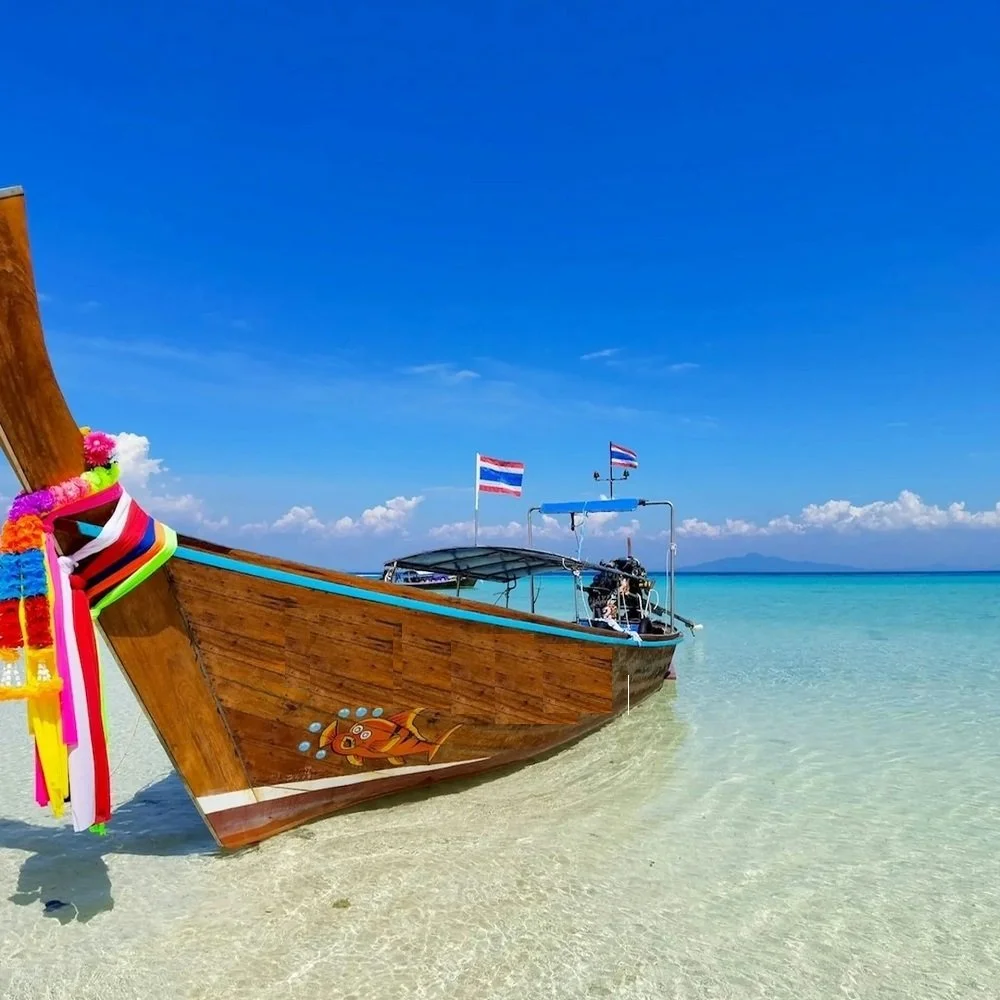
Thailand rewards those who slow down — whether that means sitting with a bowl of khao tom at 6am in a market or watching the sun rise over a jungle-covered lake from a floating bamboo bungalow
Thai Food — The Essential Briefing
Thai food is one of the great cuisines of the world and is routinely encountered in its least impressive form by tourists who eat only at restaurants with English menus and photographs of the food. The real thing — eaten at a night market, at a street cart that opens at 10pm and closes when the food runs out, or at a shophouse restaurant where the cook has been making one dish for thirty years — is in a completely different category.
Must Try Everywhere: Pad Thai from a street cart (never a tourist restaurant), tom kha gai (coconut milk soup with galangal and lemongrass — the most aromatic bowl of anything you will ever eat), som tam (green papaya salad, ferociously spicy if you don't specify otherwise), mango sticky rice for dessert, khao man gai (poached chicken on rice with a ginger-garlic sauce — Bangkok's greatest breakfast), and any grilled meat on a skewer from any cart at any night market. The cart with the longest queue is always the right choice.
Regional differences: Northern Thai food (Chiang Mai, Chiang Rai, Pai) is distinct from central and southern Thai — earthier, herb-heavy, less sweet, often served with sticky rice rather than jasmine rice. Khao soi (egg noodles in a rich coconut curry broth with crispy fried noodles on top) is the definitive dish of the north and is worth flying to Chiang Mai specifically to eat. Southern Thai food (Koh Lanta) is heavier on coconut milk and seafood, with a Muslim-Malay influence that produces the finest curries in the country.
The City That Never Sleeps, Never Quiets, and Never Fails to Astonish
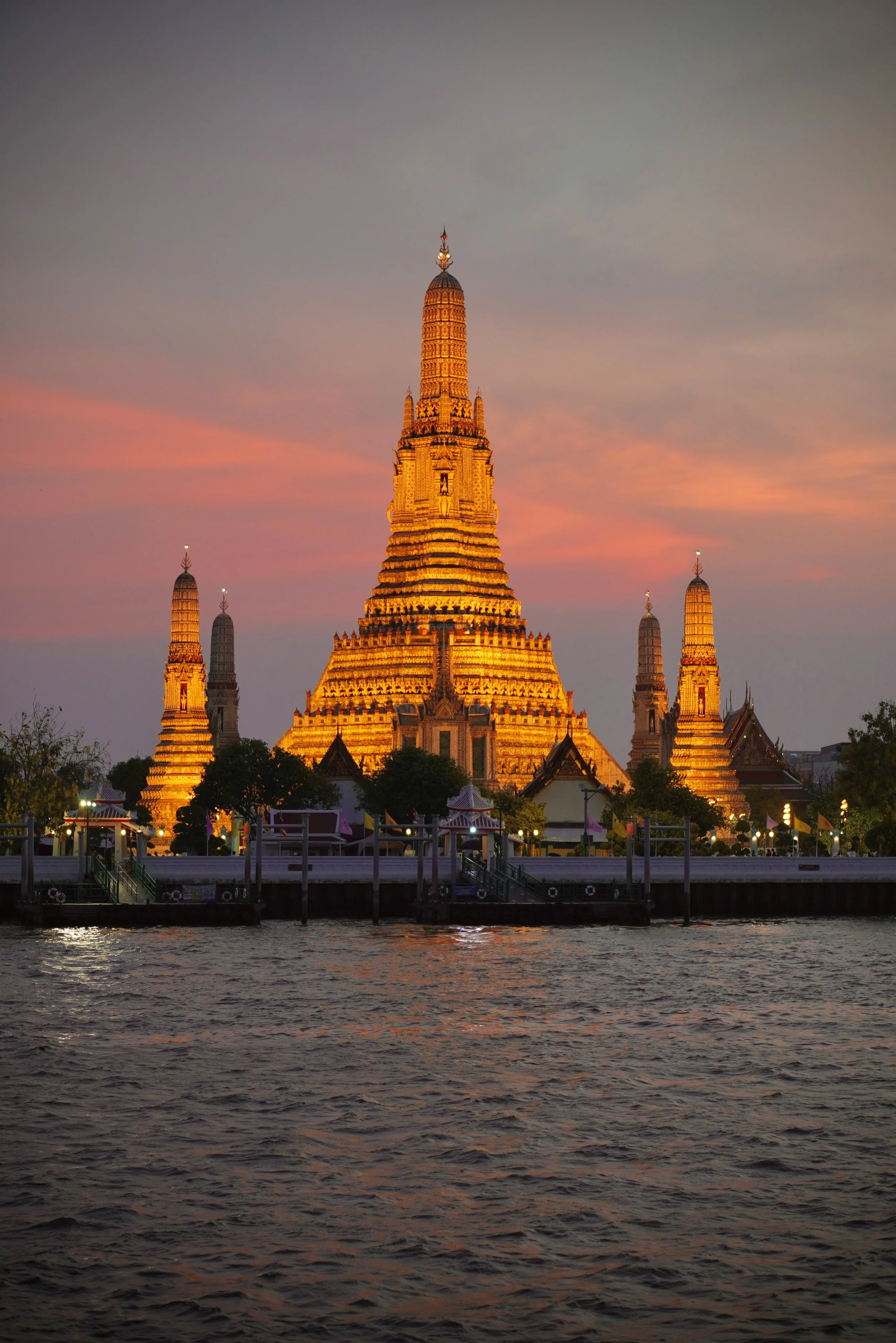
Wat Arun at golden hour from the Chao Phraya River: the Temple of Dawn in the last light of the afternoon, its porcelain-inlaid spires catching the sun in a way that makes every photograph look like a painting
Culture & Vibes
Bangkok is a city of districts, and understanding which one you are in is the difference between a good visit and an extraordinary one. Rattanakosin — the old royal island — contains the Grand Palace, Wat Phra Kaew (Temple of the Emerald Buddha), and Wat Pho (Temple of the Reclining Buddha), the three most important temples in the country. Visit all three in a single morning, starting at 8am before the heat and crowds arrive. Thonburi, across the river, contains Wat Arun and the canal network — take a longtail boat tour through the klongs (canals) at dawn to see a Bangkok that existed before the skyscrapers arrived.
Sukhumvit is where the luxury hotels, restaurants, and nightlife concentrate — BTS Skytrain-accessible, air-conditioned malls, the best cocktail bars in Southeast Asia, and the Asok/Nana/Phrom Phong dining corridor where the serious eating happens. Silom and Sathorn are the financial district with excellent rooftop bars. Ari and Phrom Phong are the neighbourhoods where Bangkok residents actually live and eat — quieter, more interesting, and with significantly better coffee.
Food
Must Try: Pad kra pao (stir-fried basil with minced pork, a fried egg on top — the national dish, eaten at all hours from any street cart), khao man gai from Khua Kling Pak Sod or any shophouse near a morning market, som tam at a northeastern Thai restaurant in Silom, boat noodles at Ratchadamnoen, mango sticky rice from any vendor on Ekkamai or Thonglor after dark, and a full tasting menu at Nahm or Bo.lan if budget allows — both are among the finest Thai restaurants in the world and are in Bangkok.
The Chao Phraya River — Bangkok's Most Important Transport Link
The Chao Phraya Express Boat is the most useful, most atmospheric, and least-used-by-tourists transport link in Bangkok. Orange flag boats run every 15–20 minutes between Nonthaburi in the north and Wat Rajsingkorn in the south, stopping at every major temple and hotel landing along the way. A single trip costs 15 baht. Longtail boat charters for canal tours cost 600–1,200 baht per hour and can be arranged at any major pier. Take the boat at least once — preferably at dawn or dusk.
Experience Snapshot
The Rose of the North — Ancient Temples, Cooking Schools & the Cultural Heart of Thailand
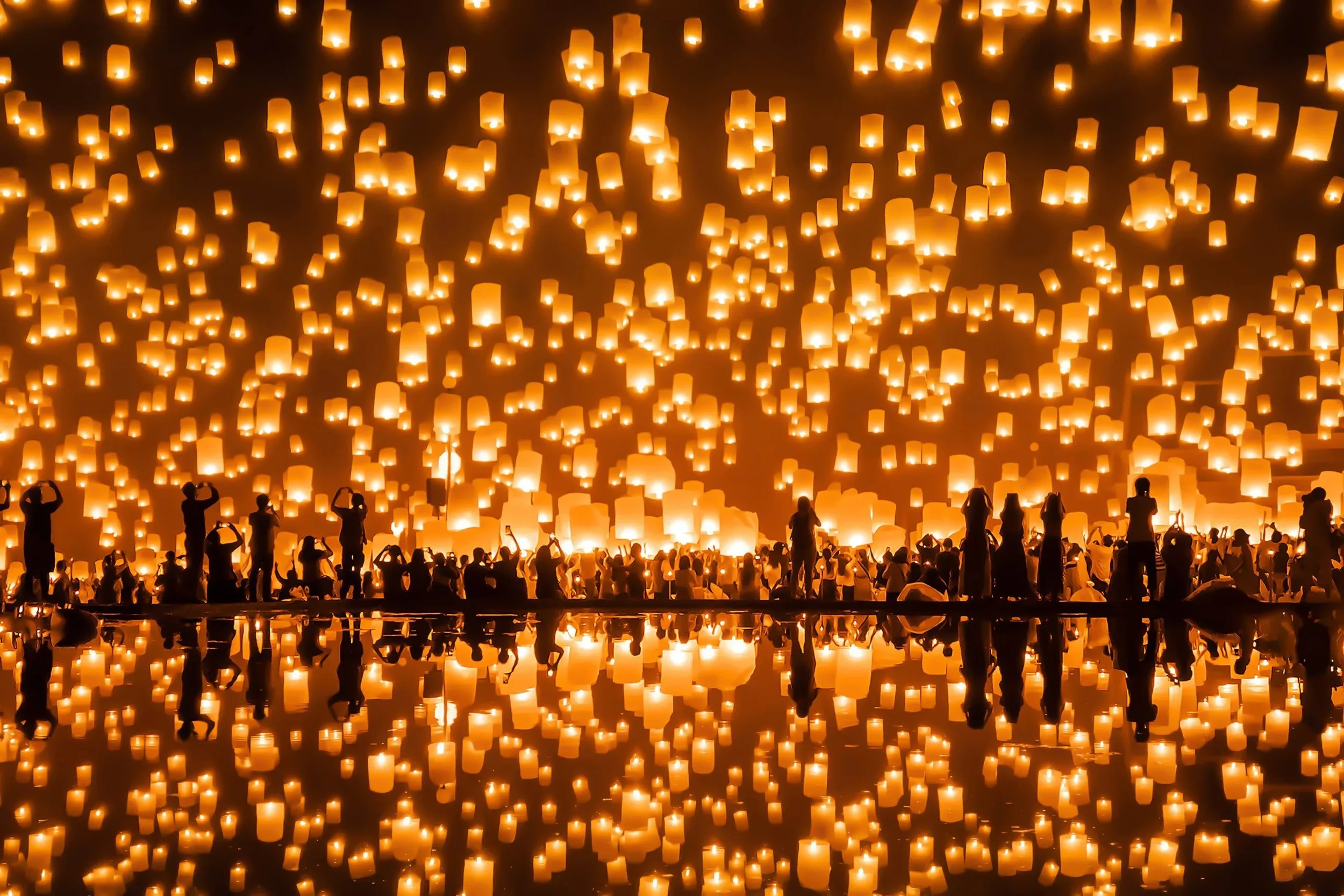
Yi Peng Lantern Festival, Chiang Mai: thousands of paper lanterns released simultaneously into the night sky above the old city moat — one of the most beautiful spectacles in Asia, held each November on the full moon
Culture & Vibes
Chiang Mai's old city — a perfect square surrounded by a moat, with the remains of the ancient city walls at each corner — contains over 30 temples within its walls alone. Wat Chedi Luang (the ruined chedi that once held the Emerald Buddha) and Wat Phra Singh (the finest Lanna-style temple in the city, with a beautifully preserved viharn) are the two essential old-city temples. Doi Suthep — the golden temple on the mountain above the city, reached by 306 naga-flanked steps or a funicular — is the most important temple in northern Thailand and is extraordinary at both dawn and dusk when the valley below fills with cloud.
The Sunday Walking Street on Wualai Road is the finest night market in Thailand — 1.5 kilometres of local crafts, silk, silverwork, ceramics, street food, and live music, attended as enthusiastically by Chiang Mai residents as by tourists. The Warorot Market (Kad Luang) is the city's oldest covered market and the place to buy local snacks, dried fruit, and northern Thai ingredients at local prices.
Ethical Elephants
Chiang Mai is the ethical elephant sanctuary capital of Thailand. Following decades of tourism that normalised elephant riding and performances, a new generation of sanctuaries now operates on a care-and-observe model — visitors help prepare food, feed, bathe, and walk with elephants without riding them. Elephant Nature Park (founded by Lek Chailert, one of the most respected elephant conservationists in the world) is the benchmark. Following Giants and Elephant Jungle Sanctuary are strong alternatives. Book at least 2 weeks in advance in peak season — demand significantly exceeds capacity at the ethical operations.
Food — The Home of Khao Soi
Khao soi is the defining dish of northern Thailand — egg noodles in a rich, slightly sweet coconut-curry broth, topped with crispy fried noodles, shallots, pickled mustard greens, and a squeeze of lime. It is one of the finest bowls of food in Southeast Asia and is specific to this region. Khao Soi Khun Yai and Khao Soi Mae Sai are the local benchmarks. Must Also Try: Sai oua (northern Thai herbed sausage, grilled and eaten with sticky rice), nam prik noom (roasted green chili dip), kaeng hung lay (Burmese-influenced pork belly curry with ginger and tamarind), and larb moo khua (dry-fried northern pork larb — completely different from the central Thai version).
Experience Snapshot
The Mountain Valley — Mist, Hot Springs & the Thailand Nobody Talks About
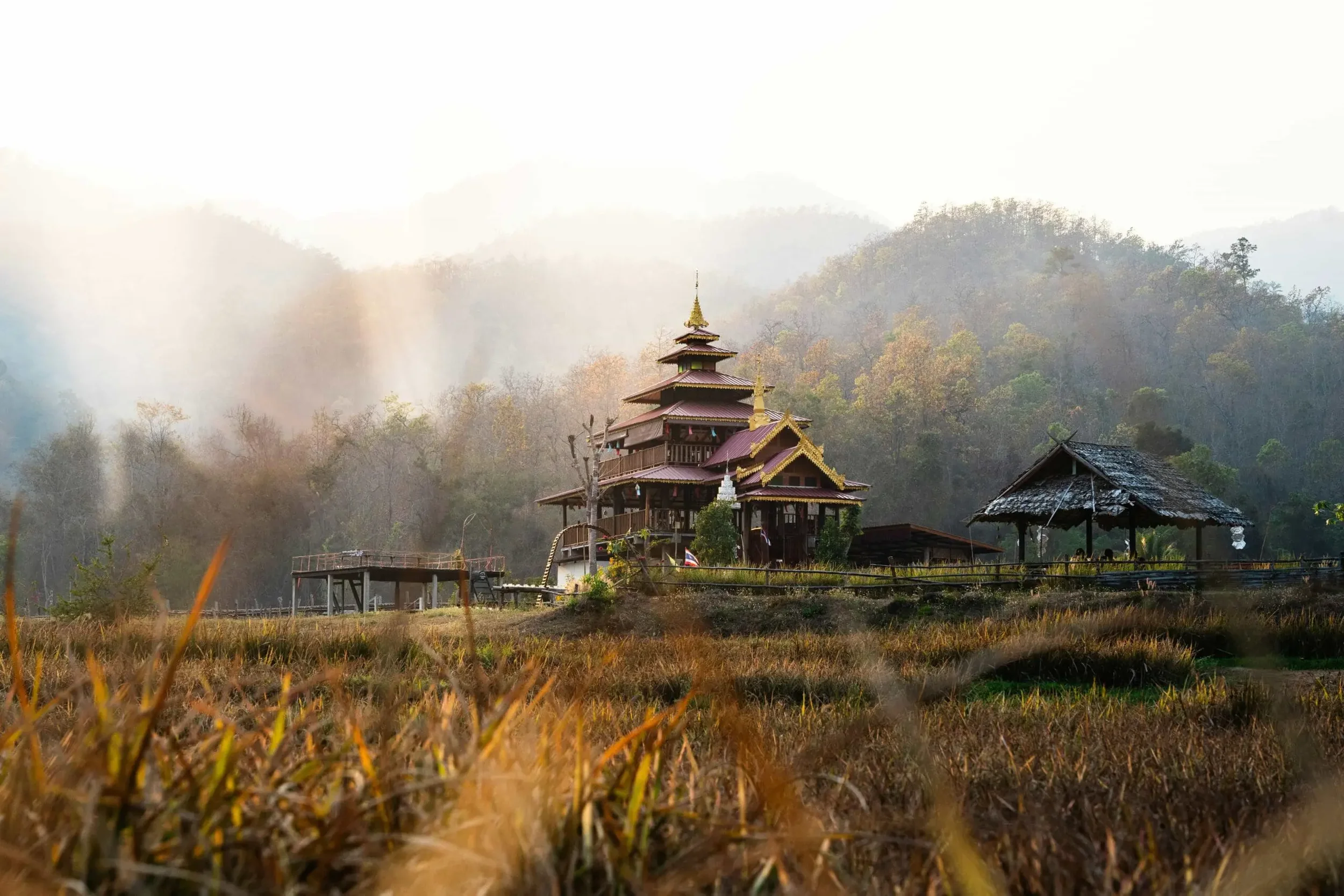
Pai valley at dawn: a small mountain town surrounded by jungle-covered hills, rice fields, and waterfalls, three hours from Chiang Mai on a road with 762 curves — and entirely worth every one of them
The Town & Surroundings
Pai sits in a broad mountain valley at 800 metres elevation — cool at night, warm by day, and draped in morning mist from October through February that makes the rice fields and jungle-covered hills look like a landscape painting. The town itself is small enough to walk end-to-end in 15 minutes, with a single main street of cafés, guesthouses, and night market stalls that come alive after dark.
Everything worth seeing is outside the town: the Pai Hot Springs (natural thermal pools in a forested park, best visited at dusk when the temperature drops), Mo Paeng Waterfall (a natural rock slide into a jungle pool — 30 minutes by motorbike), Pam Bok Waterfall (smaller, less visited, beautiful), the Chinese Village of Santichon (a Yunnan-Chinese settlement in the hills), and the World War II Memorial Bridge (a teak bridge over the Pai River built by Japanese POWs in 1942, beautiful at dawn). The Pai Canyon — a narrow ridge of eroded red clay above a deep gorge — is extraordinary at sunset but requires reasonable agility on the trails.
Food & Nightlife
Pai's night market (Walking Street) is small, local, and excellent — much better than its reputation suggests. The food is northern Thai and cheap: sai oua grilled to order, mango sticky rice, fresh corn, and Thai-style crepes. Na's Kitchen and Edible Jazz are the reliable dinner options for sit-down meals. The best coffee in Pai is at Waan Waan — a small café in a rice field with mountain views that makes the drive worthwhile on its own.
Experience Snapshot
The Relaxed Island — Long Beaches, Excellent Food & Zero Full-Moon Parties
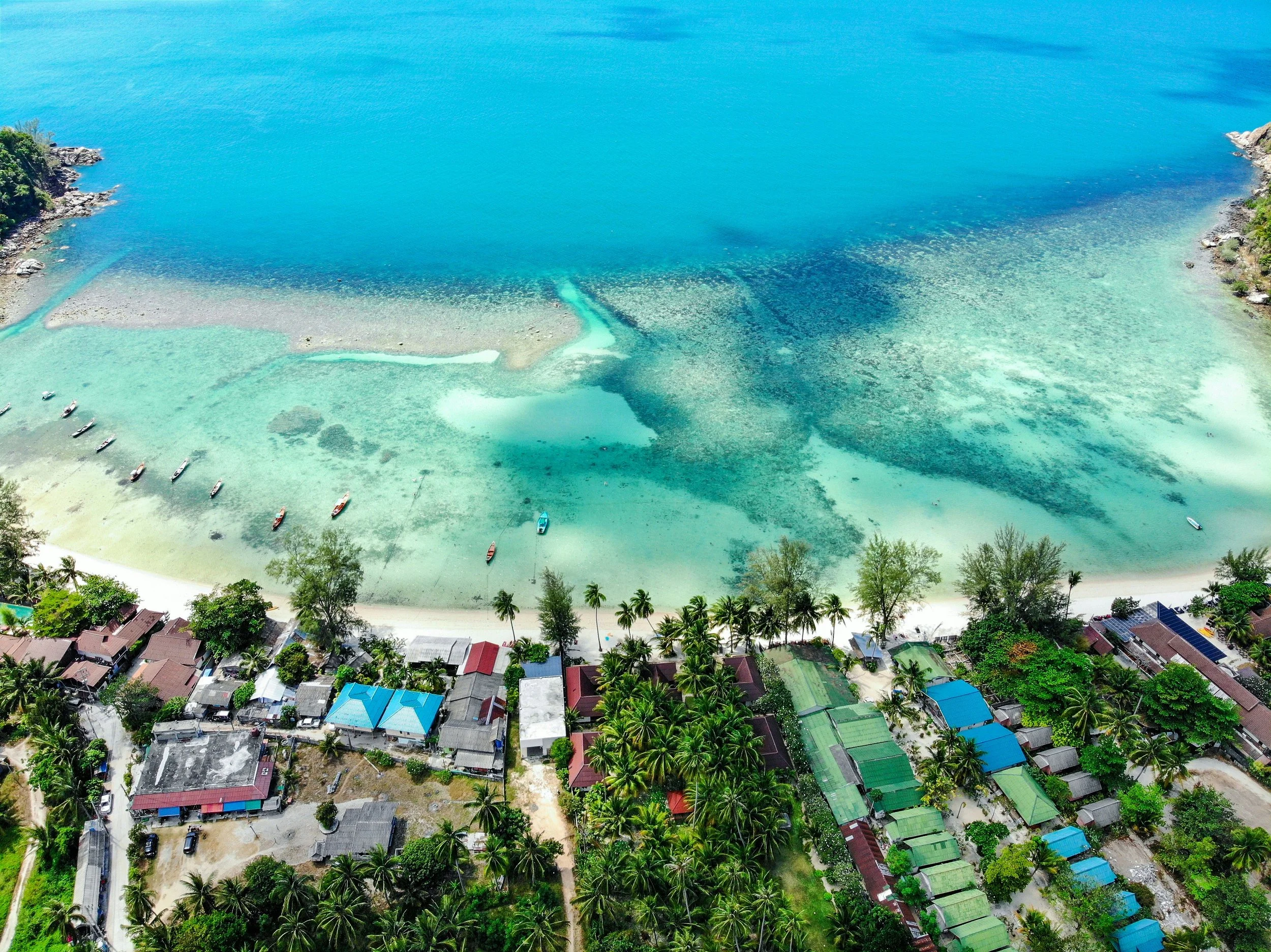
Koh Lanta at low tide: the kind of beach that makes you understand why people move to Thailand — long, relatively empty, fringed with casuarina trees, and backed by a jungle-covered hill that turns gold at sunset
The Island
Koh Lanta Yai is a long, narrow island about 30 kilometres end to end, with a chain of beaches on its western coast that each have a distinct character. Long Beach (Hat Khlong Dao) — the northernmost and most developed — is 3 kilometres of flat, wide sand with the best range of accommodation and restaurants. Phra Ae (Long Beach South) is quieter and has better sunset bars. Hat Khlong Nin is the middle-island sweet spot — beautiful beach, fewer tourists, the best independent restaurants on the island. Hat Khlong Jak and Bamboo Bay at the southern end are nearly empty, accessible by motorbike on a winding coastal road through the national park, and are two of the most beautiful and overlooked beaches in Thailand.
The Old Town (Ban Si Raya) on the eastern coast is Koh Lanta's original settlement — a wooden pier village on stilts above the water, inhabited by the sea-gypsy Urak Lawoi people and a Muslim Malay fishing community. It is genuinely beautiful, completely unself-conscious about tourism, and has excellent seafood restaurants over the water. The Koh Lanta Marine National Park at the southern tip protects mangroves, coral reefs, and nesting hawksbill turtles — accessible by boat or kayak from the national park entrance.
Food — Southern Thai & Seafood
Koh Lanta's food scene is driven by its Muslim-Malay heritage — the massaman curry here (slow-cooked beef with potatoes, peanuts, and cardamom) is among the finest in Thailand, and the fresh seafood from the eastern fishing fleet is extraordinary. Must Try: Massaman curry at any Muslim-owned restaurant, grilled fresh fish at a waterfront restaurant in the Old Town, kaeng tai pla (fermented fish kidney curry — an acquired taste that rewards acquisition), fresh coconut water from the coconut groves on the inland road, and roti canai with condensed milk for breakfast from any of the Muslim bakery carts that appear at dawn.
Experience Snapshot
Ancient Rainforest, Floating Bungalows & the Most Extraordinary Landscape in Thailand

Cheow Lan Lake at dawn: Khao Sok's vast reservoir surrounded by vertical limestone karsts rising 900 metres from the water's surface, the jungle still thick with mist and the only sound the call of gibbons in the canopy above
The Park & the Lake
Khao Sok National Park covers 739 square kilometres of the Tenasserim Hills — one of the oldest and most biodiverse rainforests on earth, estimated at 160 million years old (significantly older than the Amazon). The park supports over 200 bird species, 100 mammal species, and a staggering diversity of plant life including the Rafflesia kerrii — the largest individual flower in the world, reaching up to 80cm in diameter and producing a scent variously described as rotting flesh and fermented fruit, blooming unpredictably in the forest floor.
Cheow Lan Lake — created in 1982 when the Ratchaprapha Dam was built — is the heart of the park experience. The lake covers 165 square kilometres and is surrounded by limestone karsts that rise 900 metres from the water's surface. The only accommodation is on floating bungalow complexes accessible by longtail boat (45 minutes from the pier). The best operators — Art's Riverview Jungle Lodge and Elephant Hills Floating Camp — run full programmes including jungle trekking, kayaking, night safaris, and guided cave visits.
Wildlife
Khao Sok is one of the last refuges for the Malayan tapir, the Asian elephant, the Indochinese leopard, the clouded leopard, and the sun bear — all present in the park but rarely seen. What you will see, reliably: gibbons (white-handed gibbons sing at dawn from the canopy every morning — an extraordinary sound), hornbills (great hornbills and wreathed hornbills are common), dusky langurs (leaf monkeys), monitor lizards, kingfishers, and more species of butterfly than most people encounter in a lifetime. Night jungle walks led by park guides reveal flying squirrels, civets, slow lorises, and the generally alarming variety of insects that a 160-million-year-old rainforest accumulates.
Experience Snapshot
The White Temple, the Blue Temple & the Far North — Thailand's Most Surprising City
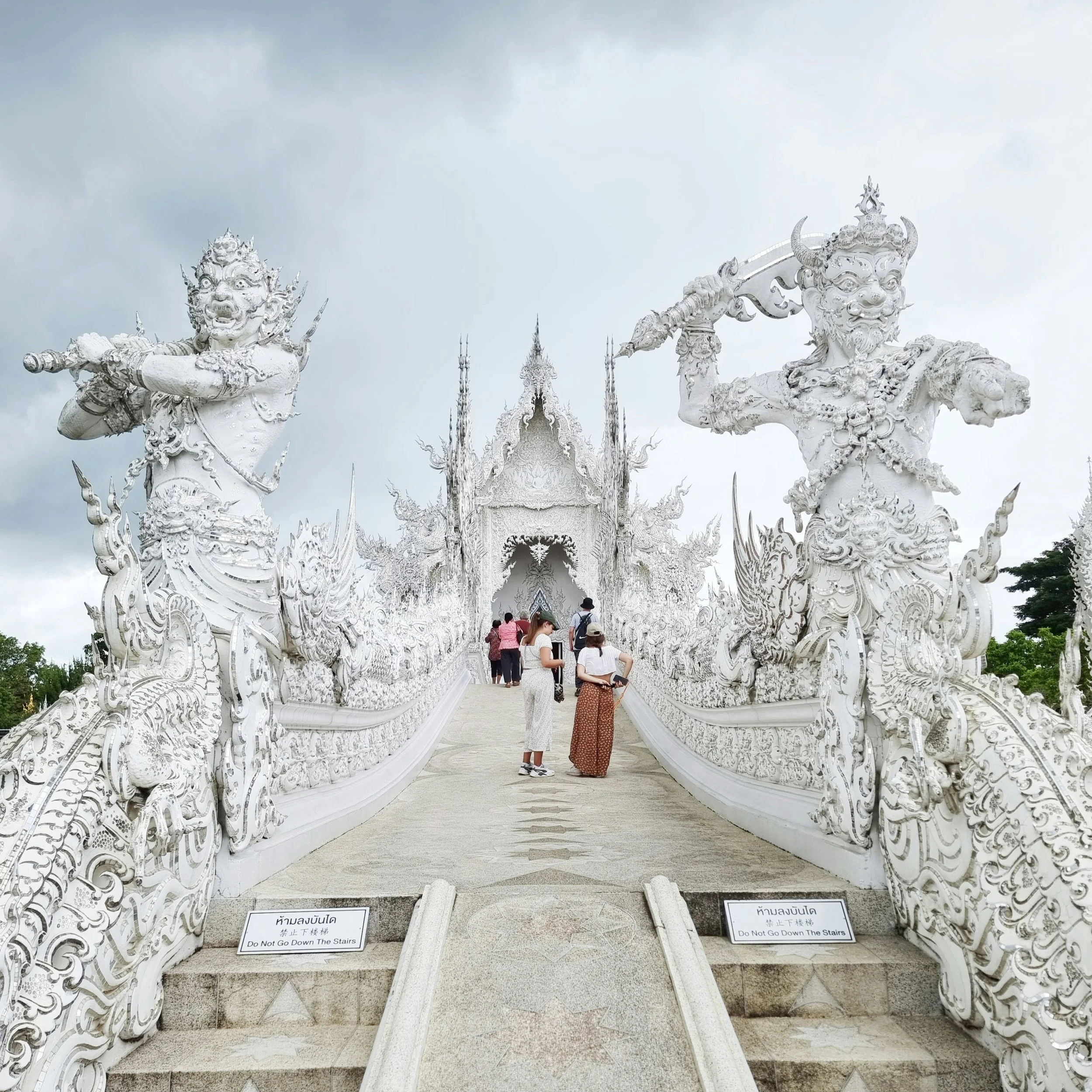
Wat Rong Khun (The White Temple), Chiang Rai: a privately owned work of art begun in 1997 by artist Chalermchai Kositpipat, still under construction, still the most extraordinary contemporary building in Thailand — and one of the most photographed in Southeast Asia
The Temples
Wat Rong Khun (The White Temple) is not an ancient temple — it is a contemporary work of art by Thai artist Chalermchai Kositpipat, begun in 1997 and still under construction. The entire complex is white and encrusted with millions of tiny mirror fragments that catch the light in all directions. The bridge to the main hall crosses a lake of reaching hands (representing desire and suffering). Inside, the murals depict traditional Buddhist themes alongside contemporary references including Neo from The Matrix and a number of superheroes. It is extraordinary, deeply strange, and completely unlike anything else in Asia. Arrive when it opens (8am) — by 10am the queues are significant.
Wat Rong Suea Ten (The Blue Temple) is newer (completed 2016) and far less visited than the White Temple. It is entirely covered in deep cobalt blue tile work and houses a large white Buddha in a midnight-blue interior — one of the most beautiful temple interiors in Thailand. Baan Dam (The Black House) — the life's work of artist Thawan Duchanee — is a collection of 40 black buildings filled with animal bones, skins, and dark ceremonial art, representing the shadow side of existence. It is deeply strange and completely compelling.
The Golden Triangle & Hill Tribes
The Golden Triangle — where Thailand, Laos, and Myanmar converge at the confluence of the Mekong and Ruak rivers — is 60 kilometres from Chiang Rai. The area was once the world's largest opium-producing region; the Hall of Opium museum at Sop Ruak is an excellent and serious museum on the history of the trade. The view across the Mekong to Laos and Myanmar from the golden Buddha at the river confluence is one of the great geographical moments in Southeast Asia.
The hill tribe villages in the mountains around Chiang Rai — Akha, Karen (including the long-neck Karen communities), Hmong, Yao, and Lisu — are accessible by organised tour or rental car. Tourism has transformed many of these communities in ways both positive and complicated; visiting with a responsible operator who contributes directly to community benefit and employs local guides is strongly recommended. Mirror Foundation and Akha Ama Coffee (a social enterprise using coffee sales to fund Akha village development) are the most ethical operators in the area.
Experience Snapshot
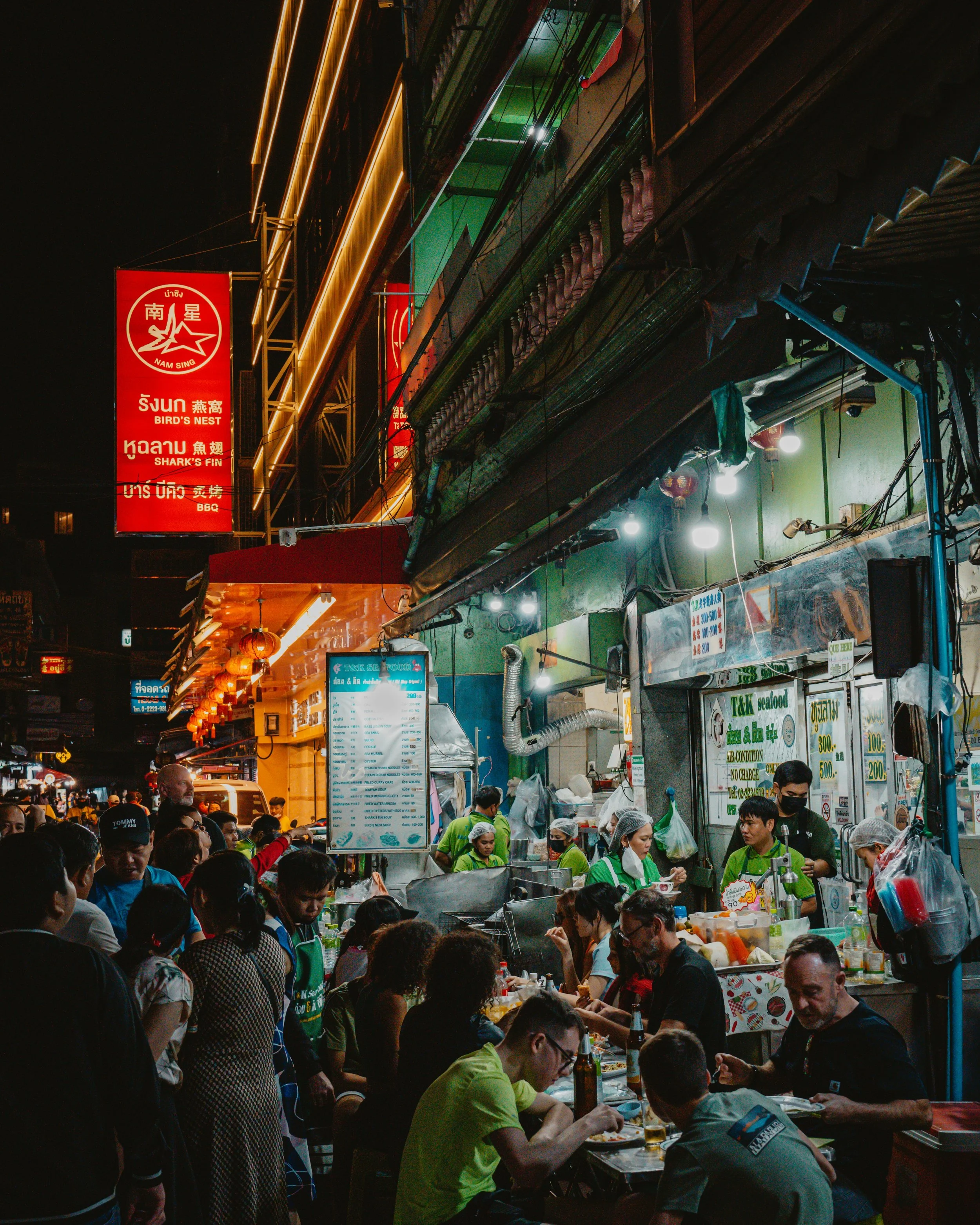
Thailand rewards those who eat where the locals eat — follow the queue, order what the person in front of you ordered, and prepare to reconsider everything you thought you knew about Thai food
Getting Around
International Entry: Suvarnabhumi Airport (Bangkok) is the main international hub. Don Mueang Airport handles budget carriers and some regional routes. Most nationalities receive a 30-day visa-free entry stamp on arrival — confirm current requirements for your passport before departure, as policies change.
Bangkok: The BTS Skytrain and MRT Metro cover the main tourist and business districts efficiently. Grab (Southeast Asia's Uber equivalent) is the correct way to take a taxi — always use Grab rather than street taxis to avoid fare disputes. Tuk-tuks are for short hops only and should be agreed on price before departure. The Chao Phraya Express Boat covers the riverside temples and hotels.
North Thailand: Bangkok to Chiang Mai by domestic flight is 1 hour and costs $30–60 USD on Air Asia, Bangkok Airways, or Thai Airways — book ahead. Chiang Mai to Pai is 3 hours by minivan (762-curve mountain road — take motion sickness medication). Chiang Mai to Chiang Rai is 3 hours by road or a 35-minute domestic flight. Rental cars and motorbikes are the best way to explore both cities' surroundings.
South Thailand / Islands: Bangkok to Koh Lanta requires a flight to Krabi (1.5 hours, then ferry or minibus — 2 more hours). Alternatively, overnight train from Bangkok to Surat Thani (12 hours) then ferry or bus. Khao Sok is between Surat Thani and Krabi — easily incorporated into a south Thailand itinerary.
Visas, Currency & Money
Most passport holders receive a 30-day visa exemption on arrival in Thailand. The Thai Baht (THB) is the currency. ATMs are widely available but charge foreign transaction fees (150–200 baht per withdrawal) — use Wise or Revolut cards to minimise fees. Cash is still widely used for street food, markets, and transportation. Credit cards are accepted at hotels and larger restaurants. Budget approximately $80–150 USD per day for comfortable independent travel; luxury hotel and fine-dining travel runs $300–600+ USD per day.
Temple Etiquette
Temples require covered shoulders and knees — carry a light scarf or sarong. Remove shoes before entering any temple building. Never point feet toward a Buddha image (feet are considered spiritually low). Monk robes are saffron orange — do not touch a monk, and women should never hand anything directly to a monk. Photography inside temples is usually permitted but check for signage. Speak quietly and move slowly — temples are active places of worship, not tourist attractions.
Health & Safety
Vaccinations: Hepatitis A and B, typhoid, and tetanus are recommended. Japanese encephalitis and rabies vaccinations are recommended for longer stays or rural travel. Consult your physician at least 6 weeks before departure. Malaria: Low risk in cities and popular tourist areas; higher risk in remote jungle areas including parts of Khao Sok and the Golden Triangle border region — discuss prophylaxis with your doctor. Mosquitoes: Use DEET repellent at dawn and dusk. Dengue fever is present throughout Thailand and has no vaccine. Food safety: Street food in Thailand is generally safe and often safer than restaurant food — the high turnover ensures freshness. Drink bottled water only. Ice in Thai restaurants is generally made from purified water but use judgment in very rural areas.
Responsible Travel in Thailand
Thailand's elephant tourism industry has been one of the most significant conservation and welfare stories in Southeast Asia. Please do not ride elephants, attend elephant shows, or visit mahout "experiences" where elephants perform tricks — these practices require training methods that cause significant harm. The ethical sanctuaries listed in the Chiang Mai section (Elephant Nature Park and its affiliated operations) are the only appropriate choice. Similarly, when visiting hill tribe villages in the north, choose operators who work directly with communities and pay fair wages to local guides. The Mirror Foundation in Chiang Rai is the benchmark.
Thailand is not one place.
It is Bangkok at midnight and a mountain valley at dawn.
It is limestone rising from a jungle lake, a white temple catching the light in ten thousand mirrors,
and a bowl of khao soi that makes every other noodle dish you've eaten feel like a rough draft.
The Thailand worth finding is always one turn off the main road.