
Travel Guide
Tanzania
Serengeti | Zanzibar | Arusha | Moshi
Dar es Salaam | Mwanza
Safari · Culture · Coast · Where to Stay, Eat & Explore
Welcome to Tanzania
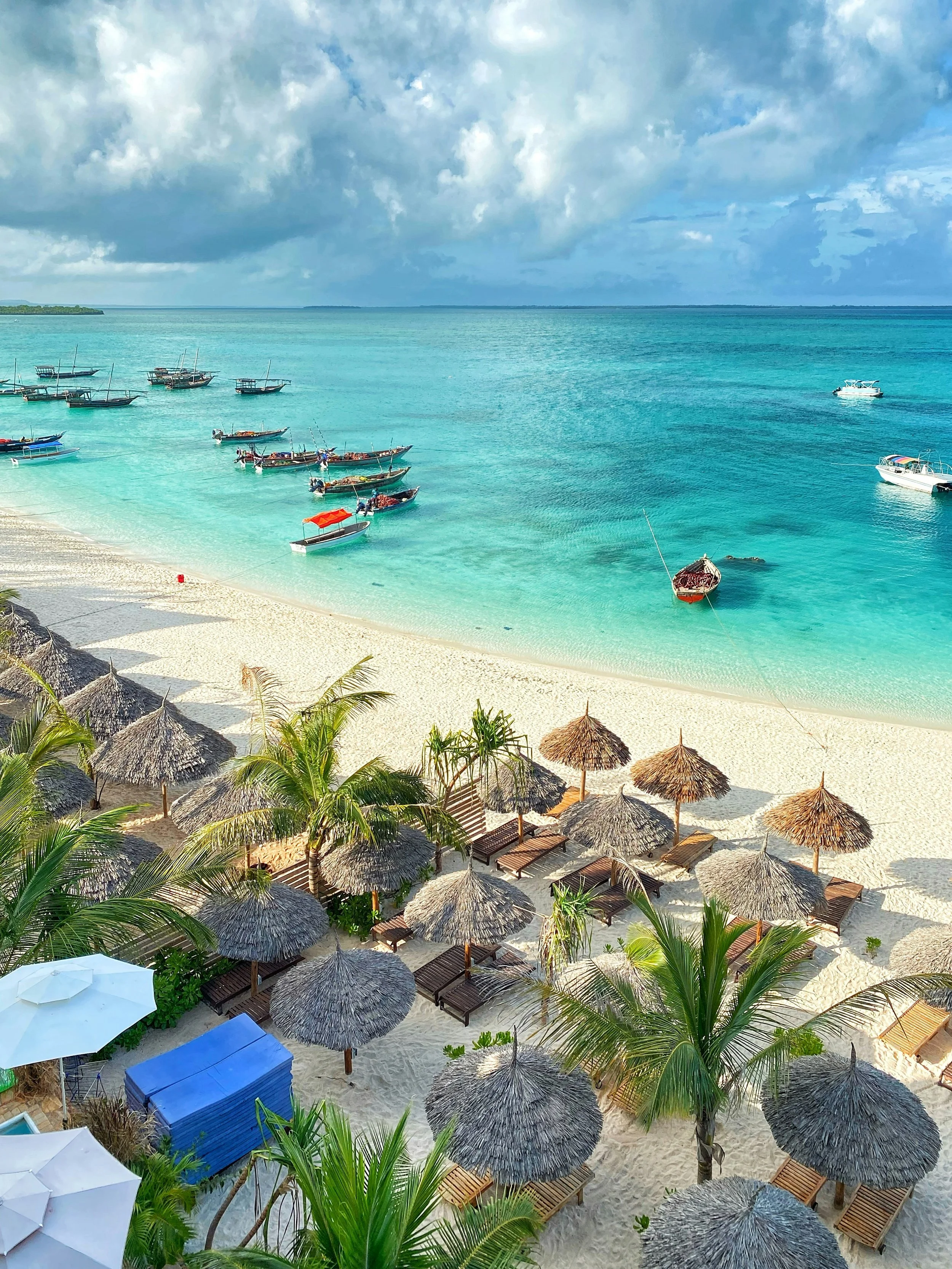
Tanzania is Africa at its most elemental and overwhelming — the continent's greatest wildlife spectacle on its largest savannah, the world's most iconic mountain rising above coffee-green foothills, the spiced labyrinth of a Swahili island city, and an Indian Ocean coastline of extraordinary, unspoiled beauty. It is the Africa of your imagination, made breathtakingly real.
This guide covers six distinct Tanzanias: the incomparable Serengeti and its great migration; the ancient, aromatic island of Zanzibar; Arusha, the safari gateway with its own national park; Moshi, the base for Kilimanjaro climbers; Dar es Salaam, the vibrant commercial capital; and Mwanza, the lakeside city on the shores of Lake Victoria. Together they represent one of the most complete and rewarding journeys available anywhere on earth.
Best Time to Visit
- June – October (Dry Season): The best overall window for safari. Sparse vegetation makes wildlife easier to spot, animals congregate around waterholes, and the great migration river crossings peak in July–August. Cooler nights, warm days. Book camps 12–18 months ahead for peak season.
- January – February (Short Dry): Excellent for the southern Serengeti calving season (December–March) — the greatest concentration of predator activity on earth. Quieter and more affordable than high season.
- March – May (Long Rains): Many camps close. Roads can be challenging. The landscape is lush and green — experienced safari travellers who love the atmosphere and discounted rates come now.
- Zanzibar year-round: Hot and tropical always. The best diving is June–September and January–February. Avoid the long rains (March–May) for beach holidays.
- December – March: Wildebeest calving in the southern Serengeti (Ndutu area). 500,000 calves born in 3 weeks — extraordinary predator activity. Best for big cat sightings.
- April – May: The herds move north through the central Serengeti. Long rains begin.
- June – July: Migration reaches the Western Corridor. First river crossings of the Grumeti River — crocodiles and drama.
- July – September: The great Mara River crossings — the iconic wildebeest crossing scenes. The migration is in the northern Serengeti and Masai Mara (Kenya). Peak season, peak drama.
- October – November: Herds begin moving south. Short rains arrive. Quieter camps, lower prices.
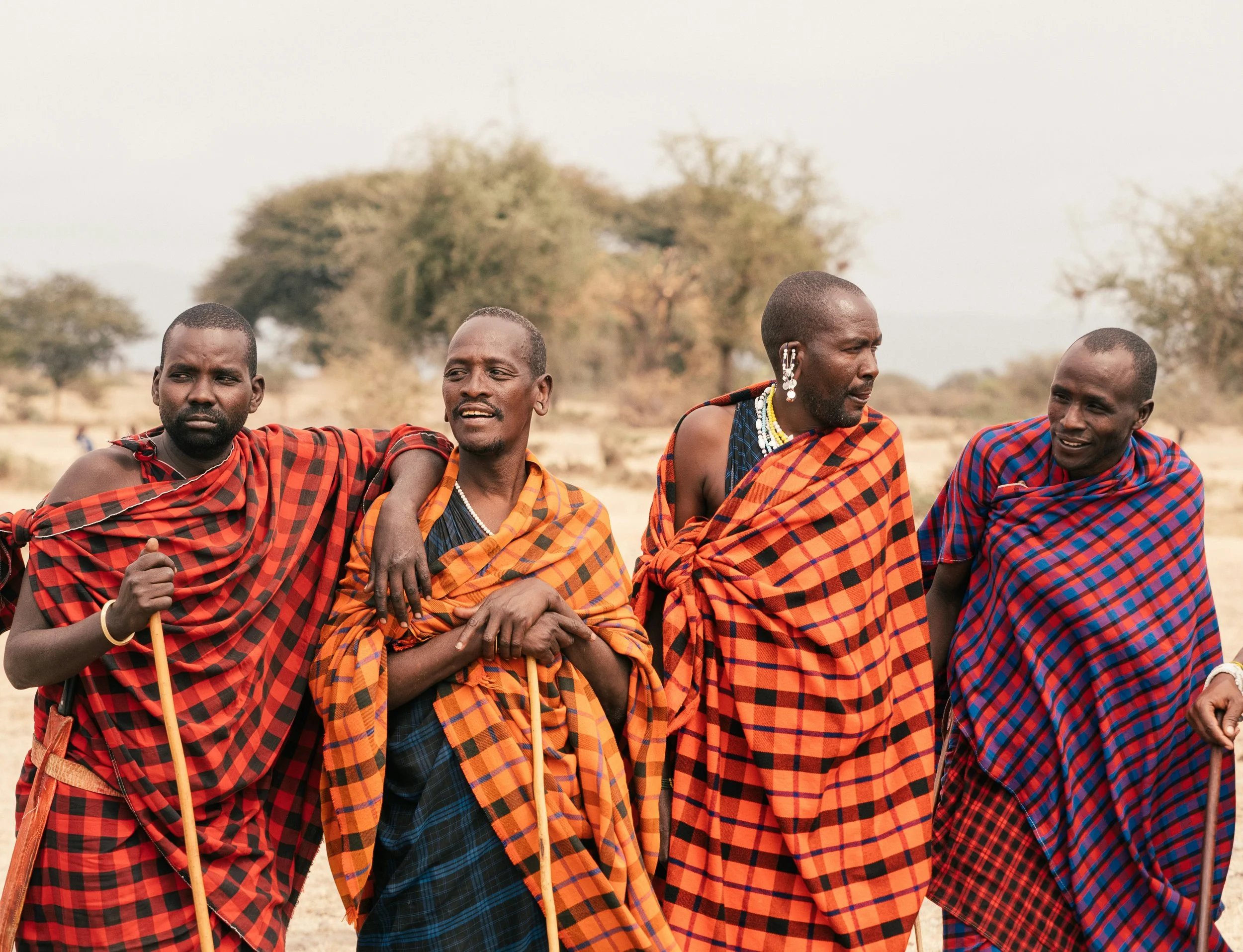
Tanzania's cultures are as extraordinary as its landscapes — from the proud warrior traditions of the Maasai to the Arabic-Swahili heritage of Zanzibar's Stone Town, carved into every doorway
Safari Planning — The Essentials
Planning Your Tanzania Safari: What You Need to Know
Operators: Tanzania's safari industry ranges from budget camping to ultra-luxury private conservancies. For a Serengeti safari, we strongly recommend using an established, licensed operator with TATO (Tanzania Association of Tour Operators) membership. Key names in the premium tier include Asilia Africa, &Beyond, Nomad Tanzania, Singita, and Sanctuary Retreats. Mid-range excellence: Legendary Expeditions, Shadows of Africa, and Easy Travel Tanzania. Always verify TATO membership and read recent reviews before booking.
Park fees & permits: Tanzania National Parks (TANAPA) fees apply to all parks and are paid at the gate or pre-booked through your operator. Serengeti fees are approximately $82 USD per person per day (non-resident adult). The Ngorongoro Conservation Area has a separate fee structure ($70–$80 per person per day). These fees are typically included in operator packages — confirm this when booking. Kilimanjaro park fees and rescue fees are additional and compulsory.
Vehicle types: Most Serengeti safaris use 4WD Land Cruisers with pop-up roofs for game viewing. Private vehicles (just your group) are significantly better than shared group vehicles — worth the premium. Hot air balloon safaris over the Serengeti (approximately $600 per person) are among the great wildlife experiences on earth and should be pre-booked well in advance.
Accommodation tiers: Tented camps range from budget (shared facilities, basic tents) to ultra-luxury (private plunge pools, butler service, gourmet dining). Migration camps that move seasonally to follow the herds offer the best wildlife positioning but book 12–18 months ahead. Permanent lodges offer more comfort and consistency. We are happy to advise on the right tier and specific camps for your budget and travel style.
Food & Culture
Tanzanian food is a beautiful fusion of African, Arab, Indian, and Portuguese influences — a legacy of the Swahili coast's centuries of Indian Ocean trade. Ugali (stiff maize porridge, the staple of the mainland), pilau (spiced rice cooked with meat — a Zanzibar masterpiece), nyama choma (grilled meat, eaten communally at roadside restaurants called mchomas), mishkaki (marinated meat skewers), zanzibar pizza (a folded street-food crepe with egg, meat, and vegetables, nothing like Italian pizza), and fresh seafood grilled simply on the beach are the dishes to seek out. Fresh fruit — mango, pineapple, coconut — is extraordinary and available everywhere. Kilimanjaro beer (brewed locally since 1996) is the drink of choice.
The Greatest Wildlife Show on Earth — Endless Plains & the Great Migration
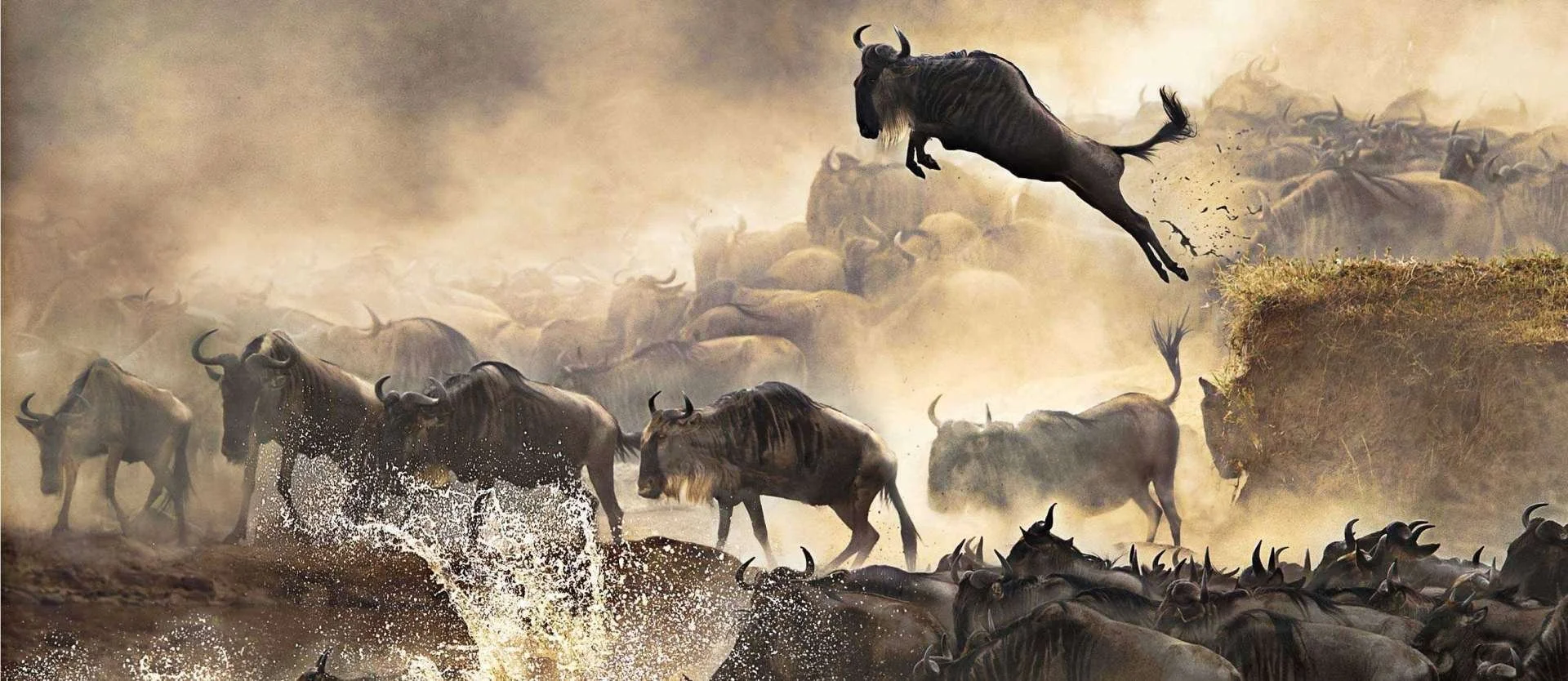
The great migration: 1.5 million wildebeest, 300,000 zebra, and 200,000 gazelle moving in an ancient, unbroken circuit across the Serengeti and Masai Mara — the largest land migration on earth
The Serengeti Ecosystem
The Serengeti is not one place but an entire ecosystem — a vast, interconnected landscape that shifts character across its different zones. The Southern Serengeti (Ndutu area) is the calving ground (December–March) — short grass plains stretching to the horizon, where cheetahs hunt in open ground and lions patrol in large prides. The Central Serengeti (Seronera) is the year-round wildlife hub, where the Seronera River supports permanent populations of lion, leopard, hippo, and crocodile. The Western Corridor sees the first Grumeti River crossings in June–July. The Northern Serengeti (Kogatende, Lamai) hosts the famous Mara River crossings in July–September — the most dramatic wildlife spectacle on the continent.
The Ngorongoro Crater, 180km southeast of the central Serengeti, is a separate conservation area and a UNESCO World Heritage Site — the world's largest intact volcanic caldera, sheltering a self-contained ecosystem with an extraordinary density of wildlife including the highest concentration of lions in Africa and one of the last significant populations of black rhino.
Experience Snapshot
The Spice Island — Stone Town, Turquoise Seas & a Swahili Soul
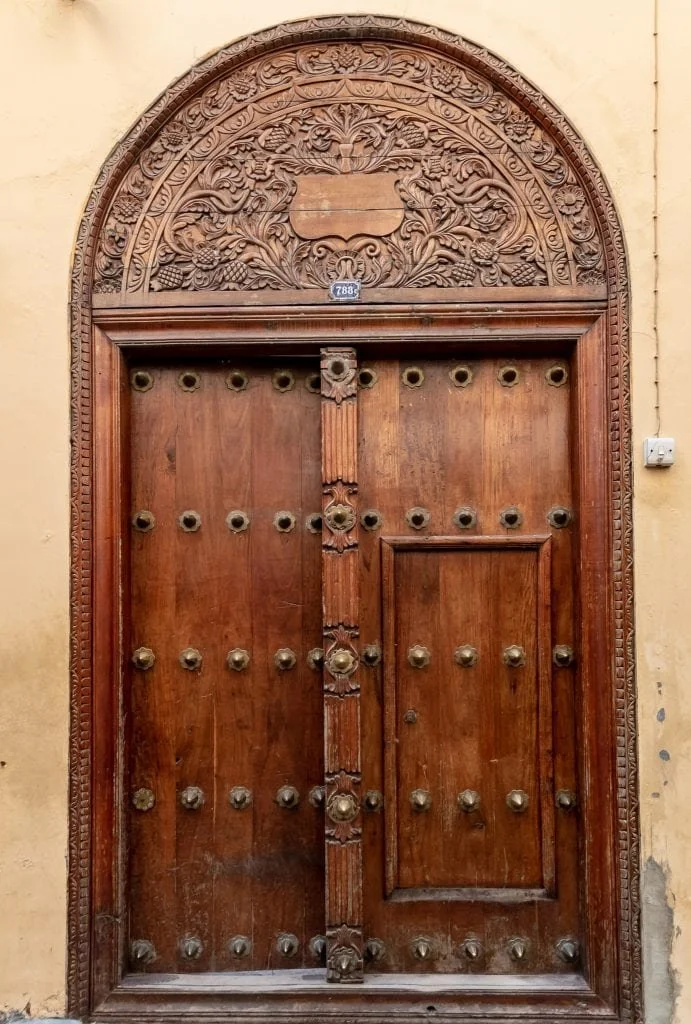
Stone Town's carved wooden doors — each one a statement of wealth, status, and artistry, studded with brass bosses in the Indian tradition or carved in the Omani style, none of them alike
Stone Town
Zanzibar City's ancient core — Stone Town — is one of the Indian Ocean's most remarkable urban environments. A UNESCO World Heritage Site, it is a living, breathing medina of narrow coral-stone streets, ornate mosques, 19th-century palaces, carved wooden doors, and the layered history of Arab, Indian, African, and Portuguese cultures that traded, competed, and coexisted here for centuries. The island was the centre of the East African slave trade (the last legal slave market closed in 1873), and this history is honestly and movingly told at the Anglican Cathedral built on the site of the slave market.
Wandering Stone Town without a map is the correct approach — the town is small enough to be manageable and beautiful enough to reward every wrong turn. The Darajani Market at dawn, the House of Wonders, the Old Fort, the Freddie Mercury Museum (Zanzibar is the birthplace of Queen's lead singer), and the Forodhani Gardens night food market on the seafront are the essential markers.
Beaches & Diving
Nungwi and Kendwa on the northern tip are the most developed beach areas — calm turquoise water, good restaurants, lively atmosphere. Paje and Jambiani on the east coast offer a different energy: windswept, quieter, excellent for kitesurfing. Mnemba Atoll, a private island just off the northeast coast, offers Zanzibar's finest diving — resident dolphins, hawksbill turtles, whale sharks (October–February), and pristine coral gardens. One Ocean and East Africa Diving are the respected operators for dive trips from the main island.
Food — The Spice Island
Zanzibar's food is its most immediate pleasure. The Forodhani Gardens night market in Stone Town is the essential start: dozens of stalls serving Zanzibar pizza, seafood skewers, sugar cane juice, and fresh lobster grilled on open charcoal for extraordinary prices. The Rock Restaurant (built literally on a rock in the ocean, accessible by boat at high tide) is Zanzibar's most photographed dining experience. Emerson Spice rooftop in Stone Town serves the finest Swahili cuisine on the island at sunset. A spice tour in the central island farms — clove, cardamom, vanilla, black pepper, turmeric — concludes with a lunch cooked entirely from what you have just harvested.
Experience Snapshot
The Safari Gateway — More Than a Stopover
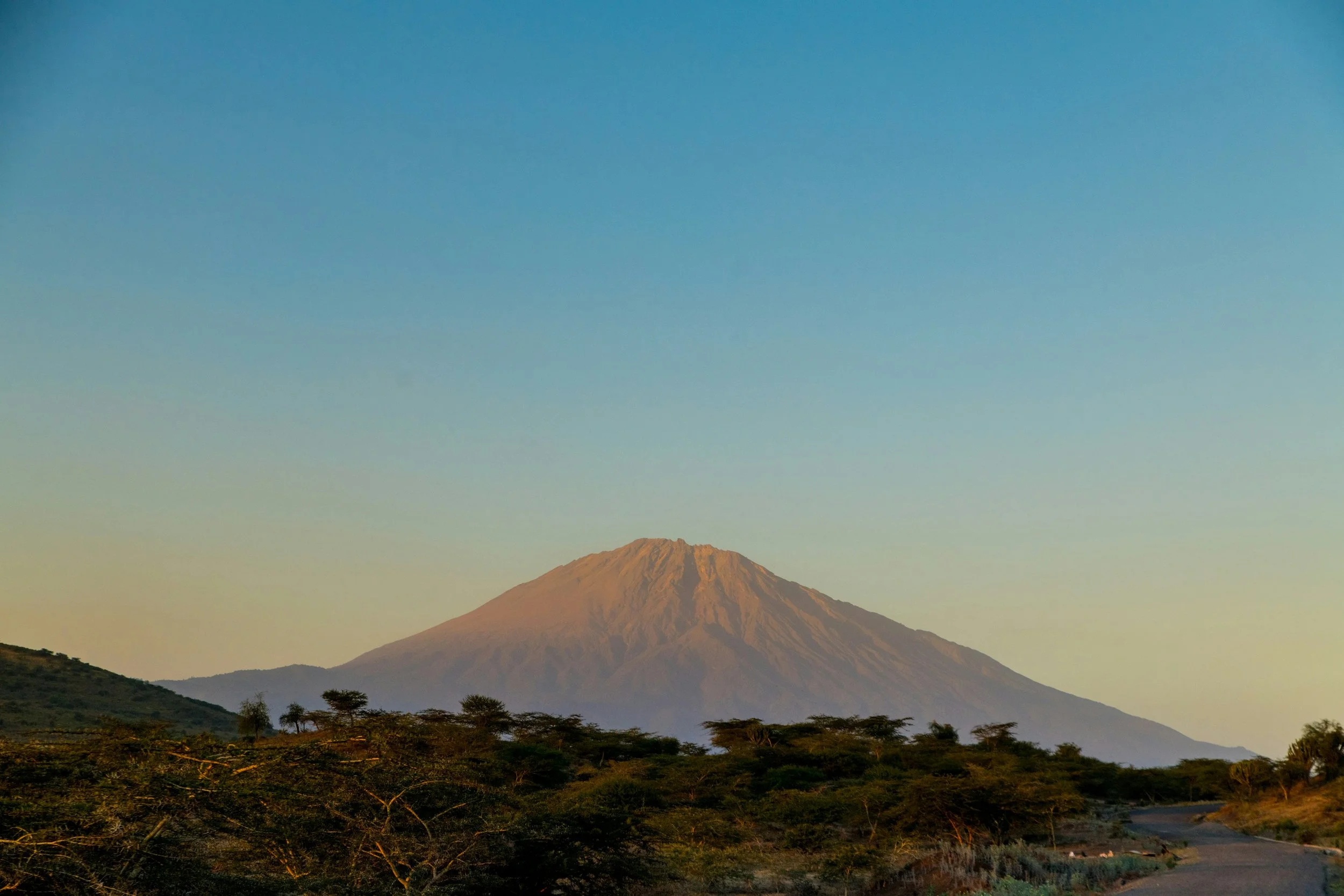
Mount Meru rising above Arusha at dawn — Tanzania's second-highest peak and one of Africa's finest and least-crowded mountain treks, often overlooked by visitors heading straight to Kilimanjaro
Culture & Vibes
Arusha sits at the geographical heart of Africa — a plaque in the city centre marks the midpoint between Cairo and Cape Town. It is a genuinely cosmopolitan East African city, home to the East African Community headquarters and the ICTR (International Criminal Tribunal for Rwanda), with a population that mixes Tanzanian, Kenyan, Indian, and international communities. The Maasai Market on specific days of the week is one of East Africa's best craft and textile markets. The Cultural Heritage Centre is an extraordinary repository of African art, jewellery, and Maasai beadwork — commercial but genuinely impressive in scale and quality.
The coffee culture around Arusha is worth noting — the slopes of Mount Meru produce excellent Arabica beans, and several farms offer coffee tours. Shanga, a social enterprise workshop producing jewellery and crafts from recycled materials, employs people with disabilities and is one of the most inspiring stops in the region.
Experience Snapshot
Gateway to the Roof of Africa — Kilimanjaro, Coffee & Chagga Culture
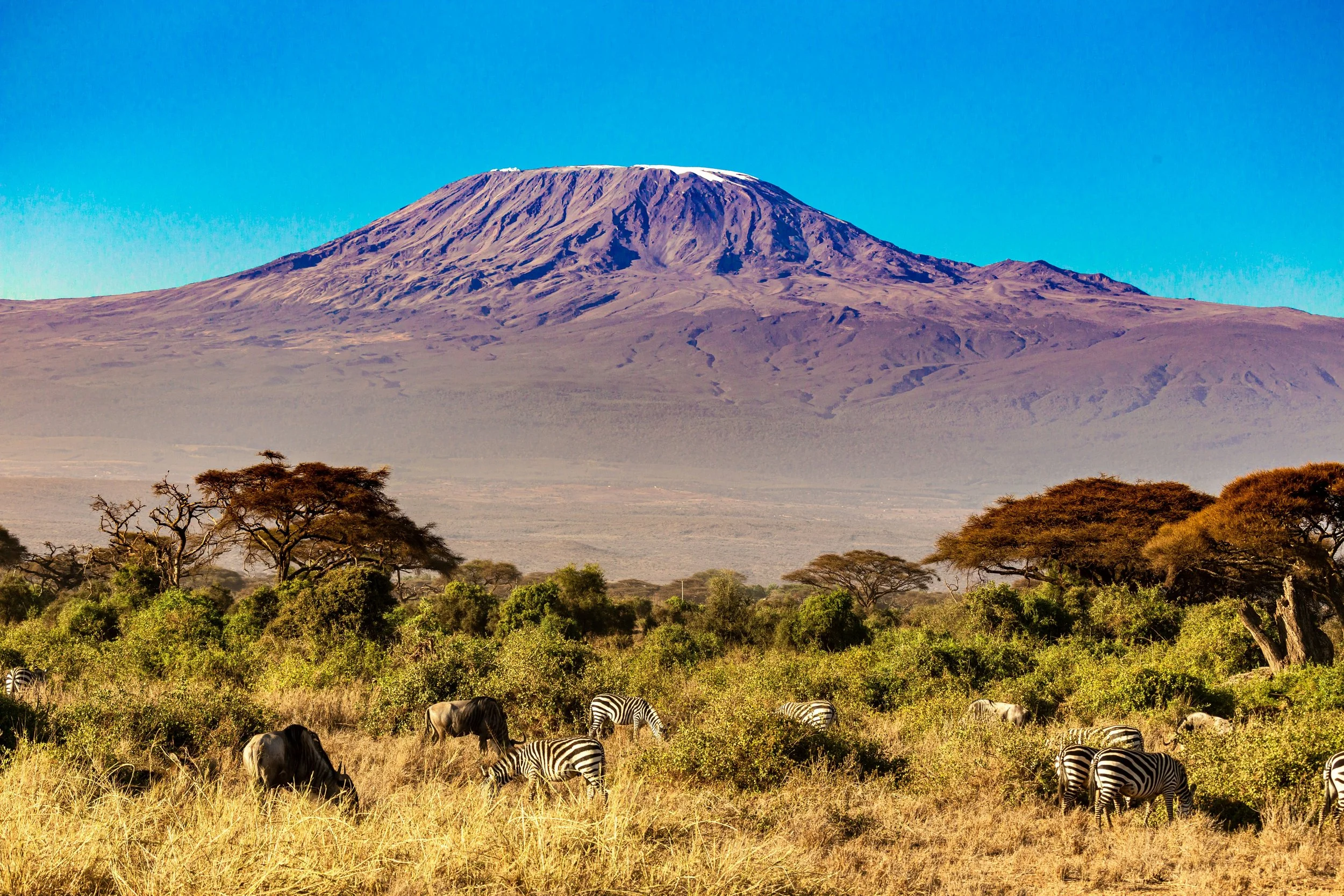
Kilimanjaro at dawn above the Moshi foothills: at 5,895m, Africa's highest peak is also the world's highest free-standing mountain — and one of the most accessible high-altitude climbs on earth
Kilimanjaro — Planning the Climb
Climbing Kilimanjaro: What You Need to Know
Routes: There are seven official routes. The Machame Route ("Whiskey Route") is the most popular for good reason — scenic, varied, and with good acclimatisation profiles over 6–7 days. The Lemosho Route (7–8 days) is longer, quieter, and offers the best acclimatisation — the preferred choice for those prioritising summit success. The Marangu Route ("Coca-Cola Route") is the only route with hut accommodation (all others use tents) and the most affordable, but its 5-day itinerary has poor acclimatisation and a lower summit success rate.
Success rates and acclimatisation: The overall summit success rate on Kilimanjaro is approximately 65%. The primary cause of failure and early descent is acute mountain sickness (AMS). Choosing a longer route (7–8 days), ascending slowly, and following the "pole pole" (slowly slowly) principle dramatically improves your chances. Diamox (acetazolamide) for altitude sickness prevention should be discussed with your doctor before departure.
Operators: All climbs must be done with a licensed operator and guides — independent climbing is not permitted. Reputable operators include Zara Tours (large, reliable, good guides), Altezza Travel (premium, excellent safety record), Kilimanjaro Experts, and African Walking Company. Always verify KPAP (Kilimanjaro Porters Assistance Project) affiliation — this ensures your porters are paid fairly and treated ethically.
Best seasons: January–March and June–October are the clearest months. December and March see some snow on the summit. The long rains (April–May) and short rains (November) bring cloud and wet conditions — possible but less pleasant. July–September is peak season with the most climbers on the mountain.
Park fees: KINAPA (Kilimanjaro National Park Authority) fees are compulsory and substantial — approximately $700–$900 per person for a 7-day climb, inclusive of all gate, camping, rescue, and conservation fees. These are typically included in operator packages — confirm before booking.
Moshi Town & Surroundings
Moshi itself is a pleasant, unhurried market town — the central market is lively and colourful, the coffee shops around the clock tower serve excellent locally grown Arabica, and the views of Kilimanjaro on a clear morning from any elevated point in town are breathtaking. The surrounding Chagga villages on the mountain slopes offer excellent cultural walks — local guides take you through banana groves, coffee shambas, and traditional homesteads, explaining the Chagga's remarkable history of mountain agriculture and their sophisticated pre-colonial irrigation systems.
Experience Snapshot
Tanzania's Beating Heart — Swahili Coast Energy & Indian Ocean Light

Dar es Salaam's harbour at dusk — the city whose Swahili name means "haven of peace" is anything but sleepy: a fast-growing commercial capital of 6 million people on the edge of the Indian Ocean
Culture & Vibes
Dar es Salaam — "Haven of Peace" in Arabic — is a city of contrasts: colonial-era buildings beside glass towers, fishing dhows beside container ships, street food vendors beside rooftop restaurants. The city moves fast and breathes heat. Its neighbourhoods each have a distinct character: Kariakoo is the vast, labyrinthine market district; Msasani Peninsula is the upscale expatriate and diplomatic quarter with good restaurants and beach clubs; Oyster Bay and Masaki are where the city's finest restaurants and bars are concentrated.
The National Museum of Tanzania houses some of the world's most important palaeontological findings — including the fossil footprints of Australopithecus from Laetoli and specimens from Olduvai Gorge. The Village Museum (10 minutes from the centre) presents authentic traditional homesteads from across Tanzania's 120+ ethnic groups in an open-air setting — one of East Africa's best ethnographic museums.
Experience Snapshot
The Lake City — Africa's Inland Sea & the Western Safari Circuit
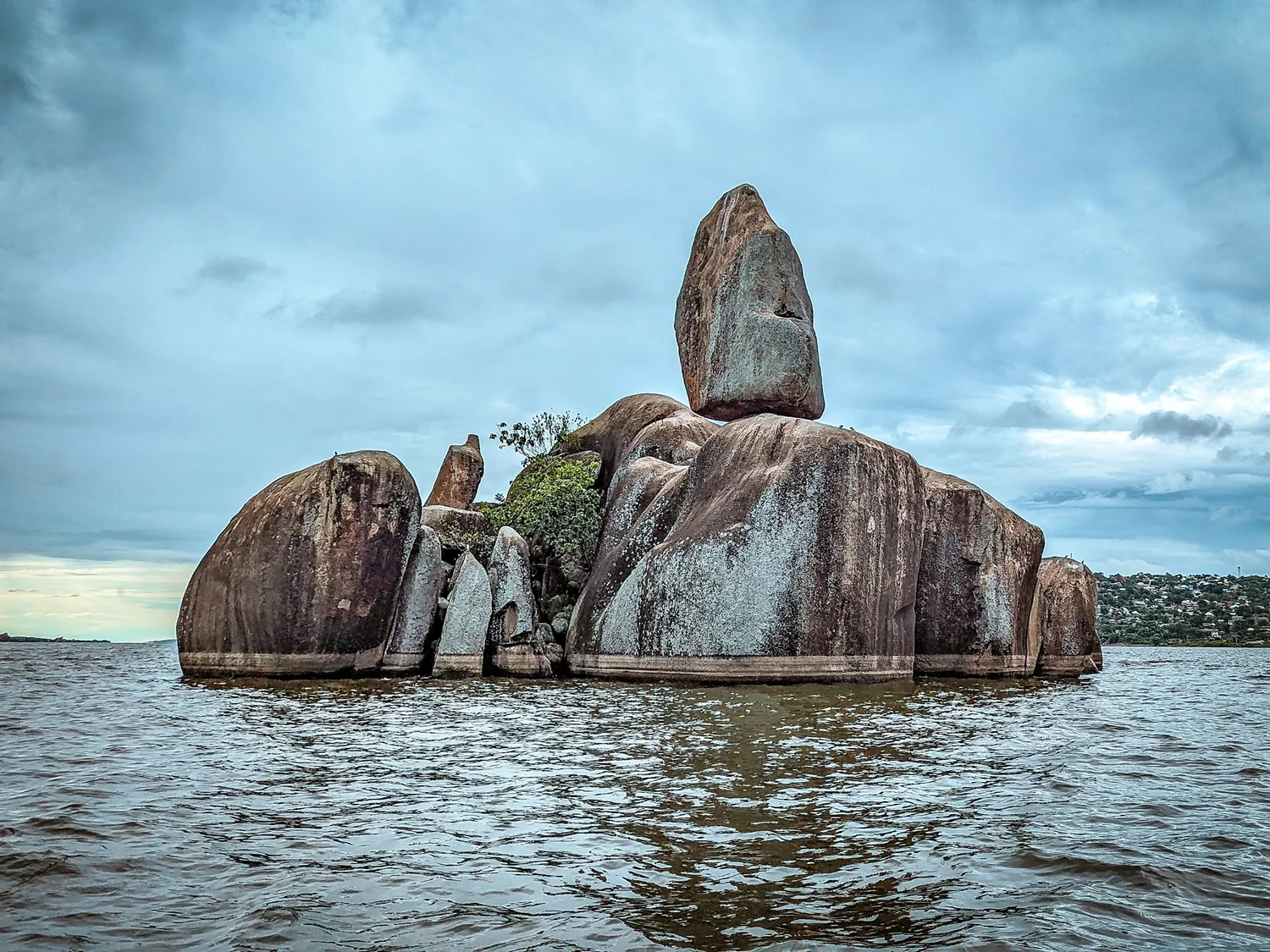
Bismarck Rock, Mwanza: a cluster of granite boulders balanced impossibly above Lake Victoria — the world's second-largest freshwater lake and the source of the Nile
Lake Victoria & Surroundings
Lake Victoria — shared between Tanzania, Uganda, and Kenya — is the world's second-largest freshwater lake by surface area and the source of the Nile. Mwanza sits on its southern shore, a chaotic, colourful fishing city of granite kopjes, lake ferries, and a fish market that processes Nile perch and tilapia from the world's most productive freshwater fishery. The lake itself is beautiful — rocky islands rising from still water, fish eagles calling, dhow-like wooden fishing boats moving across the horizon at dusk.
Rubondo Island National Park — accessible by charter flight from Mwanza — is one of Tanzania's hidden treasures. The island shelters a chimpanzee population introduced in the 1960s (one of Africa's few habituated chimp groups outside Uganda and Rwanda), alongside elephant, sitatunga antelope, and extraordinary birdlife. The combination of chimpanzee trekking and fishing on Lake Victoria's shores makes Rubondo a unique and largely undiscovered destination.
Experience Snapshot
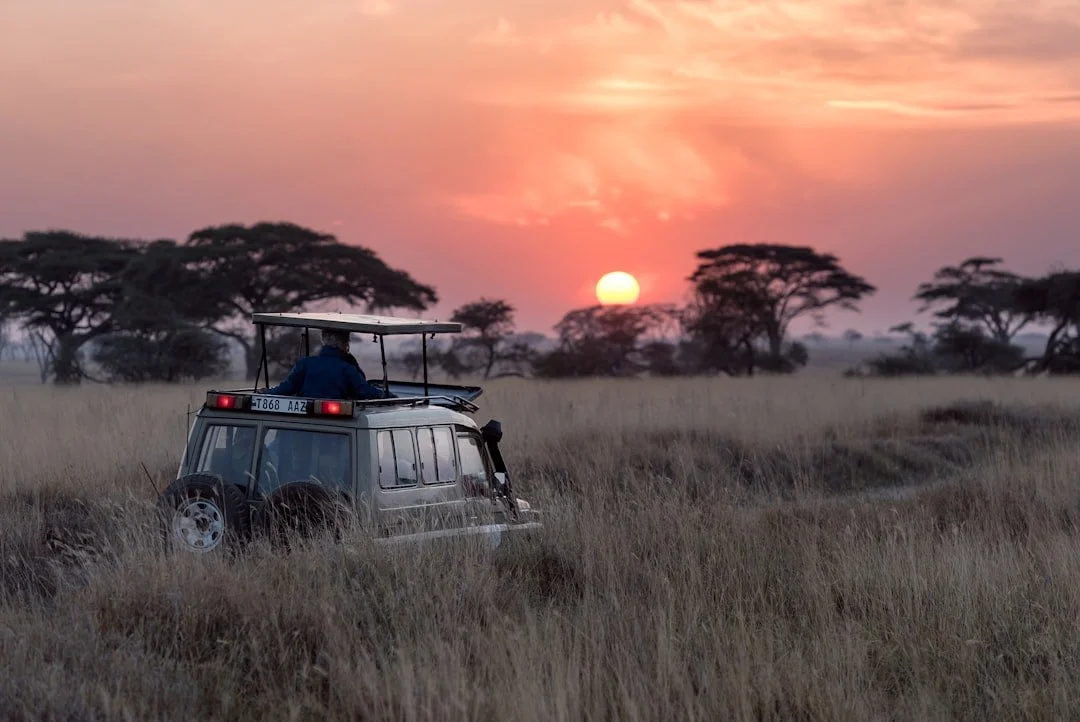
Tanzania rewards those who plan carefully and arrive unhurried — the distances are vast, the experiences are profound, and every extra day is always worth it
Getting There & Around
International flights: Julius Nyerere International Airport (Dar es Salaam) and Kilimanjaro International Airport (near Arusha and Moshi) are the main entry points. Connections from London, Amsterdam, Dubai, Doha, Nairobi, and Johannesburg are well-served. Kenya Airways, Ethiopian Airlines, KLM, Qatar, and Emirates all fly regularly. There are no direct flights from North America — connections through Europe or the Gulf are standard.
Domestic flights: Tanzania's domestic aviation network is excellent — Precision Air, Air Tanzania, Coastal Aviation, and Auric Air connect all major safari destinations. Charter flights (6–12 seater Cessnas) are the norm for remote camps. The Zanzibar ferry departs from Dar es Salaam multiple times daily (Azam Marine — 2 hours fast ferry, book ahead in high season).
Visas & Entry
Most nationalities require a visa for Tanzania — available as an e-visa online before departure (strongly recommended) or on arrival at major entry points. Cost is approximately $50 USD. Yellow fever vaccination is required if arriving from a yellow fever endemic country. East Africa Tourist Visa (also covers Kenya and Uganda, $100) is excellent value for multi-country itineraries.
Health
Malaria: Tanzania is a malaria zone throughout — begin prophylaxis before departure, use DEET repellent, and sleep under nets. Consult your doctor at least 6 weeks before travel. Water: Bottled water only on the mainland. In high-end safari camps, filtered water is provided. Altitude: If climbing Kilimanjaro or visiting the Ngorongoro Crater highlands, acclimatisation is essential — plan your itinerary to ascend gradually.
Money & Currency
The currency is the Tanzanian Shilling (TZS). USD is widely accepted in tourist areas, safari camps, and hotels — bring clean, post-2009 bills as older or worn notes are frequently refused. ATMs are available in Dar es Salaam, Arusha, and Zanzibar. Cash is essential in rural areas and national parks. Tipping is expected and important — $10–20 USD per day for safari guides, $5–10 per day for camp staff, 10–15% in restaurants.
A Note on Responsible Tourism
Tanzania's wildlife and wild places are under constant pressure from habitat loss, poaching, and climate change. Choosing operators with genuine conservation commitments — those who contribute directly to park funds, employ local guides, and participate in anti-poaching initiatives — makes a tangible difference. Ask your operator about their conservation partnerships before booking. The camps and lodges listed in this guide have been selected with this in mind.
Tanzania is not a country you visit.
It is a country that visits you — in the roar of a lion at 4am,
in the smell of cloves on a Zanzibar breeze, in the silence of a summit at 5,895 metres,
in the migration crossing that you will spend the rest of your life trying to describe.