
Travel Guide
Seychelles
Mahé | Praslin | La Digue
The Outer & Private Islands
Beaches · Islands · Creole Charm · Where to Stay, Eat & Explore
Welcome to Seychelles
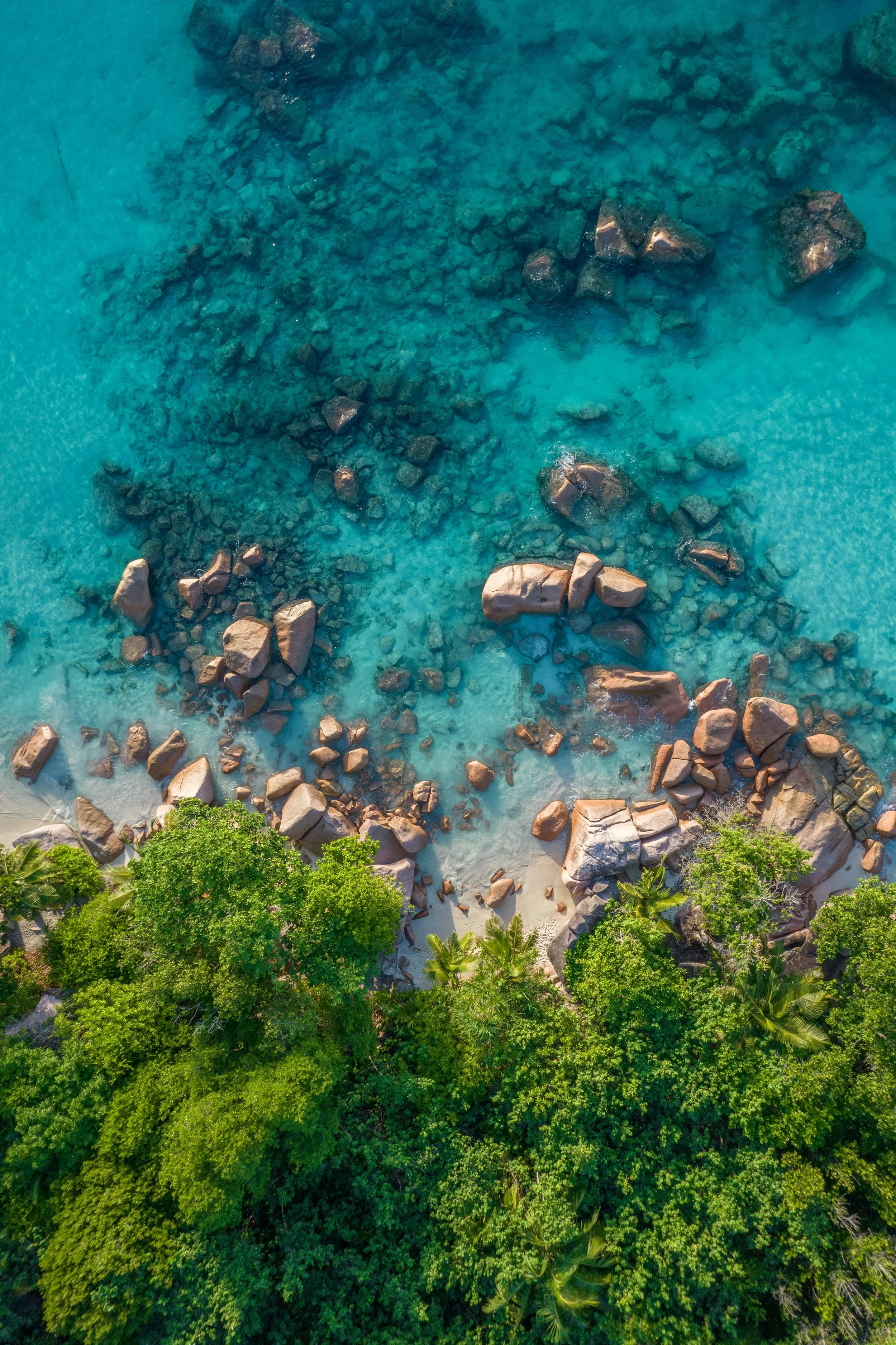
The Seychelles may have the most beautiful beaches on earth. Sculpted pink-granite boulders frame powder-white sand and impossibly clear water across 115 islands scattered over the western Indian Ocean. Nearly half of the country's land is protected, and its islands shelter giant tortoises, rare birds and the extraordinary coco de mer palm, found nowhere else in the world.
This guide covers four distinct experiences: Mahé, the mountainous main island; Praslin, home of the UNESCO-listed Vallée de Mai; La Digue, the car-free island of bicycles and granite coves; and the remote outer and private islands, some of the most exclusive hideaways on the planet. Island-hopping between them is part of the magic.
Best Time to Visit
- April – May and October – November: The calm transition months between the trade winds — often the clearest water and the best conditions for snorkelling and diving.
- May – September (Southeast Trades): Cooler, drier and breezier. Southeast-facing beaches can be rough; northwest coasts are calmer.
- December – March (Northwest Trades): Hotter and more humid, with occasional heavy showers. Northwest-facing beaches can be choppier; southeast coasts are calmer.
- Year-round: Warm water (around 27–30°C) and sunshine make the Seychelles a year-round destination.
- Your advisor will choose your beaches and hotels based on the season's wind direction — it makes a real difference.
- Whale sharks are often seen off Mahé from about August to October, and hawksbill turtles nest on many beaches from around September to March.
- Bird Island hosts huge colonies of sooty terns from roughly April to October.
- Pack reef-safe sunscreen, a rash guard, water shoes and a light rain jacket.
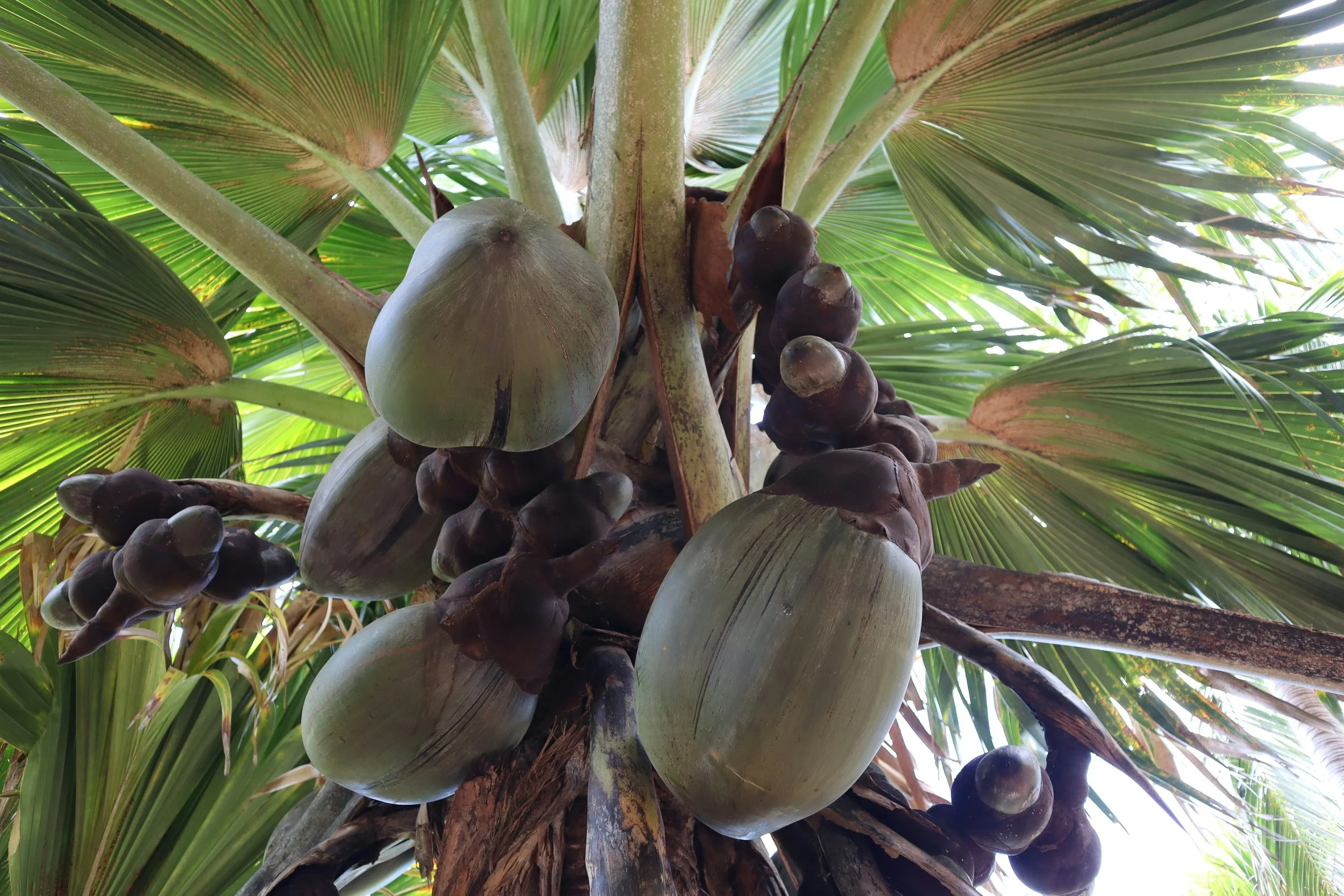
The coco de mer — the world's largest and heaviest seed — grows naturally only on Praslin and Curieuse
Culture & Character
Seychellois Creole culture blends African, French, British, Indian and Chinese roots, shaped by centuries of settlement on islands that had no native population. Kreol, English and French are all official languages. Life is relaxed, friendly and deeply connected to the sea, with music and dance such as moutya — recognised by UNESCO — at its heart.
The Seychelles is a world leader in conservation: nearly half its land area is protected, and two UNESCO World Heritage Sites — the Vallée de Mai on Praslin and the Aldabra Atoll — protect unique ecosystems. Exporting coco de mer nuts requires an official permit, so buy only certified ones.
Food & Drink — What to Know
Seychellois Creole cooking celebrates the ocean and the island's spices. Look for fish curry and octopus curry in coconut milk, grilled red snapper and jobfish, ladob (plantain or breadfruit cooked in sweet coconut milk), shark chutney (a traditional specialty), and breadfruit chips. Fresh tropical fruit — mango, papaya, star fruit and passion fruit — is everywhere. Drink SeyBrew lager, fresh coconut water, and rum from the Takamaka distillery on Mahé.
The Main Island — Mountains, Markets & the Tiny Capital of Victoria
Mahé's granite peaks rise to more than 900 metres, covered in lush tropical forest
Culture & Vibes
Mahé is home to the international airport and to Victoria, one of the world's smallest capitals. Wander the colourful Sir Selwyn Selwyn-Clarke Market, see the little silver clock tower (a replica of one in London), and visit the vibrant Hindu temple. Then head into Morne Seychellois National Park, where trails like Copolia and Morne Blanc reward with breathtaking views.
Snorkel or take a glass-bottom boat in Sainte Anne Marine Park, tour the Takamaka Rum Distillery, and visit the Jardin du Roi spice garden. For beaches, lively Beau Vallon faces the sunset, while Anse Intendance and Anse Takamaka in the south are wild and beautiful.
Food
Must Try: A Creole set menu at Marie-Antoinette, fresh fish at the Victoria market, and street food at the Beau Vallon Bazaar Labrin on Wednesday evenings.
Experience Snapshot
Home of the Coco de Mer — Ancient Forest & World-Famous Beaches
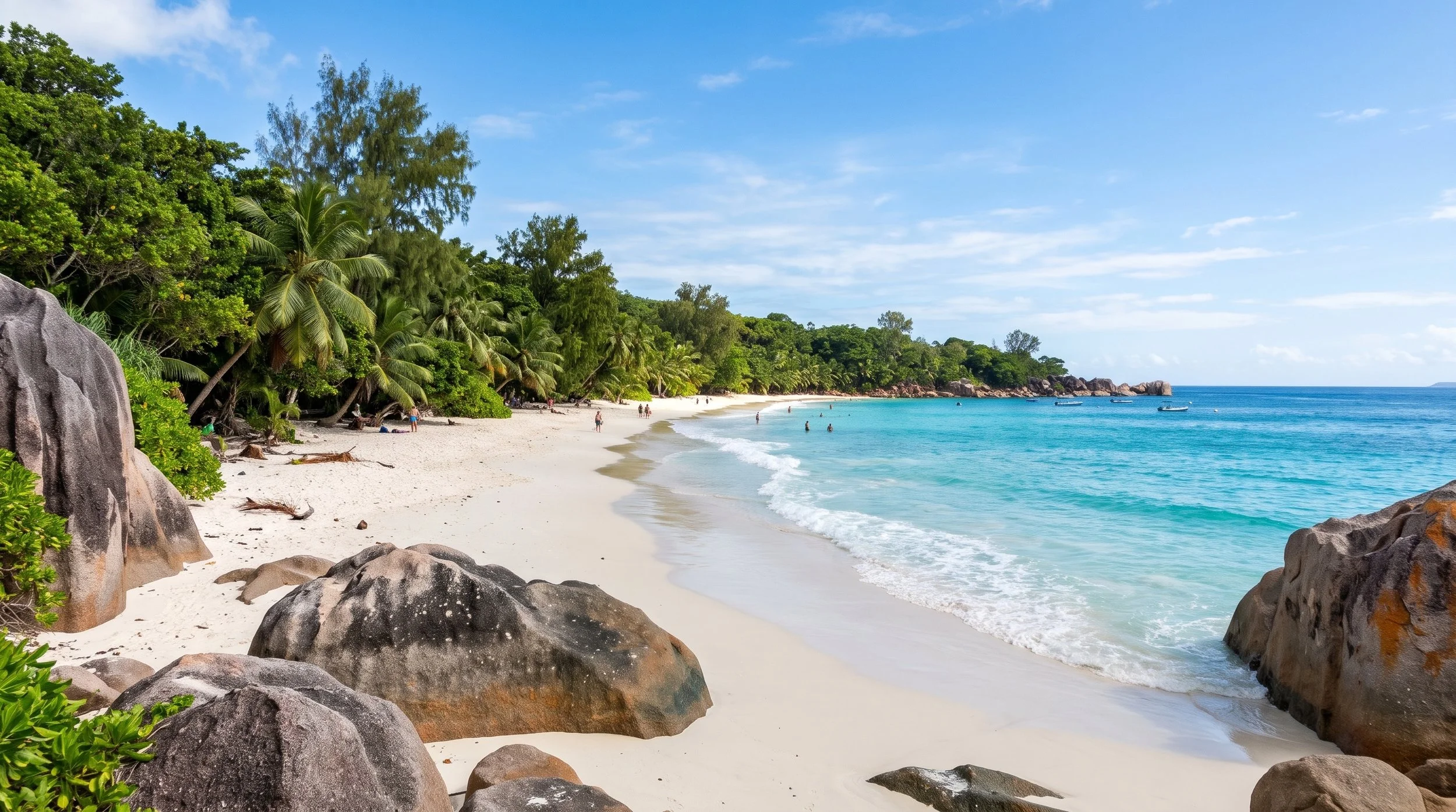
Anse Lazio — regularly ranked among the most beautiful beaches in the world
Culture & Vibes
The Vallée de Mai, a UNESCO World Heritage Site, is a primeval palm forest that feels unchanged since prehistoric times. It is home to the famous coco de mer, whose giant seeds can weigh more than 15 kilograms, and the rare Seychelles black parrot. Nearby, Fond Ferdinand nature reserve offers guided walks with sweeping views.
Praslin's beaches are legendary: Anse Lazio in the north and the secluded Anse Georgette. Take a boat to Curieuse Island to meet giant Aldabra tortoises and walk its mangrove boardwalk, snorkel at St Pierre islet, and visit Cousin Island, a special reserve for nesting seabirds.
Food
Beachside Creole lunches at Anse Lazio, seafood by the water, and relaxed dining in the Côte d'Or area.
Experience Snapshot
Island Life by Bicycle — Granite Coves & Anse Source d'Argent
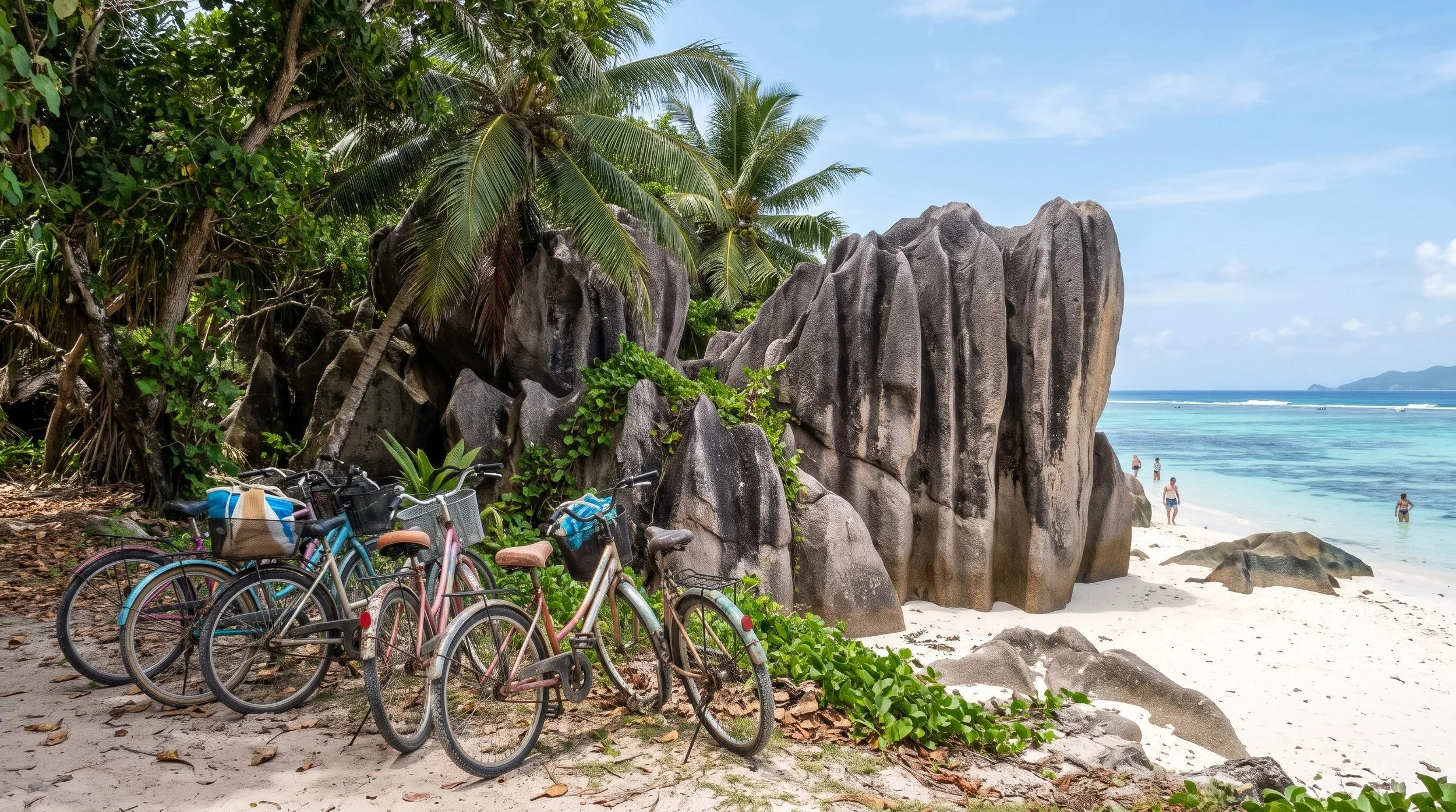
On La Digue, bicycles and ox-carts are the main way to get around — and the beaches are worth every pedal
Culture & Vibes
La Digue moves at the pace of a bicycle. Pedal through L'Union Estate — an old copra and vanilla plantation with giant tortoises — to Anse Source d'Argent, whose sculpted granite boulders and shallow turquoise water make it one of the most photographed beaches on earth. On the east coast, Grand Anse, Petite Anse and Anse Cocos are wild and beautiful (swim carefully, as currents can be strong).
Look for the rare Seychelles paradise flycatcher in the Veuve Nature Reserve, snorkel at Anse Patates, and hike to Nid d'Aigle, the island's highest point. La Digue is an easy day trip from Praslin, but staying a night or two lets you enjoy the beaches before and after the day visitors.
Food
Takeaway Creole curries eaten on the beach, fresh fruit and juices from roadside stands, and grilled fish at the Fish Trap Restaurant near the jetty.
Experience Snapshot
Barefoot Exclusivity — Private Islands, Coral Atolls & True Remoteness
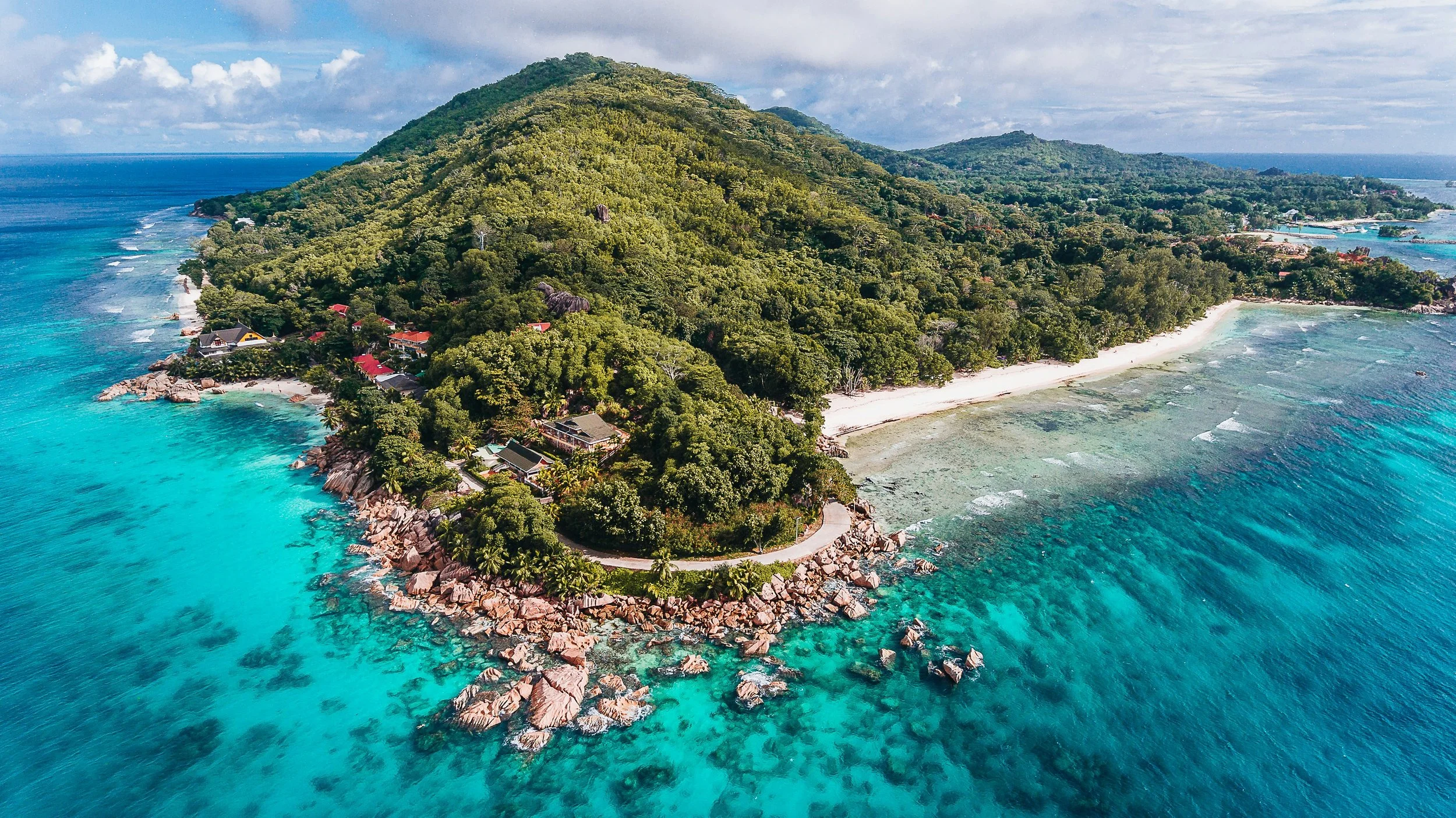
The Seychelles' outer islands — coral atolls and private islands far from anywhere
Culture & Vibes
Beyond the main islands, the Seychelles offers a handful of private-island resorts, each the only property on its island. North Island, Fregate Island Private and Félicité (home to Six Senses Zil Pasyon) are granite islands near Mahé and Praslin, reached by helicopter or boat. Farther out, coral islands such as Desroches and Denis offer endless beaches, turtles and superb diving and fishing.
Many of these islands run serious conservation programmes — restoring native forest, protecting nesting turtles and reintroducing endangered birds. Far to the southwest, Aldabra Atoll, a UNESCO World Heritage Site, is home to around 100,000 giant tortoises; access is very limited and usually by expedition cruise.
Food
Private-island dining is tailored to you — island-grown produce, freshly caught fish, and dinners on the beach by candlelight.
Experience Snapshot
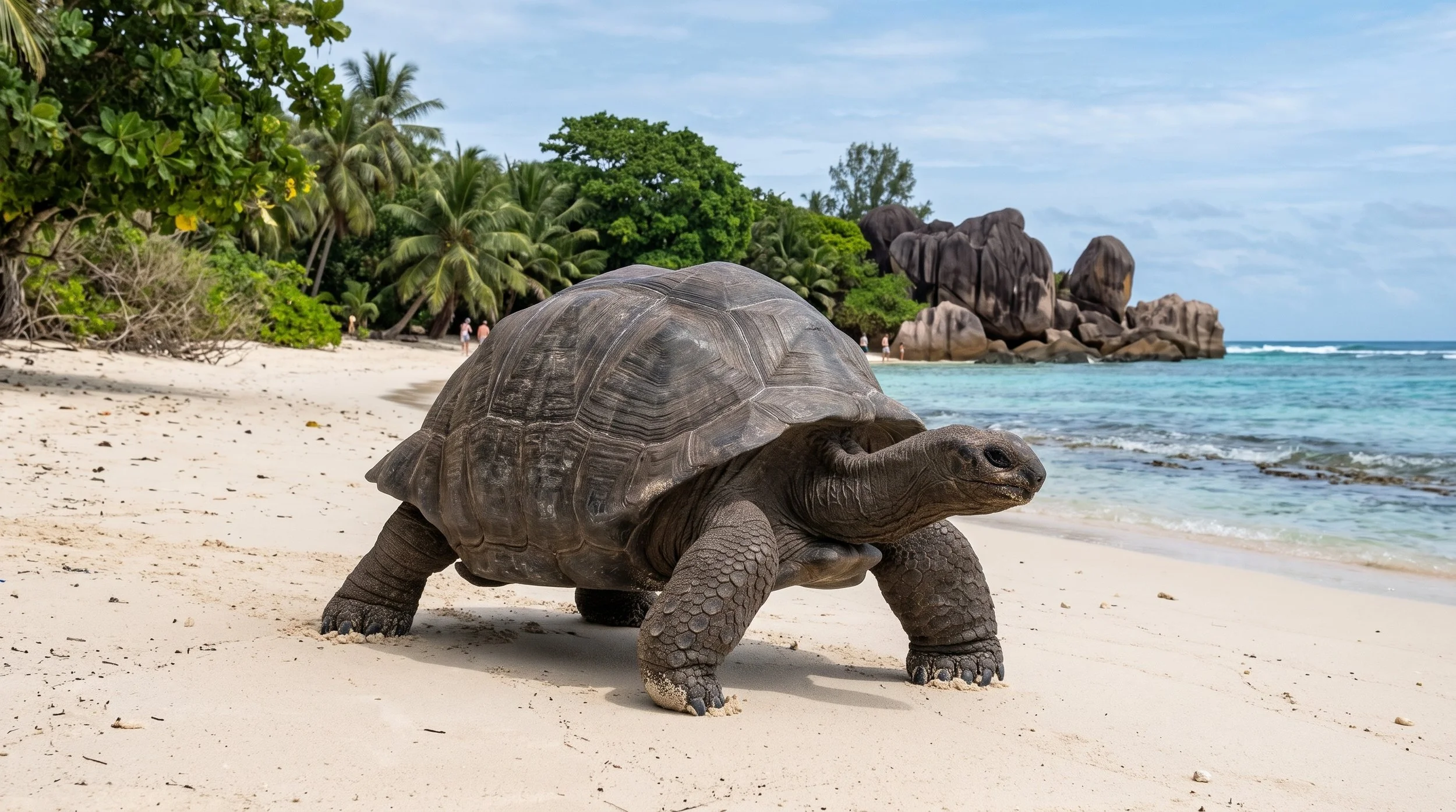
Giant Aldabra tortoises — some more than 100 years old — wander many of the Seychelles' islands
Getting There & Around
Flights: There are no nonstop flights from the US. Connect via Dubai, Doha, Abu Dhabi, Addis Ababa or Istanbul to Seychelles International Airport on Mahé. Nairobi is about three hours away, making a safari combination easy. Island-hopping: Cat Cocos fast ferries link Mahé and Praslin (about an hour), Air Seychelles flies in about 15 minutes, and La Digue is a 15-minute ferry from Praslin. Helicopters serve the private islands.
Visas & Entry
US citizens do not need a visa, but must apply online for a Travel Authorisation before flying (a small fee applies). Carry a return ticket, accommodation details and proof of sufficient funds. Confirm current requirements before travel.
Health & Safety
Malaria: There is no malaria risk, though mosquito-borne dengue occurs — use repellent. Swimming: Some beaches have strong currents in certain seasons — always check conditions and swim where it is calm. Safety: The Seychelles is very safe and friendly.
Money & Currency
The currency is the Seychelles Rupee (SCR). Cards, euros and US dollars are accepted at many hotels. A small per-night environmental levy is charged at hotels. The Seychelles is a premium destination — guesthouses and self-catering villas offer good-value alternatives to resorts.
Culture & Etiquette
Dress modestly in Victoria and villages. Do not collect shells or coral, and buy only certified coco de mer nuts with an export permit. Respect nesting turtles and keep your distance on the beach at night.
Suggested Itinerary Combinations
7 days: Mahé (2 nights) + Praslin (3) + La Digue (2). 10 days: Mahé (3) + Praslin (4) + La Digue (3). Milestone escape: Mahé (2) + a private island (4–5). Safari + beach: Kenya or Tanzania safari (4–5 nights) followed by Praslin and La Digue (5). Schedule a call and I will build a custom itinerary around your travel style and timeline.
The Seychelles is where every cove looks like it was painted just for you.
Giant tortoises in the shade, granite glowing at sunset,
water so clear you will forget you are swimming.
Paradise is not a cliché here. It is simply the view.