
Travel Guide
Philippines
Manila | El Nido | Palawan | Boracay
Lagoons · Limestone · Island Life · Four Very Different Sides of the Same Archipelago

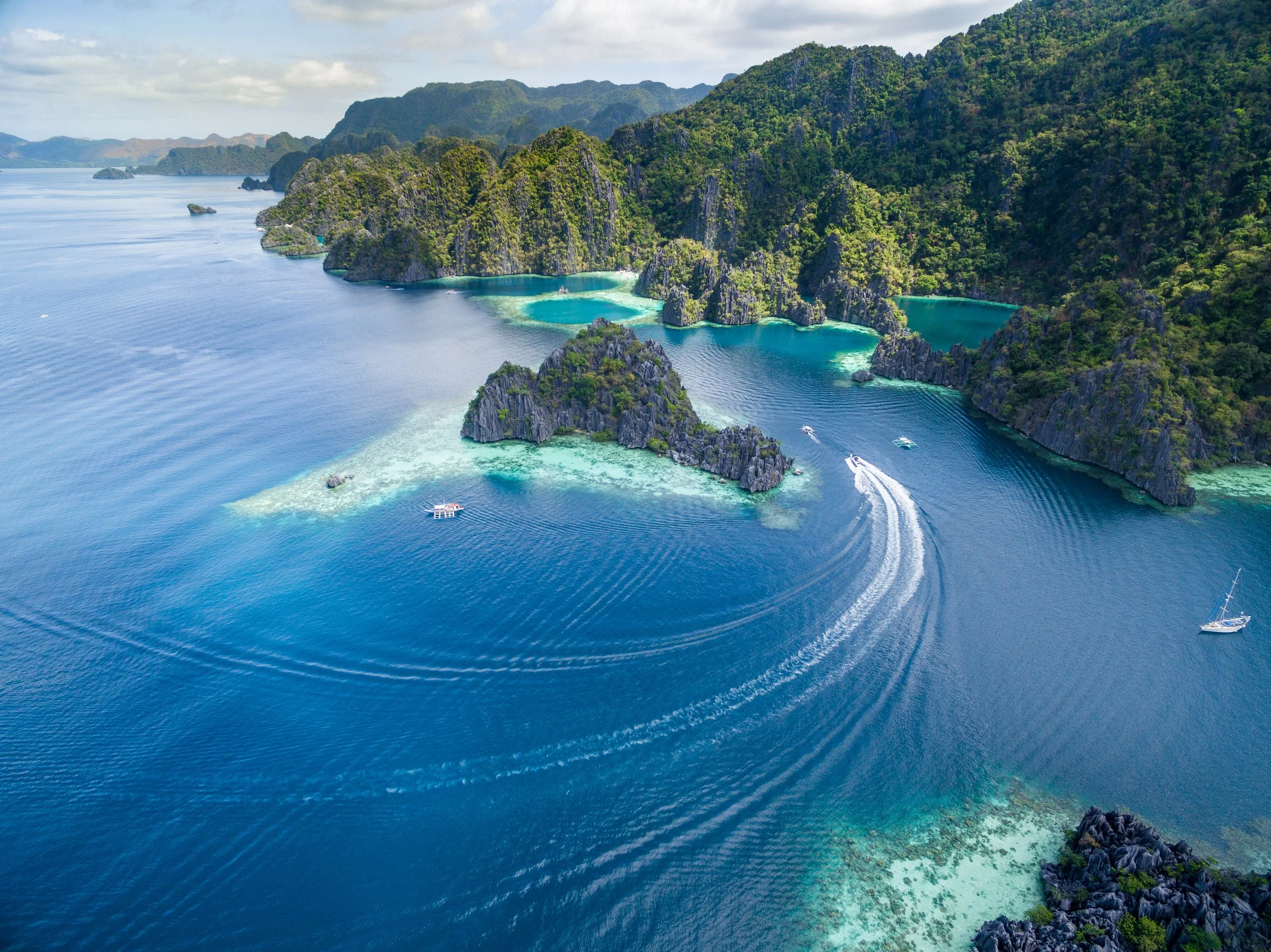
Welcome to the Philippines — One Country, Four Completely Different Trips
The Philippines is an archipelago of more than 7,000 islands, and no single itinerary can claim to capture it — which is exactly the point. This guide covers four destinations that, taken together, show just how much range the country has: the dense, contrast-rich capital of Manila; the limestone lagoons of El Nido; the rainforest and underground river system of Puerto Princesa, Palawan's provincial capital; and the four-kilometer stretch of White Beach on Boracay, split into three stations with three distinct personalities.
These aren't stops on the way to somewhere else. Each one rewards a proper visit on its own terms — a few days minimum, ideally more — and the transitions between them (city to lagoon, rainforest to nightlife beach) are part of what makes a Philippines itinerary so satisfying to build.
Best Time to Visit
- December – February: The best window nationwide. Cooler, drier, and the calmest seas for island hopping in El Nido and Boracay — also the busiest and most expensive stretch, so book accommodations early.
- March – May: Still dry, but noticeably hotter — expect low-to-mid 30s°C (90s°F) and high humidity, especially in Manila. Beaches and diving remain excellent; this is peak local summer travel too.
- June – October: The southwest monsoon and the height of typhoon season, concentrated July–September. Palawan and the western islands are somewhat sheltered compared to the eastern Philippines, but disruption is possible.
- November: A good shoulder month — the rains are tapering off and the dry season is just beginning, often with lighter crowds than December.
- El Nido and Boracay both see reduced boat activity and rougher seas during the June–October wet season — island-hopping tours can be cancelled with little notice.
- Domestic flights connect Manila to Puerto Princesa, El Nido's own small airport, and Boracay's gateway airports (Caticlan and Kalibo) — book these early during December–February peak season.
- Manila traffic is a genuine planning variable at any time of year — always build in more transfer time than Google Maps suggests, especially around EDSA and BGC.
- A flexible, buffer-day mindset serves any multi-island Philippines itinerary well — inter-island transfers are the part most likely to shift.
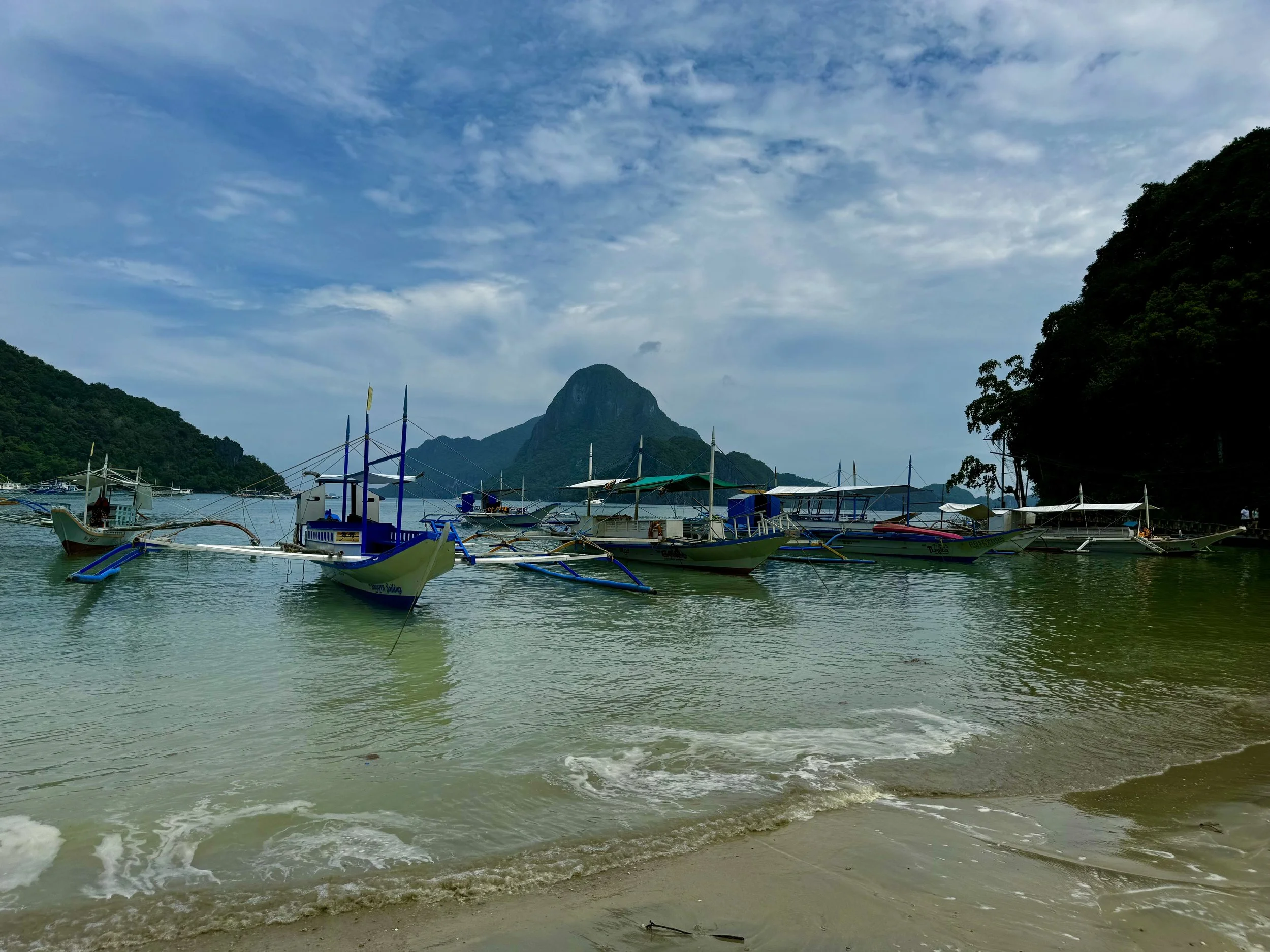
The banka — the traditional double-outrigger boat — is the vehicle of island hopping across the Philippines, from Bacuit Bay to Honda Bay to the open water off White Beach
Filipino Food — What to Know
Filipino cuisine doesn't get the international attention of its Southeast Asian neighbors, but it is distinctive, comforting, and shaped by centuries of Malay, Chinese, and Spanish influence. Must Try Everywhere: Adobo (meat braised in vinegar, soy, and garlic — arguably the national dish), sinigang (a sour tamarind-based soup, usually with pork or fish), lechon (whole roast pig, the centerpiece of any real celebration), halo-halo (shaved ice, evaporated milk, and a colorful mix of sweet toppings — the essential antidote to the heat), and fresh mango, which is simply better here than almost anywhere else in the world.
Regional differences matter: Manila's food scene spans everything from centuries-old Chinatown eateries to some of the most ambitious modern Filipino fine dining in Southeast Asia. Palawan leans heavily on fresh seafood and, in Puerto Princesa specifically, a genuinely adventurous local delicacy — tamilok, a mangrove woodworm eaten raw with vinegar, for the curious. Boracay's dining scene is built around beachfront grills, fresh-caught fish, and sunset cocktails more than culinary ambition — the setting is the main event.
Old Spanish Walls, New Money Skylines — The Gateway to the Philippines
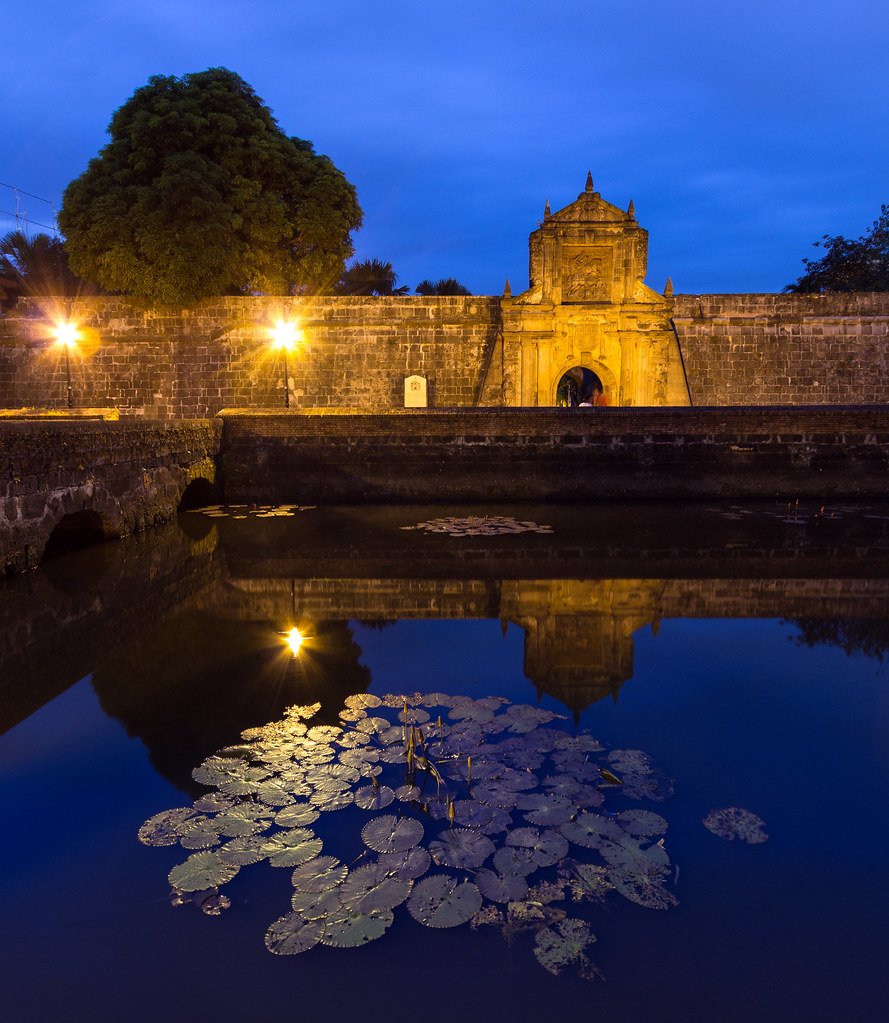
Fort Santiago at dusk: the 16th-century walls of Intramuros standing directly against the glass towers of a 21st-century skyline — Manila's central contrast, in one view
Neighborhoods & Culture
Intramuros, the old walled city, is Manila's essential historic core — cobblestone streets, Spanish colonial architecture, Fort Santiago (where national hero José Rizal spent his final days), and the UNESCO-listed San Agustin Church, the oldest stone church in the Philippines. It's genuinely walkable, and a kalesa (horse-drawn carriage) ride or bamboo-bike tour is a pleasant way to cover more ground. Binondo, right next door, is the world's oldest Chinatown — an excellent food-crawl neighborhood in its own right.
Bonifacio Global City (BGC) is the clean, walkable, thoroughly modern counterpoint — wide sidewalks, street art and murals on almost every block, Bonifacio High Street for shopping, and a strong contemporary café and dining scene. Makati, the traditional financial district, has its own upscale malls and museums by day and the Poblacion neighborhood's dense cluster of bars and speakeasies by night.
Food & Nightlife
Where to Eat: Toyo Eatery in Makati (widely regarded as one of the most ambitious modern Filipino kitchens in the country), a Binondo food crawl for dim sum, lumpia, and hopia, Poblacion's bar-and-restaurant strip for an evening out, and — unpretentiously — a plate of adobo, sinigang, or halo-halo from any well-reviewed local spot. Manila's specialty coffee scene (Poblacion, BGC, and beyond) has also grown into something worth seeking out for anyone who cares about a good pour-over.
Traffic Is a Planning Variable, Not a Detail
Metro Manila traffic is genuinely heavy at most hours, and it affects how much you can realistically fit into a day. Use Grab rather than hailing street taxis, build in real buffer time between activities — especially anything tied to a flight — and consider grouping activities by neighborhood (a day for Intramuros/Binondo, a separate day for BGC/Makati) rather than zig-zagging across the city.
Experience Snapshot
Limestone Cliffs & Turquoise Lagoons — The Face of Bacuit Bay
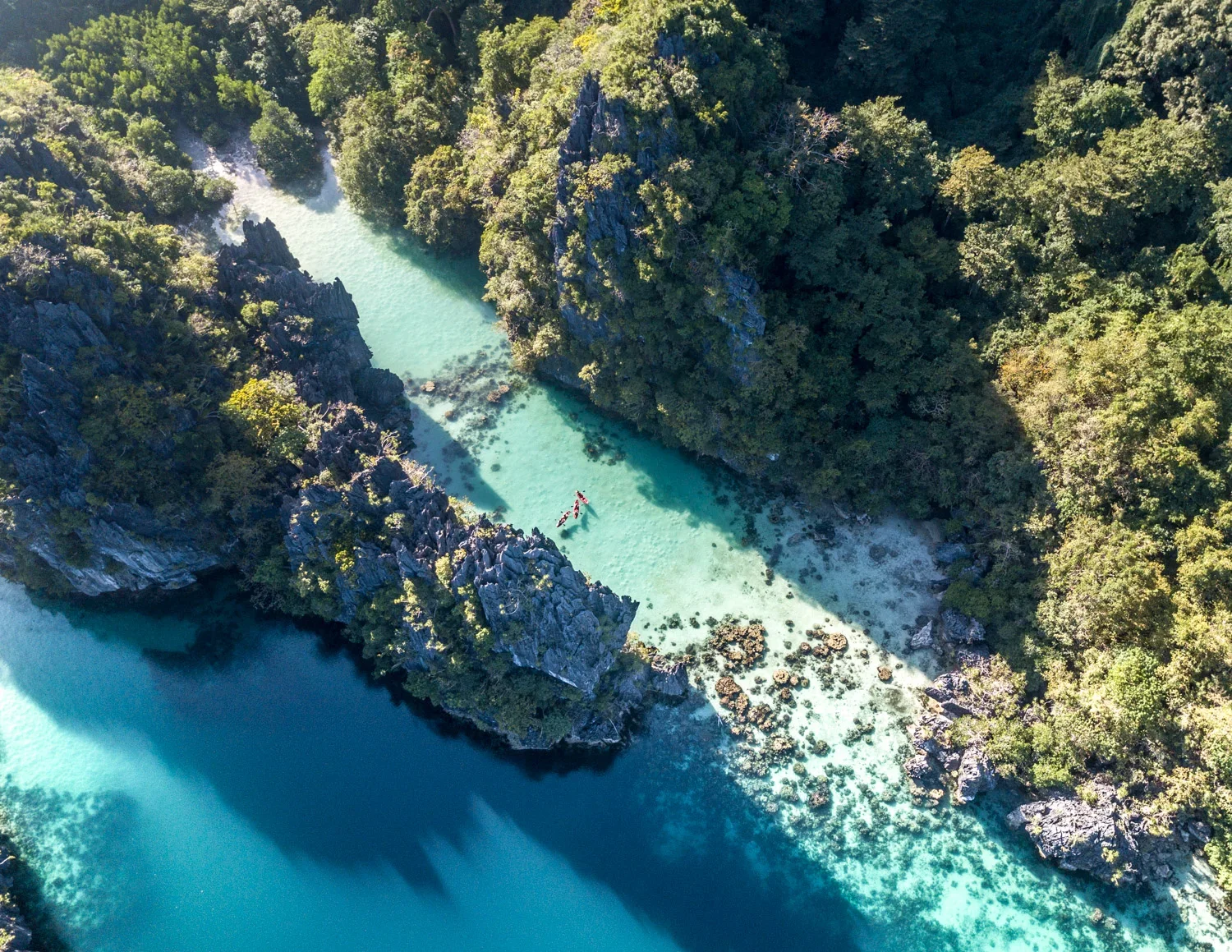
Big Lagoon, El Nido: turquoise water framed by towering limestone walls — the single image most people picture when they think of Palawan
The Bay & the Town
El Nido town itself is small, busy, and unpretentious — a walkable strip of guesthouses, dive shops, and restaurants that serves mainly as the launch point for the real attraction: Bacuit Bay, a scattering of limestone islands, hidden lagoons, and white-sand beaches just offshore. Travelers who want more quiet tend to base themselves in Corong-Corong, a short tricycle ride from town, or further out at Lio Tourism Estate and Nacpan Beach, both of which trade convenience for a noticeably calmer stay.
Island Hopping — Tours A, B, C & D
El Nido's boat excursions are organized into four standardized routes through Bacuit Bay, each covering different islands. Tour A is the most popular — the Big Lagoon, Secret Lagoon, Shimizu Island, and Seven Commandos Beach — and the one most people mean when they picture El Nido. Tour C is widely considered the most dramatic, with Secret Beach (reached by swimming through a narrow cliff opening), Helicopter Island, and Matinloc Shrine. Tour B (Snake Island, Cudugnon Cave, Pinagbuyutan Island) and Tour D (Cadlao Lagoon, Pasandigan and Nat-Nat beaches) are both less crowded and reward travelers with more time — most visitors who stay three or more nights do at least two of the four.
Food
El Nido's dining is built around fresh seafood — grilled catch-of-the-day at beachfront spots in town, kinilaw (a Filipino ceviche-style raw fish dish), and casual beach bonfire dinners arranged through most resorts. This is not a fine-dining destination, and that's more or less the point: the scenery is the main event, and the food is simple, fresh, and geared toward a day spent mostly on the water.
Experience Snapshot
Puerto Princesa — Underground Rivers, Rainforest & the Province's Capital
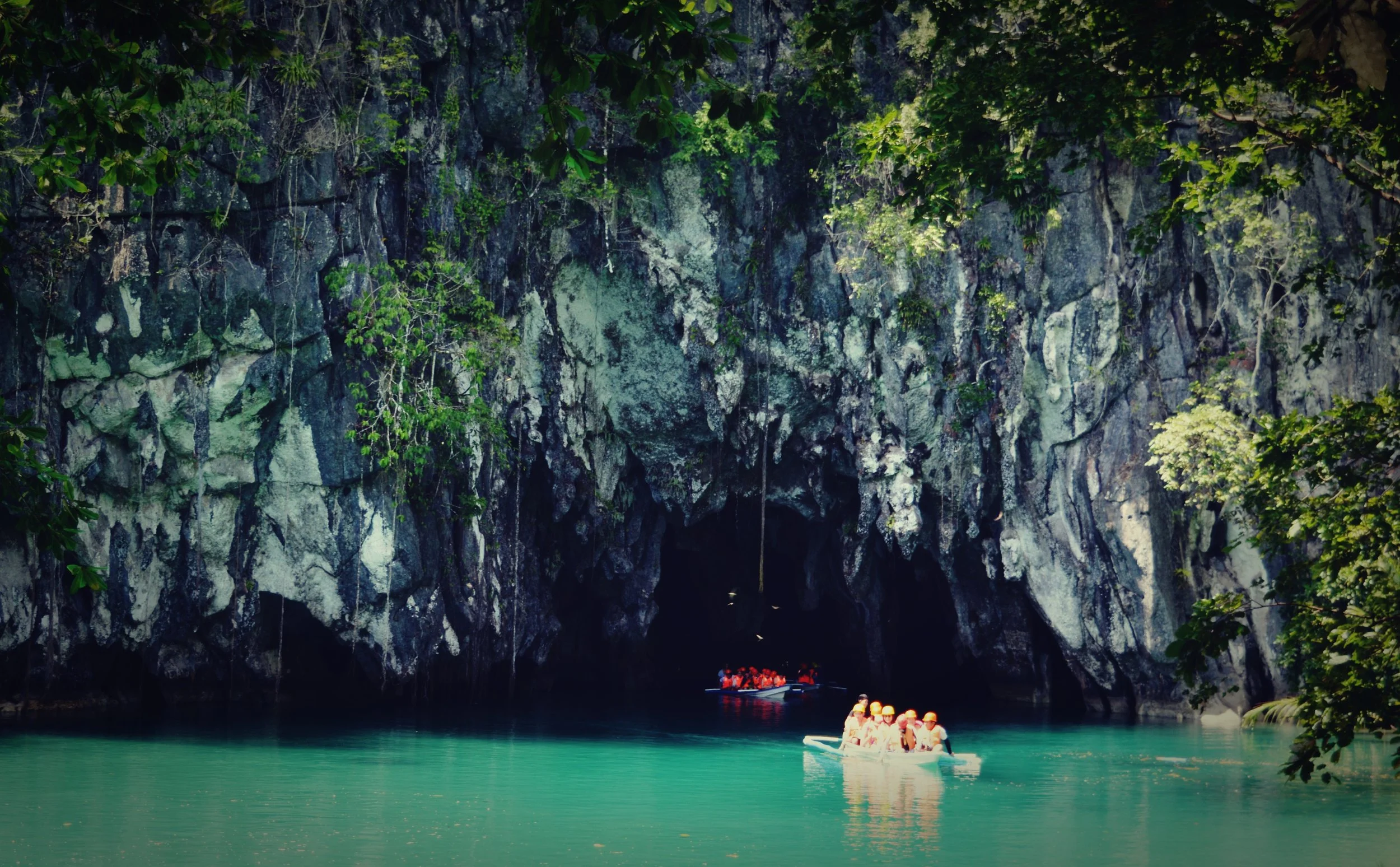
The entrance to the Puerto Princesa Subterranean River — a UNESCO World Heritage Site and one of the New7Wonders of Nature, and the anchor experience of any Puerto Princesa stay
The Underground River & Beyond
The Puerto Princesa Subterranean River National Park, about a 1.5 to 2-hour drive from the city in Sabang, is the headline reason to visit — a boat glides roughly an hour into a vast limestone cave system, past stalactites, stalagmites, and colonies of bats and swiftlets, along one of the longest navigable underground rivers in the world. It's rightly one of the most-visited natural attractions in the country, and tours should be booked in advance, as daily visitor numbers are capped.
Honda Bay, a short drive from the city center, offers easy, low-effort island hopping — Starfish Island, Cowrie Island, and Luli Island (a sandbar that disappears and reappears with the tide) are the standard stops, good for swimming and snorkeling without the longer boat days El Nido requires. After dark, a firefly-watching cruise along the mangrove rivers is one of Puerto Princesa's more distinctive evening experiences.
Food
Puerto Princesa's food scene centers on fresh seafood and a wider range of restaurants than El Nido's smaller town. For the adventurous, tamilok — a mangrove woodworm eaten raw with vinegar and chili, often described as tasting like a briny oyster — is a genuine local delicacy worth trying at least once.
Experience Snapshot
Four Kilometers of White Beach — And Three Very Different Ways to Experience It
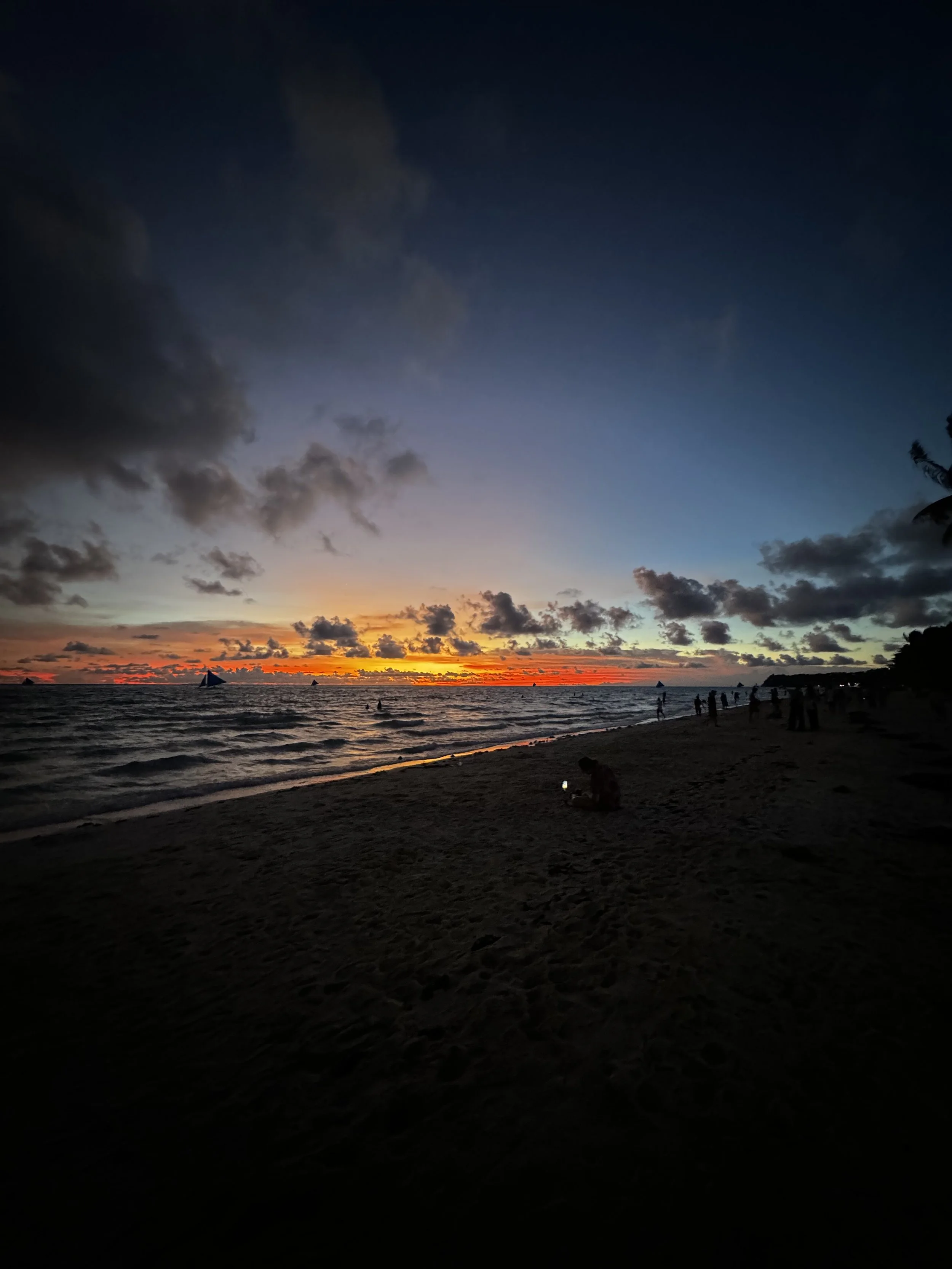
White Beach at sunset: fine, powder-soft sand and famously calm, clear water — the reason Boracay has been a Philippine bucket-list destination for decades
Choosing Your Station
The "stations" aren't official transit stops — they're informal zones along White Beach, and picking the right one matters more in Boracay than in almost any other Philippine beach destination, since the beachfront itself doesn't change much from one to the next. What changes is everything around it.
Food & Beyond White Beach
Boracay's dining leans heavily on beachfront seafood grills, sunset cocktail spots, and the fresh mango and buko (young coconut) shakes sold up and down the sand. Beyond White Beach itself, Bulabog Beach on the island's eastern side is the kitesurfing and water-sports hub, and worth a visit for anyone wanting to break up beach lounging with something more active.
The Coast — Station 2
The Coast is a four-star, 71-room beachfront resort directly on Station 2's White Beach frontage — a strong pick for travelers who want to be in walking distance of D'Mall and the island's liveliest strip, without sacrificing a genuinely comfortable, well-run stay. Its beachfront pool areas and attentive service make it a reliable choice for couples and families alike.
Experience Snapshot
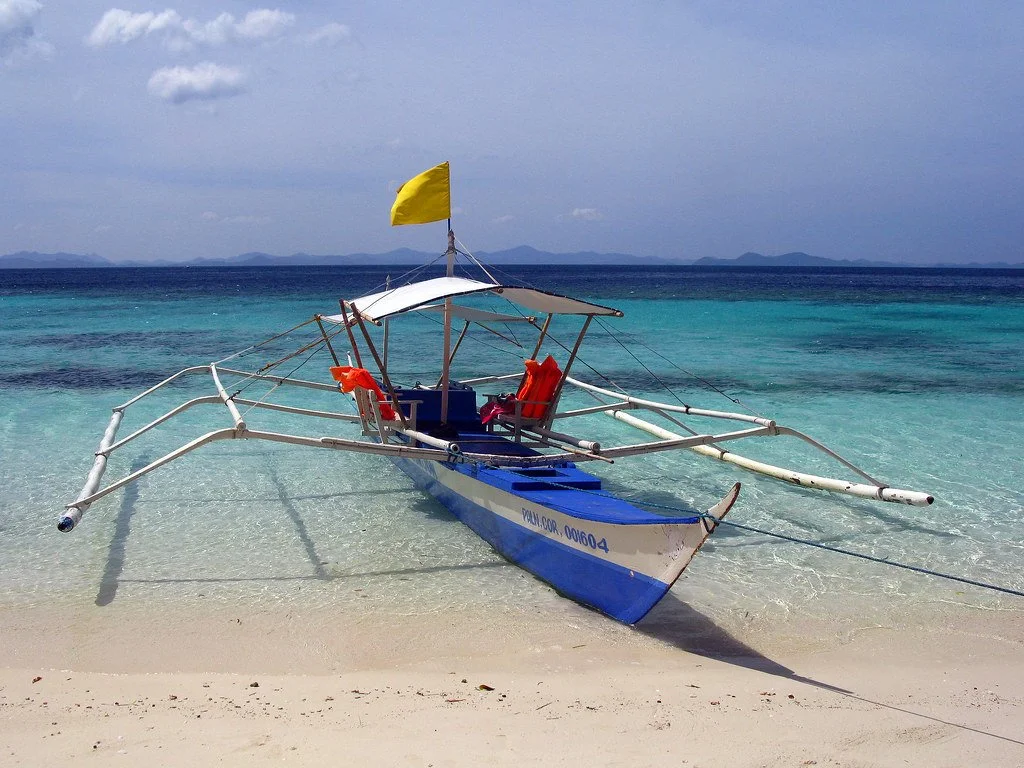
Inter-island travel in the Philippines means a mix of domestic flights, ferries, and vans — building buffer time into any multi-stop itinerary is always worth it
Getting Around
Manila: Ninoy Aquino International Airport (NAIA) is the country's main international gateway. Grab is the standard for taxis and ride-hailing — far more reliable than hailing on the street. Traffic is heavy at most hours, so build in real buffer time.
El Nido & Palawan: El Nido has its own small airport with direct flights from Manila; Puerto Princesa International Airport (PPS) is the larger gateway, also with direct Manila and Cebu flights, followed by roughly a 5-hour van or bus transfer to El Nido if not flying directly. Many travelers combine both — flying into one and out of the other.
Boracay: There is no airport directly on the island. Most travelers fly into Caticlan (Godofredo P. Ramos Airport), a short boat ride from the island, or the larger Kalibo International Airport, followed by a roughly 1.5-hour land transfer to the jetty.
Language & Money
Filipino and English are both official languages, and English is spoken very widely, including in tourist areas, hotels, and restaurants. The Philippine peso (PHP) is the currency. Grab and most hotels accept cards, but cash is useful for tricycles, small local eateries, and island-hopping extras like kayak rentals or entrance fees. Tipping is appreciated but not mandatory — rounding up or a modest 10% at sit-down restaurants is standard practice.
What to Know
Typhoon season: Late June through October carries typhoon risk, concentrated in July–September, with the western islands (Palawan especially) somewhat more sheltered than the eastern Philippines. Build flexibility into any wet-season itinerary and avoid scheduling a same-day inter-island transfer immediately before an international flight home.
Island-hopping logistics: Both El Nido and Honda Bay tours are typically booked as set group routes with standardized pricing — a small environmental fee applies in El Nido on top of the tour cost. Book ahead in December–February peak season, and bring reef-safe sunscreen, water shoes for sharp coral and rocks, and a dry bag for phones and cameras.
Safety: The Philippines is generally safe for travelers, with petty theft (particularly pickpocketing in crowded areas of Manila) the primary concern rather than anything more serious. Standard travel precautions — well-lit areas at night, Grab over street taxis, keeping valuables secured — apply as they would in any major city or busy resort area.
The Philippines doesn't ask you to pick one kind of trip.
A capital city that argues with itself, in the best way. A bay full of hidden lagoons. An underground river that feels like another planet.
And a beach so good it's been the standard by which every other Philippine beach gets measured for decades.