
Travel Guide
Namibia
Windhoek | Sossusvlei & NamibRand | Swakopmund
Damaraland & the Skeleton Coast | Etosha
Dunes · Desert · Wildlife · Where to Stay, Eat & Explore
Welcome to Namibia
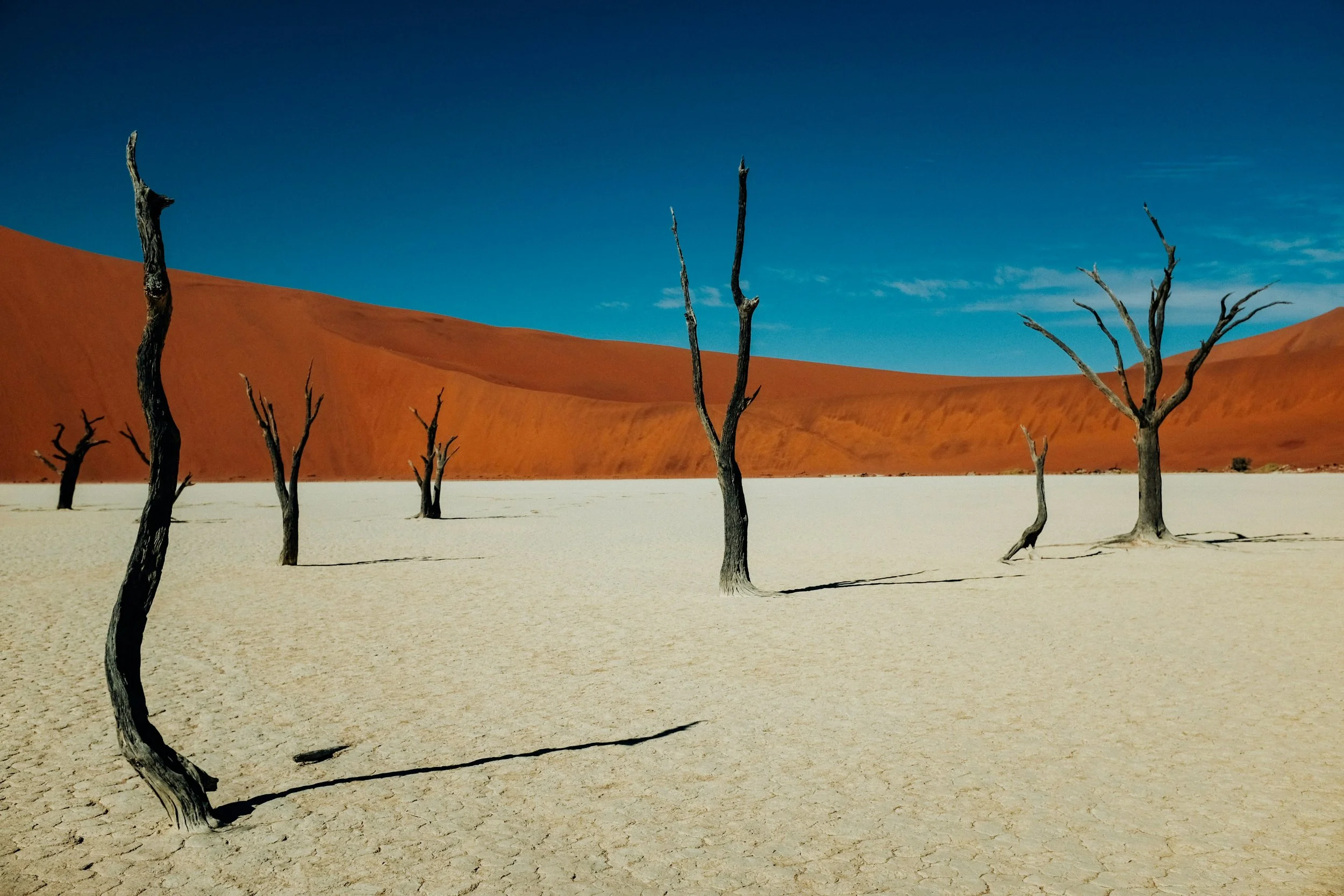
Namibia feels like another planet. Apricot-red dunes among the highest on earth rise above white clay pans studded with ancient, blackened trees; fog rolls in from the Atlantic over a coastline littered with shipwrecks; desert-adapted elephants wander dry riverbeds; and at night, the stars are so bright they cast shadows. With one of the lowest population densities in the world, it offers a sense of space and silence that few places can match.
This guide covers five distinct experiences: the capital, Windhoek; the towering dunes of Sossusvlei and the dark-sky NamibRand; the seaside adventure town of Swakopmund; the rugged wilderness of Damaraland and the Skeleton Coast; and the wildlife-rich Etosha National Park. Together they make one of the world's great road trips.
Best Time to Visit
- May – October (Dry Winter): The best time for wildlife, especially at Etosha's waterholes. Warm days, cold nights — sometimes near freezing in the desert.
- November – April (Hot, Rainy Summer): Hot desert days and afternoon storms in the north. Etosha turns green, newborn animals appear and migrant birds arrive, though wildlife disperses.
- Sossusvlei: Spectacular year-round. In summer, start at dawn to beat the heat.
- The coast: Cool and often foggy all year — pack a warm layer even in summer.
- Distances are vast — a typical itinerary covers 2,000+ kilometres. Build in time, or fly between regions on a fly-in safari.
- Sossusvlei's park gates open at sunrise; staying inside or right by the gate lets you reach the dunes before the crowds.
- Heavy summer rains can occasionally close gravel roads or riverbeds — your advisor will plan around them.
- Pack layers, sunscreen, a hat, sunglasses and a buff or scarf for dust.
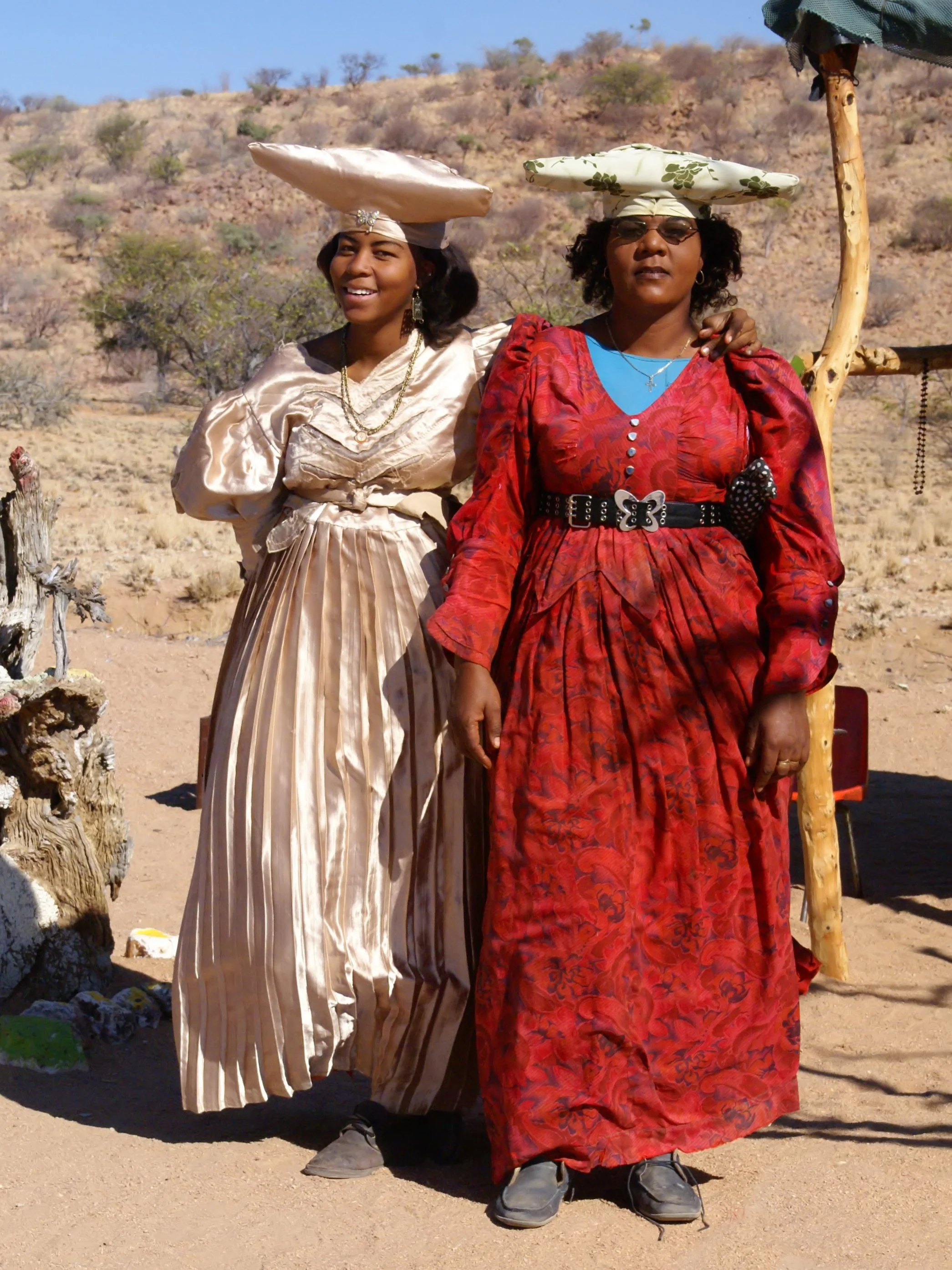
Herero women's Victorian-era gowns and horn-shaped headdresses are among the most striking traditional dress in Africa
Culture & Character
Namibia gained independence in 1990 and is one of Africa's most stable and peaceful democracies — and the first country to write environmental protection into its constitution. Its communal conservancies, where local communities manage and benefit from wildlife, are a model for the world. English is the official language, with Afrikaans, German, Oshiwambo, Herero and Damara-Nama widely spoken.
Namibia's cultures are as varied as its landscapes: the Himba of the northwest, known for their ochre-covered skin and traditional dress; the Herero, whose women wear Victorian-era gowns; the Damara, Nama and San, some of Africa's oldest peoples; and the Ovambo, the largest group, in the north. Visit communities only through respectful, community-run experiences.
Food & Drink — What to Know
Namibian food reflects its landscape and history. Kapana (street-grilled beef with chilli salt) is Windhoek's favourite snack. Game meat — oryx (gemsbok), kudu and springbok — appears on most lodge menus, often grilled at a braai. Try biltong (air-dried meat), potjiekos (stew slow-cooked in a three-legged cast-iron pot), fresh oysters from Walvis Bay, and German-style bakeries in Swakopmund. Windhoek Lager, brewed to the German purity law, is the national beer.
Planning Your Namibia Journey: What You Need to Know
Ways to travel: Namibia suits three styles — a self-drive road trip (popular, but gravel roads and long distances demand experience), a private driver-guide (relaxed and insightful), or a fly-in safari with light aircraft (fastest, with spectacular aerial views).
Distances: Sossusvlei to Swakopmund is about five hours; Swakopmund to Damaraland three to four; Damaraland to Etosha about four. Plan two or three nights in most places.
Fuel and supplies: Fuel stations can be far apart and some accept only cash — fill up whenever you can.
Accommodation: From comfortable lodges to some of the most spectacular desert camps in Africa — I will match the right properties to your route, style and budget.
The Capital — A Relaxed Start in the Highlands
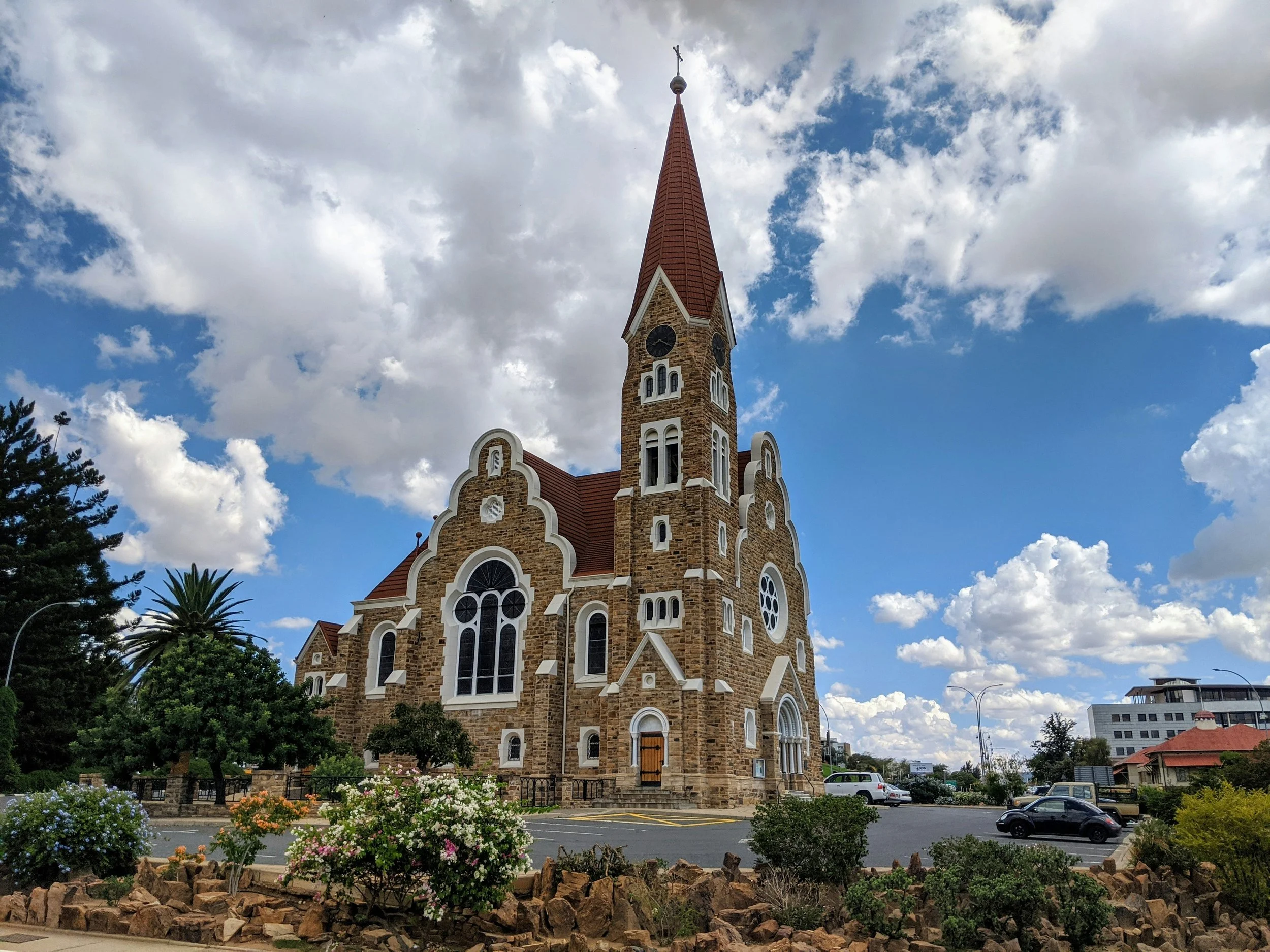
Windhoek's Christuskirche — a landmark of the capital's German colonial past
Culture & Vibes
Windhoek sits in the central highlands at about 1,650 metres. Its compact centre combines German colonial landmarks such as the Christuskirche with the striking Independence Memorial Museum, which tells the story of Namibia's struggle for freedom.
For a deeper understanding of modern Namibia, take a guided tour of Katutura, the vibrant township created during apartheid, and try kapana at the Single Quarters market. Craft shops in the city centre sell beautiful baskets, wood carvings and jewellery.
Food
Must Try: Kapana in Katutura, game meat at a classic Windhoek restaurant, and a cold Windhoek Lager.
Experience Snapshot
The Red Dunes — The Oldest Desert on Earth
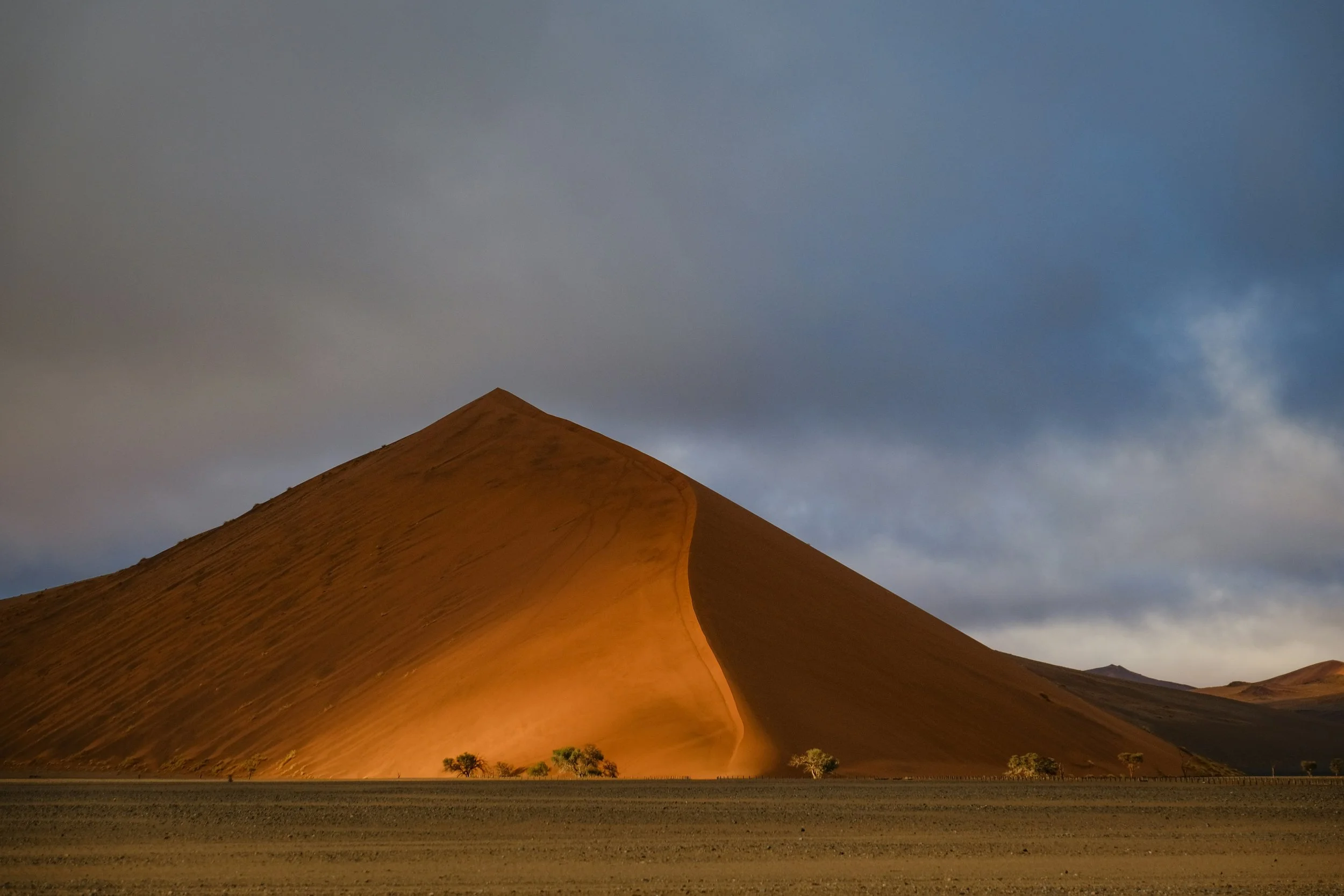
Sunrise at Sossusvlei, where some of the highest dunes on earth glow red in the morning light
Culture & Vibes
The Namib is considered the oldest desert in the world, and Sossusvlei, inside Namib-Naukluft National Park, is its showpiece. Climb Dune 45 at sunrise, hike to Deadvlei, where camel-thorn trees that died centuries ago still stand on a cracked white clay pan, and test your legs on Big Daddy, one of the tallest dunes in the area. Nearby, Sesriem Canyon is a narrow gorge carved by the Tsauchab River.
To the south, the private NamibRand Nature Reserve is one of the world's first International Dark Sky Reserves — the stargazing is astonishing. A hot-air balloon flight over the dunes at dawn, with a champagne breakfast in the desert, is a once-in-a-lifetime experience.
Food
Lodges serve beautifully prepared meals — often under the stars — with game meats, fresh vegetables and South African wines. A breakfast picnic among the dunes after your sunrise climb is a highlight.
Experience Snapshot
Where the Desert Meets the Atlantic
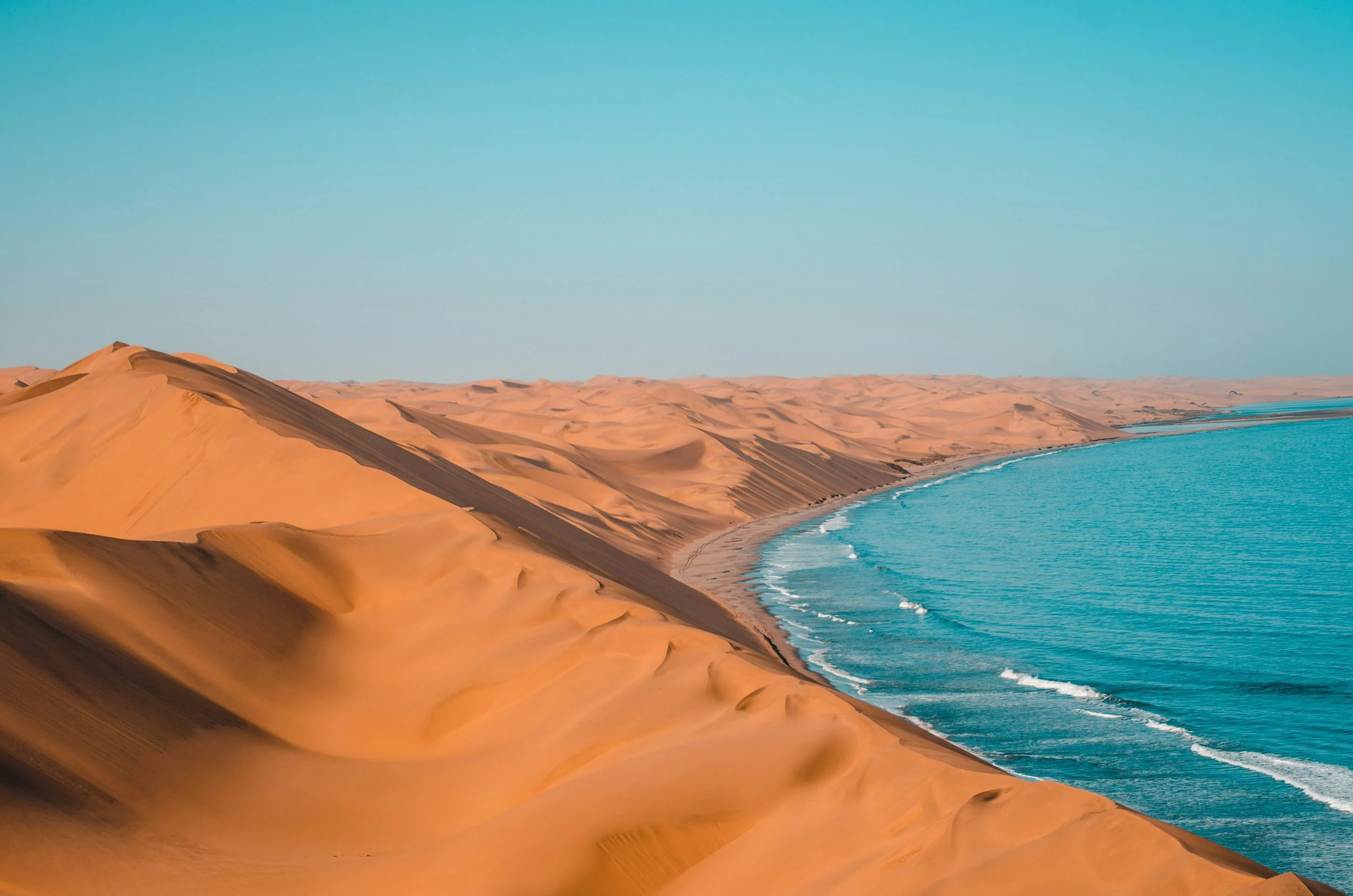
Sandwich Harbour — where towering dunes plunge straight into the Atlantic Ocean
Culture & Vibes
Swakopmund is Namibia's favourite holiday town — a mix of German-era architecture, palm-lined promenades, cafés and adventure outfitters. From neighbouring Walvis Bay, take a marine cruise with Cape fur seals, dolphins and pelicans (and oysters and sparkling wine on board), and see thousands of flamingos in the lagoon.
Join a 4x4 trip to Sandwich Harbour, where dunes fall straight into the ocean, or a Living Desert tour to find the 'Little Five' — chameleons, geckos, snakes and other desert creatures. Further inland, the Welwitschia Drive passes ancient welwitschia plants, some more than a thousand years old. A scenic flight over the Skeleton Coast reveals shipwrecks and endless dunes.
Food
Must Try: Walvis Bay oysters, fresh fish and seafood platters, and apple strudel or Black Forest cake at a German café.
Experience Snapshot
Desert Elephants, Ancient Rock Art & Africa's Wildest Coastline
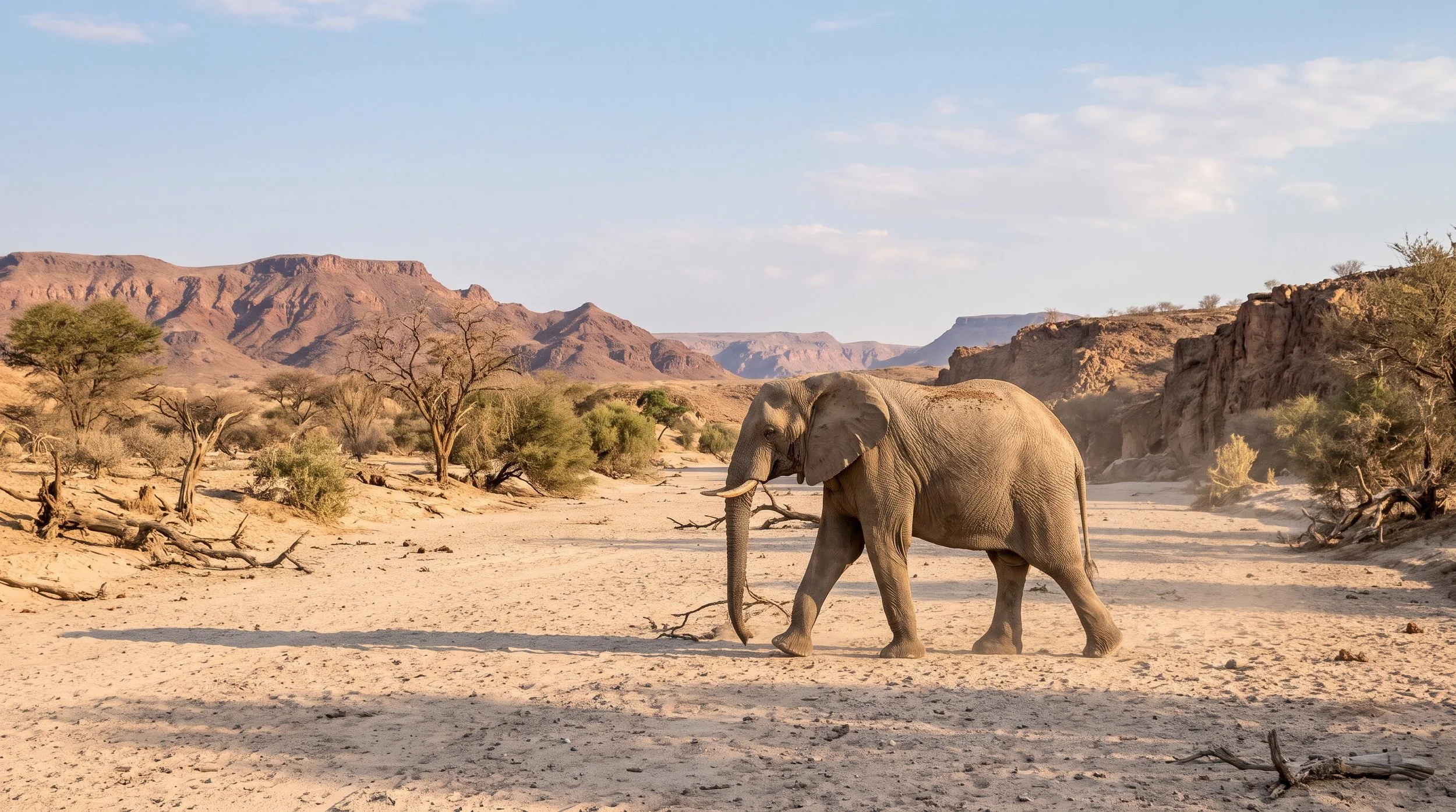
Desert-adapted elephants roam Damaraland's dry riverbeds, surviving in one of the harshest landscapes on earth
Culture & Vibes
Damaraland is one of Namibia's most dramatic regions: flat-topped mountains, boulder-strewn valleys and sandy riverbeds where desert-adapted elephants and black rhinos survive on remarkably little water. At Twyfelfontein, a UNESCO World Heritage Site, more than 2,000 rock engravings record thousands of years of San hunter-gatherer life. Nearby, the Brandberg, Namibia's highest mountain, shelters the famous 'White Lady' rock painting.
To the west, the Skeleton Coast is one of the most remote coastlines on earth — fog-shrouded dunes, shipwrecks, desert lions and huge seal colonies. Fly-in camps put you in the heart of it.
Food
Lodge dining in spectacular settings — dinners by the fire, and breakfasts with views across the desert mountains.
Experience Snapshot
The Great White Place — Waterholes, Lions & Rhinos
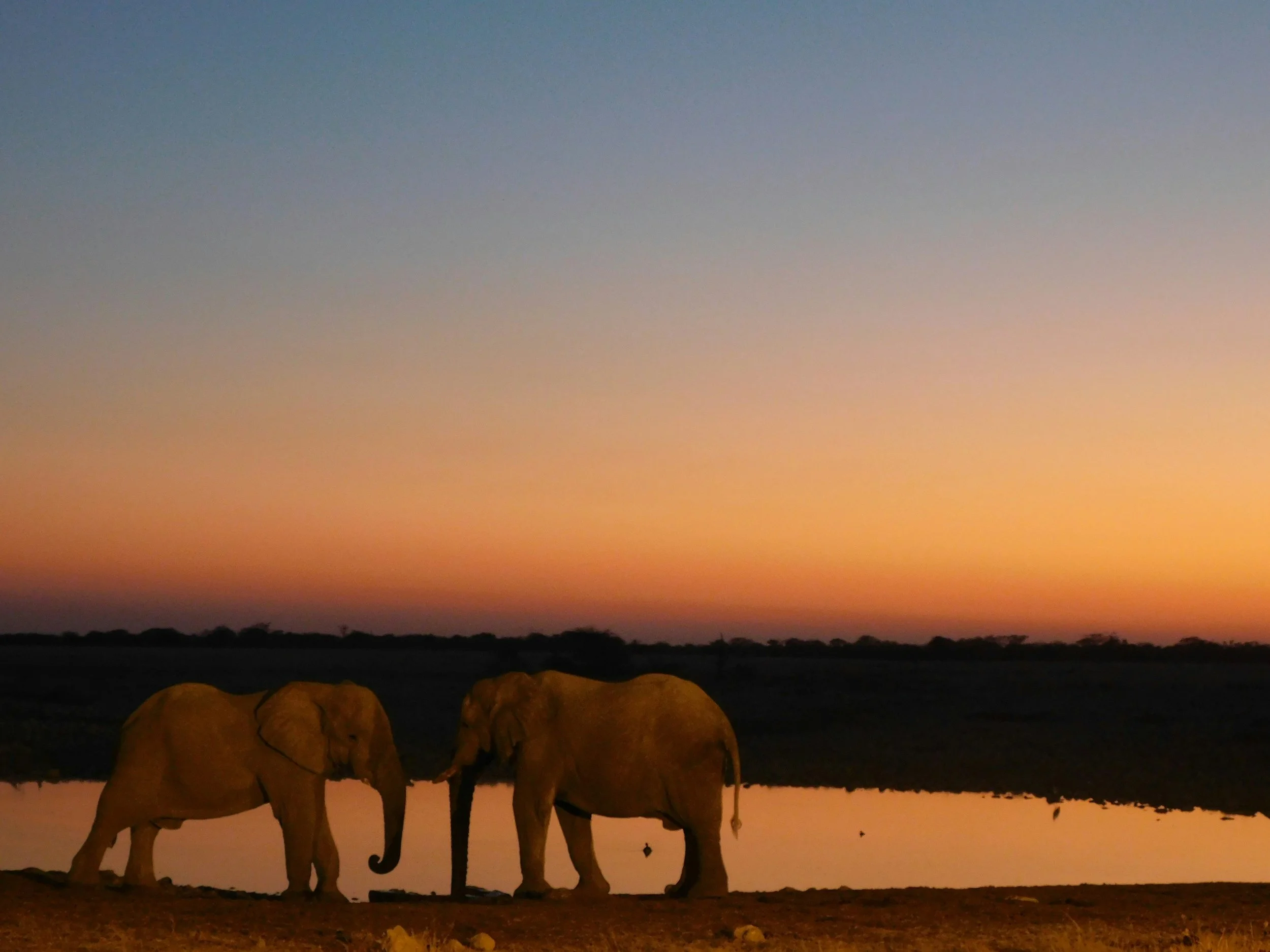
Etosha's waterholes draw a constant parade of wildlife — and floodlit waterholes keep the show going after dark
Culture & Vibes
Etosha means 'great white place', a reference to the vast salt pan at its heart — so large it is visible from space. In the dry season, the waterholes around the pan attract an extraordinary parade of elephants, lions, giraffes, zebras, springbok, oryx and black rhinos. Self-drive game viewing is easy here, or join guided drives from your lodge.
Camps such as Okaukuejo have floodlit waterholes, where you can watch rhinos, elephants and lions drink after dark — one of the best wildlife shows in Africa. Private reserves on Etosha's borders, such as Onguma and Ongava, offer night drives and walking safaris.
Food
Braai dinners under the stars and sundowners overlooking the shimmering pan.
Experience Snapshot
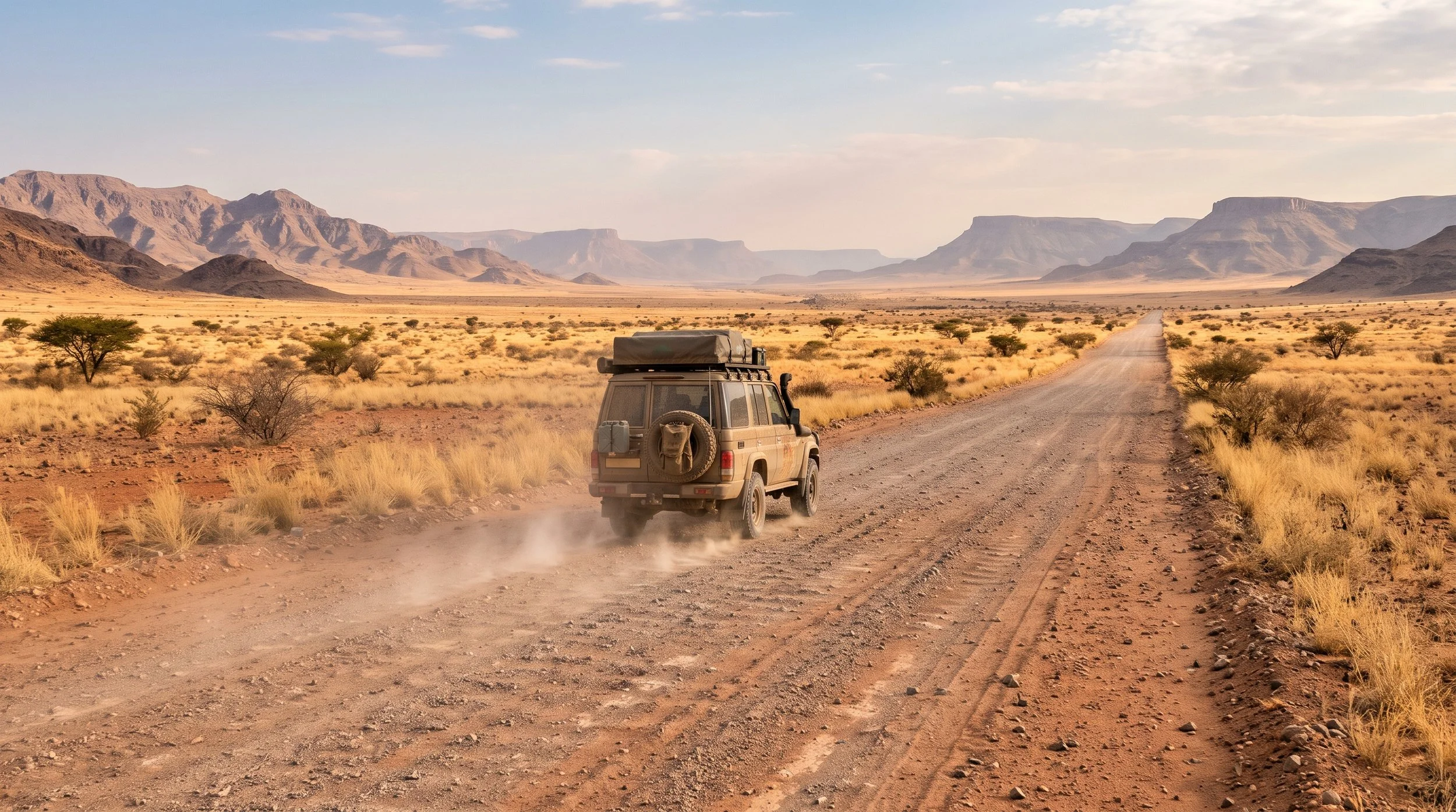
Namibia is made for road trips — endless gravel roads, empty horizons and a new landscape around every bend
Getting There & Around
Flights: There are no nonstop flights from the US. Connect via Johannesburg (about two hours to Windhoek) or Frankfurt to Hosea Kutako International Airport. Getting around: Choose a self-drive 4x4 (driving is on the left, mostly on well-maintained gravel), a private driver-guide, or a fly-in safari. Distances are long, so allow two or three nights per region.
Visas & Entry
US citizens have needed a visa since April 1, 2025. Apply online in advance (recommended) or obtain one on arrival at major entry points. The fee is about N$1,600 (roughly US$90). Carry proof of onward travel and accommodation, and ensure your passport has at least six months' validity and blank pages.
Health & Safety
Malaria: Antimalarials are recommended for the far north (including Etosha in the rainy season and the Zambezi Region) but are not needed for Sossusvlei, Damaraland or the coast. Safety: Namibia is one of Africa's safest countries. Stay hydrated, drive carefully on gravel, and never drive at night outside towns. Check the US State Department advisory before booking.
Money & Currency
The currency is the Namibian Dollar (NAD), pegged one-to-one to the South African rand, which is also accepted. Cards work in towns and lodges; some fuel stations accept cash only. Tipping guides and lodge staff is customary.
Culture & Etiquette
Visit Himba and other communities only through community-run, respectful experiences, and always ask before photographing people. Leave no trace in the desert — the landscape is fragile, and tyre tracks can last for decades.
Suggested Itinerary Combinations
7 days: Windhoek (1 night) + Sossusvlei (2) + Swakopmund (2) + Etosha (2). 10 days: Windhoek (1) + Sossusvlei (3) + Swakopmund (2) + Damaraland (2) + Etosha (2). 14 days: Windhoek (1) + NamibRand (2) + Sossusvlei (2) + Swakopmund (2) + Skeleton Coast or Damaraland (3) + Etosha (3) + Windhoek (1) — or pair with Cape Town and the Winelands. Schedule a call and I will build a custom itinerary around your travel style and timeline.
Namibia does not just show you nature.
It humbles you with it — red dunes at sunrise, elephants in the desert,
a sky so full of stars you will forget to speak.
Some places you visit. Namibia, you feel.