
Travel Guide
Malta
Valletta | Mdina | Sliema & St Julian's | Victoria
Mellieħa | Blue Lagoon | Marsaxlokk | Birgu
History · Coast · Culture · Where to Stay, Eat & Explore

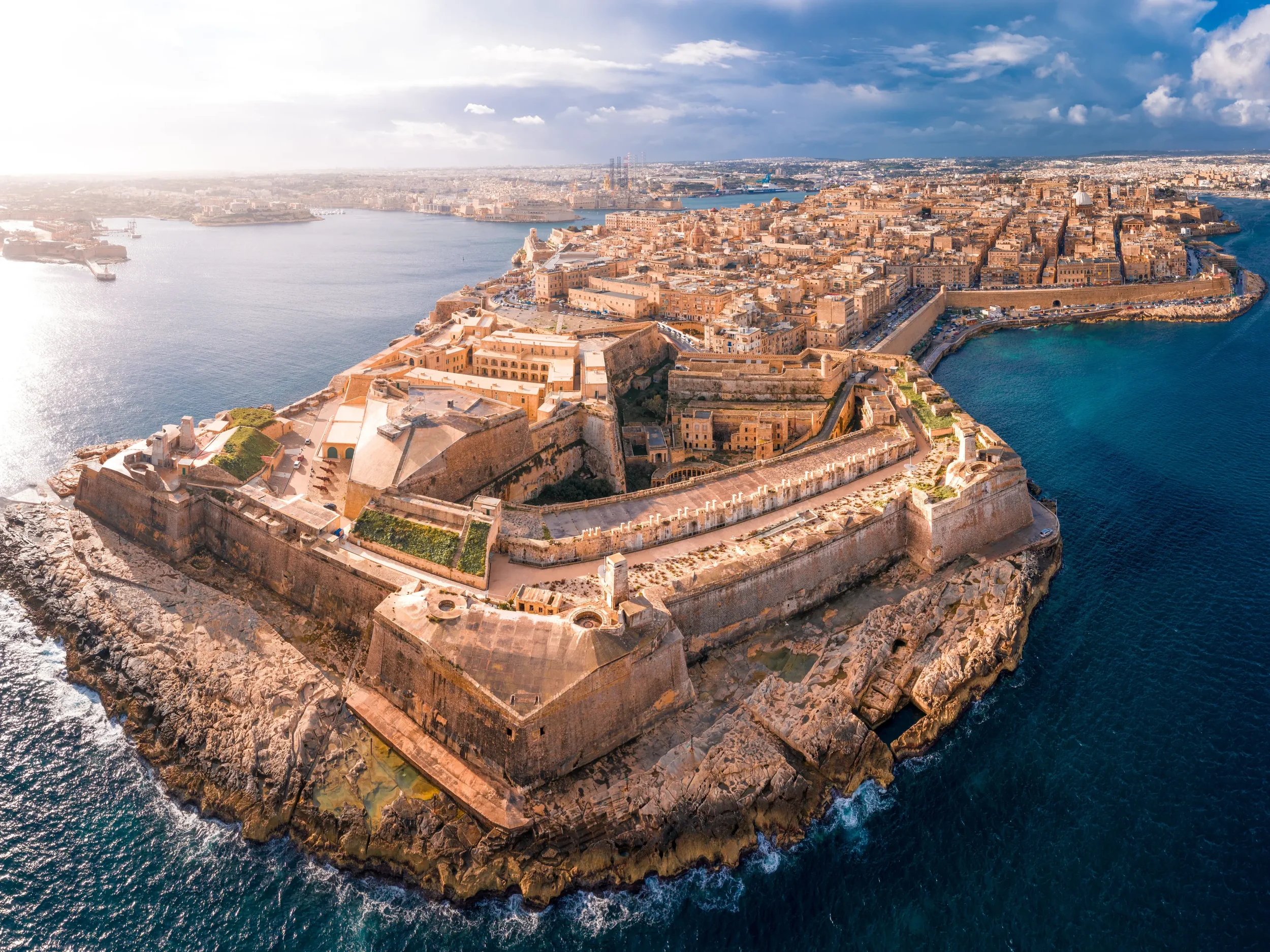
Welcome to Malta
Malta is one of Europe's most extraordinary surprises — a tiny archipelago of three inhabited islands in the heart of the Mediterranean, carrying more history per square kilometre than almost anywhere else on earth. Phoenicians, Romans, Arabs, Normans, Knights of St John, Napoleon, and the British have all left their mark on these sun-bleached limestone islands, creating a culture that is entirely and fascinatingly its own: Catholic and Mediterranean, English-speaking yet deeply Arabic in its language roots, fiercely proud of its hospitality and its food.
Malta is compact enough to explore every corner in a week yet rich enough to return to again and again. This guide covers the three main islands — Malta, Gozo, and Comino — across nine destinations, from the Baroque grandeur of Valletta and the medieval silence of Mdina to the vivid fishing harbours of Marsaxlokk and the impossibly turquoise waters of the Blue Lagoon.
Best Time to Visit
- April – June (Spring): The finest season. Warm but not hot (20–26°C), the island is green from winter rains, wildflowers cover the countryside, and crowds have not yet arrived. Perfect for walking, history, and the first sea swims of the year.
- September – October (Autumn): Equally excellent — the summer heat has broken, the sea is at its warmest (26°C+), and the island returns to its natural rhythm after the August peak. Excellent for diving and coastal walks.
- July – August (Summer): Peak season — hot (32–38°C), crowded, and expensive, especially around the Blue Lagoon. The festas (village patron saint festivals) are extraordinary in summer — dramatic fireworks, brass bands, and street celebrations that go on until dawn.
- November – March (Winter): Quiet, mild (14–18°C), and atmospheric. Valletta is magical in winter light. Some beach facilities close. Occasional rain but rarely prolonged. Ideal for history-focused visits.
- Carnival (February/March): Malta's pre-Lent carnival — elaborate floats, costumes, and street celebrations in Valletta. One of the Mediterranean's most colourful winter events.
- Good Friday processions (April): Deeply traditional and moving — life-size statues carried through village streets in solemn procession. Valletta and Żejtun are the most atmospheric.
- Village festas (June–September): Every town and village celebrates its patron saint with fireworks, band marches, and street food. The Festa season is Malta at its most joyously itself.
- Isle of MTV (July): Free outdoor music festival in Floriana — major international acts, enormous crowds, extraordinary atmosphere.
- Notte Bianca (October): Valletta's "White Night" — museums, palaces, and private buildings open until late; the city becomes one vast, free cultural event.
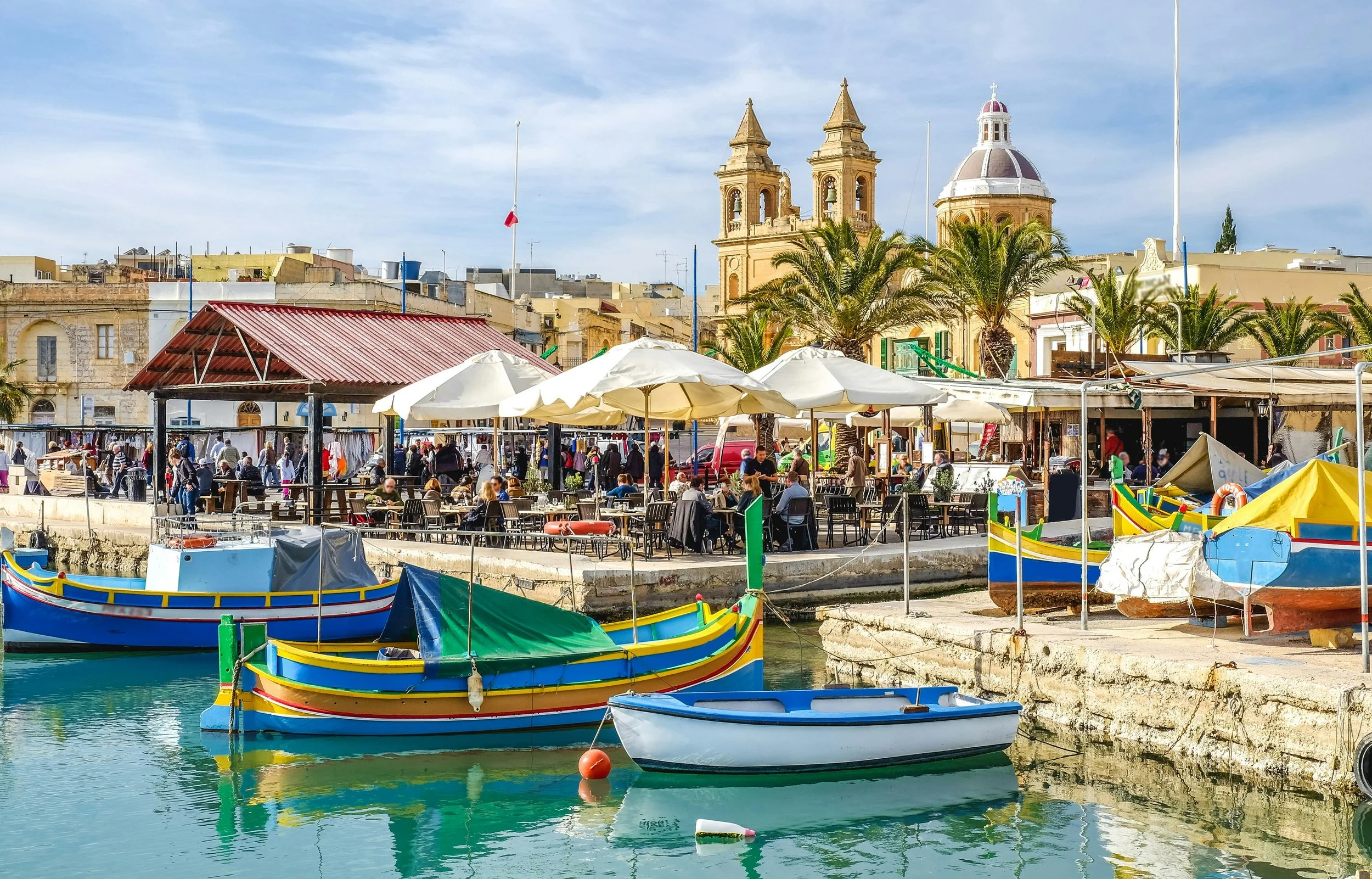
The brightly painted luzzu fishing boats of Marsaxlokk — their distinctive Eye of Osiris painted on the prow is one of Malta's most enduring symbols, a Phoenician tradition maintained for over three thousand years
Culture & Character
Malta punches far above its size in cultural weight. The Maltese language — Malti — is the only Semitic language written in the Latin alphabet, a direct descendant of the Arabic spoken by the island's medieval Arab rulers, laced with Italian, Norman French, Spanish, and English loan words. It is spoken by 500,000 people and sounds like no other language on earth.
The country is deeply Catholic — 98% of villages have a parish church that dominates the skyline, and the religious calendar (festas, processions, pilgrimages) structures the social year in ways that are both ancient and entirely alive. The Knights of St John, who ruled Malta from 1530 to 1798, left an architectural legacy of extraordinary quality — Valletta alone contains more Baroque masterpieces per square metre than Rome.
Food & Drink — What to Know
Maltese cuisine is a delicious Mediterranean hybrid — Italian influences dominate, but with North African undertones and distinctly Maltese inventions. Pastizzi (flaky pastry filled with ricotta or mushy peas — the national snack, eaten at any hour from pastizzeri) are unmissable. Bragioli (beef olives — thin beef wrapped around a herb and breadcrumb stuffing, slow-cooked in red wine) is the definitive Maltese main course. Fenek (rabbit — cooked in red wine, garlic, and herbs, traditionally the Sunday dish) is the island's most celebrated meat. Ħobż biż-żejt (bread rubbed with tomato and drizzled with olive oil and capers — Malta's answer to bruschetta) is the essential casual lunch. Fresh Mediterranean fish — lampuki (dolphinfish, September–November), dentici (sea bream), and swordfish — are simply grilled and exceptional. Kinnie (a bitter orange and aromatic herbs soft drink) is the local non-alcoholic institution.
The Baroque Capital — Europe's Smallest, Most Densely Historic City
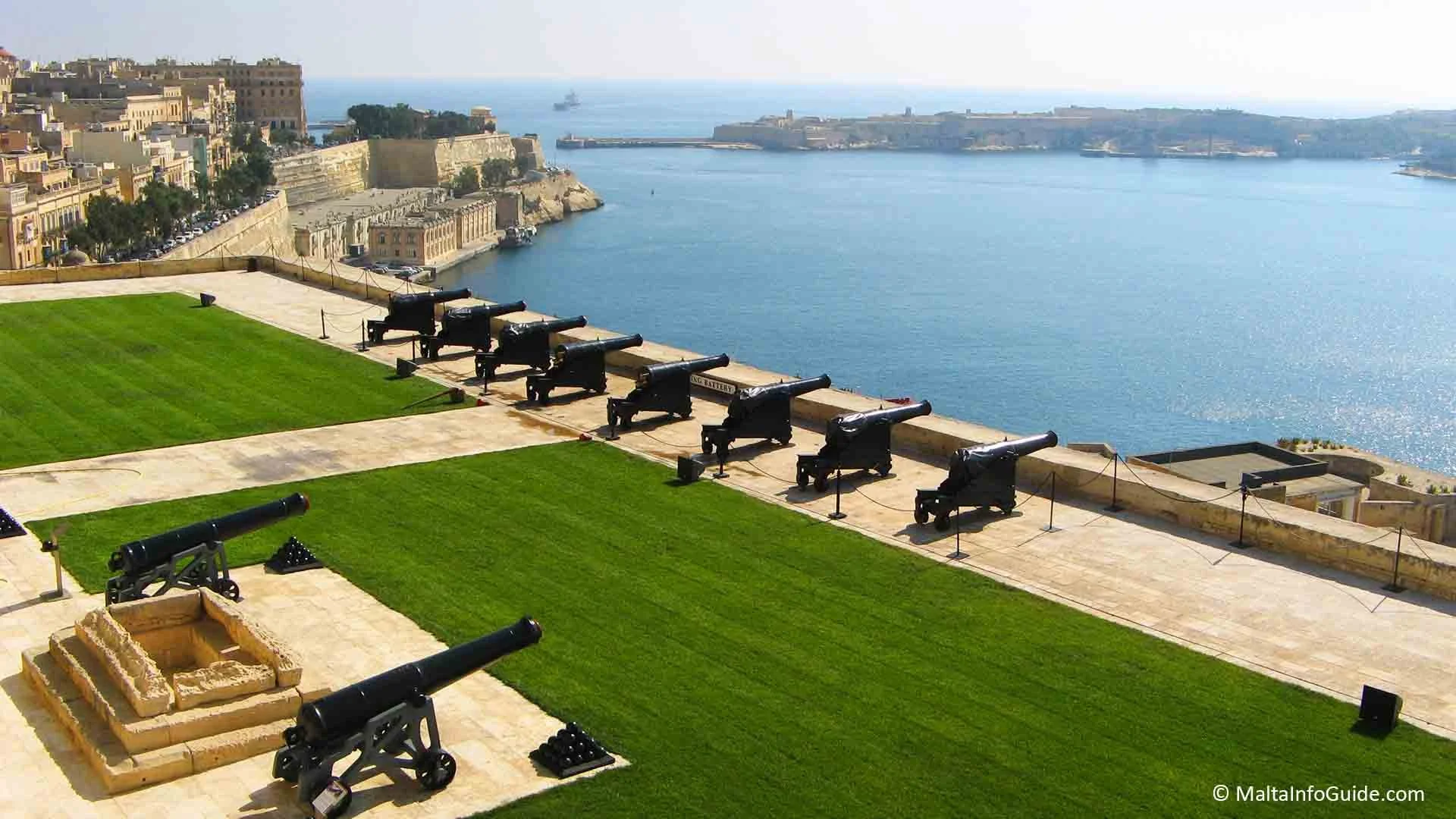
The Grand Harbour from the Upper Barrakka Gardens: one of the world's great harbour views — the Three Cities across the water, the ancient fortifications of Fort St Angelo, and the Mediterranean shimmering beyond
Culture & Vibes
Valletta was purpose-built by the Knights of St John after the Great Siege of 1565 — a planned city laid out on a grid, every building constructed in the local golden limestone that gives Malta its characteristic warm honey glow. It is simultaneously a living city (the Maltese go about their daily business here entirely naturally) and one of the world's great open-air museums. The contrast between the grandeur of the architecture and the small scale of the streets creates a specific atmosphere that is entirely unlike any other European capital.
The city's spine is Republic Street — a pedestrianised avenue running the full length of the city from City Gate to Fort St Elmo, lined with café terraces, government buildings, and the extraordinary Grand Master's Palace. Off Republic Street, the side streets drop steeply to the harbour on both sides, lined with the distinctive Maltese enclosed wooden balconies (gallariji) in green, red, and brown. The Upper Barrakka Gardens terrace offers the finest harbour view in the Mediterranean.
St John's Co-Cathedral
No building in Malta is more important than St John's Co-Cathedral. Its plain limestone exterior gives nothing away — the interior is one of the most extraordinary Baroque spaces in Europe: every square centimetre of wall and ceiling covered in gilded carvings, oil paintings, and coloured marble, the floor a continuous carpet of 400 Knights' tombs in inlaid polychrome marble. The Oratory holds Caravaggio's largest painting — The Beheading of St John the Baptist (1608), painted during his time in Malta and considered by many art historians the finest Baroque painting in existence. Allow 90 minutes minimum. Book tickets online — queues can be long.
Food
Noni (Republic Street — Malta's most celebrated restaurant, extraordinary tasting menu in a converted palazzo) is the essential fine dining reservation. Trabuxu Bistro (intimate wine bar and bistro, excellent local cuisine) and Rampila (terrace above the city walls, beautiful setting, excellent fresh fish) round out the best of Valletta's restaurant scene. The Valletta Market (Is-Suq tal-Belt) — a beautifully renovated Victorian market hall — has the city's best food hall and casual dining options.
Experience Snapshot
The Silent City — Medieval, Walled & Magnificently Still
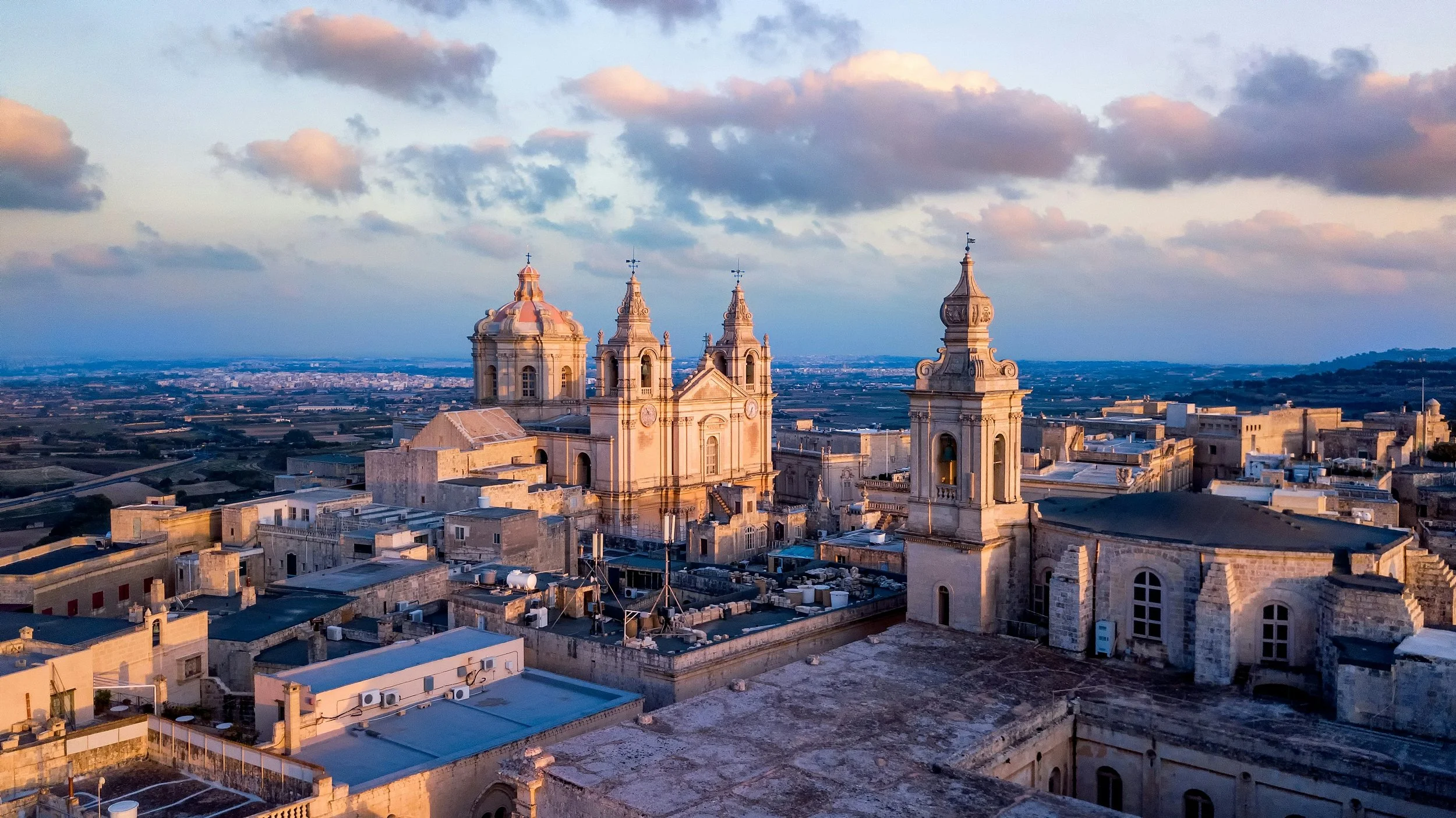
Mdina's narrow streets at dusk: the walled medieval city — with a permanent population of just 300 — falls into extraordinary silence after the day-trippers leave, its limestone passages lit by lanterns and entirely unchanged since the Norman period
Culture & Vibes
Mdina was Malta's capital for most of its recorded history — the Romans called it Melita, the Arabs Medina. The Knights moved the capital to Valletta in 1571, and Mdina has been preserved in amber ever since, its Norman and Baroque palaces still owned by the same Maltese noble families who have lived there for centuries. The permanent population of 300 gives it the atmosphere of a living museum that is simultaneously someone's home — cats sleep on doorsteps, laundry hangs between palazzo windows, and the silence is genuinely startling after the noise of the coast.
The Cathedral of St Paul (built on the site where, tradition holds, St Paul converted the Roman governor Publius to Christianity in AD 60) is a magnificent Baroque interior with stunning floor tombs and a famous trompe l'oeil ceiling painting. The Bastion Square viewpoint looks across the entire island toward the sea in both directions. At night, with lanterns lighting the streets and not a tourist in sight, Mdina earns its epithet entirely.
Rabat
Directly outside Mdina's walls, Rabat is the town that grew around the medieval capital and is often overlooked by visitors who stop at Mdina's gate. The Roman Domus (an extraordinary in-situ Roman townhouse with mosaic floors), St Paul's Catacombs (the largest network of early Christian catacombs in Malta, dating to the 3rd–5th centuries AD), and the lively town square — with its pastizzeri and local café culture — make Rabat an essential complement to Mdina.
Experience Snapshot
Malta's Cosmopolitan Coast — Promenades, Restaurants & the Island's Social Heart
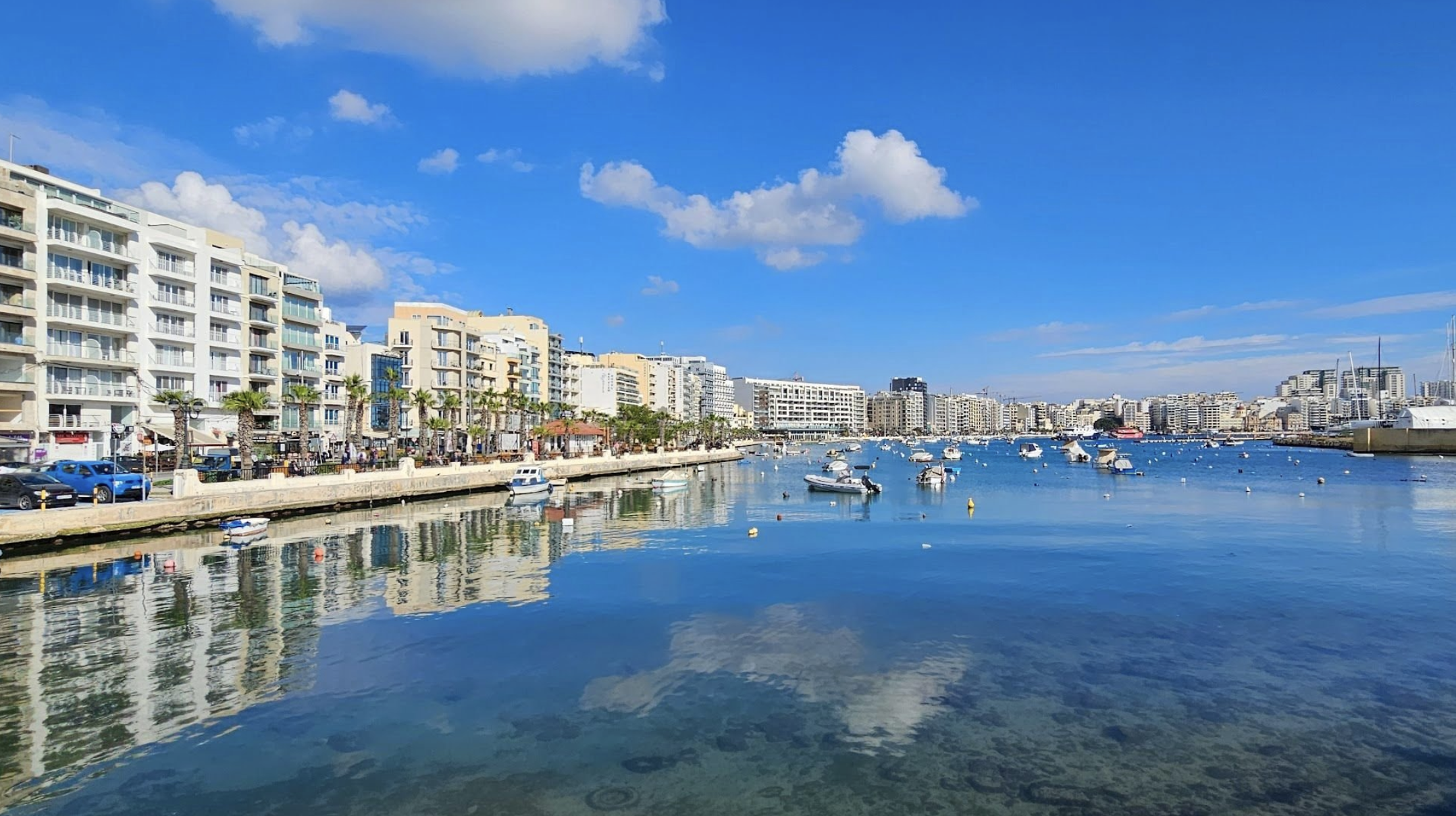
The Sliema promenade at dusk: the il-Ferħ seafront walk stretches along the rocky coast toward St Julian's, one of Malta's great evening strolls with the lights of Valletta glittering across Marsamxett Harbour
Culture & Vibes
Sliema and St Julian's form Malta's modern urban spine — a continuous stretch of seafront development that is home to the island's best hotels, restaurants, and shops. The Sliema promenade (the il-Ferħ) is the island's great walking street — a rocky seafront path lined with café terraces and swimming spots that stretches for several kilometres from Valletta ferry terminal to St Julian's. The Valletta ferry from Sliema Ferries is one of Malta's great small pleasures — a 10-minute crossing on a traditional dgħajsa ferry with extraordinary harbour views.
St Julian's has a split personality: the beautiful Spinola Bay fishing harbour, ringed with restaurants and entirely picturesque, sits a few hundred metres from Paceville — Malta's nightlife district, loud and young and not for the faint-hearted on a weekend. The bay side of St Julian's is the better bet for all ages.
Experience Snapshot
The Sister Island — Slower, Greener & More Deeply Maltese
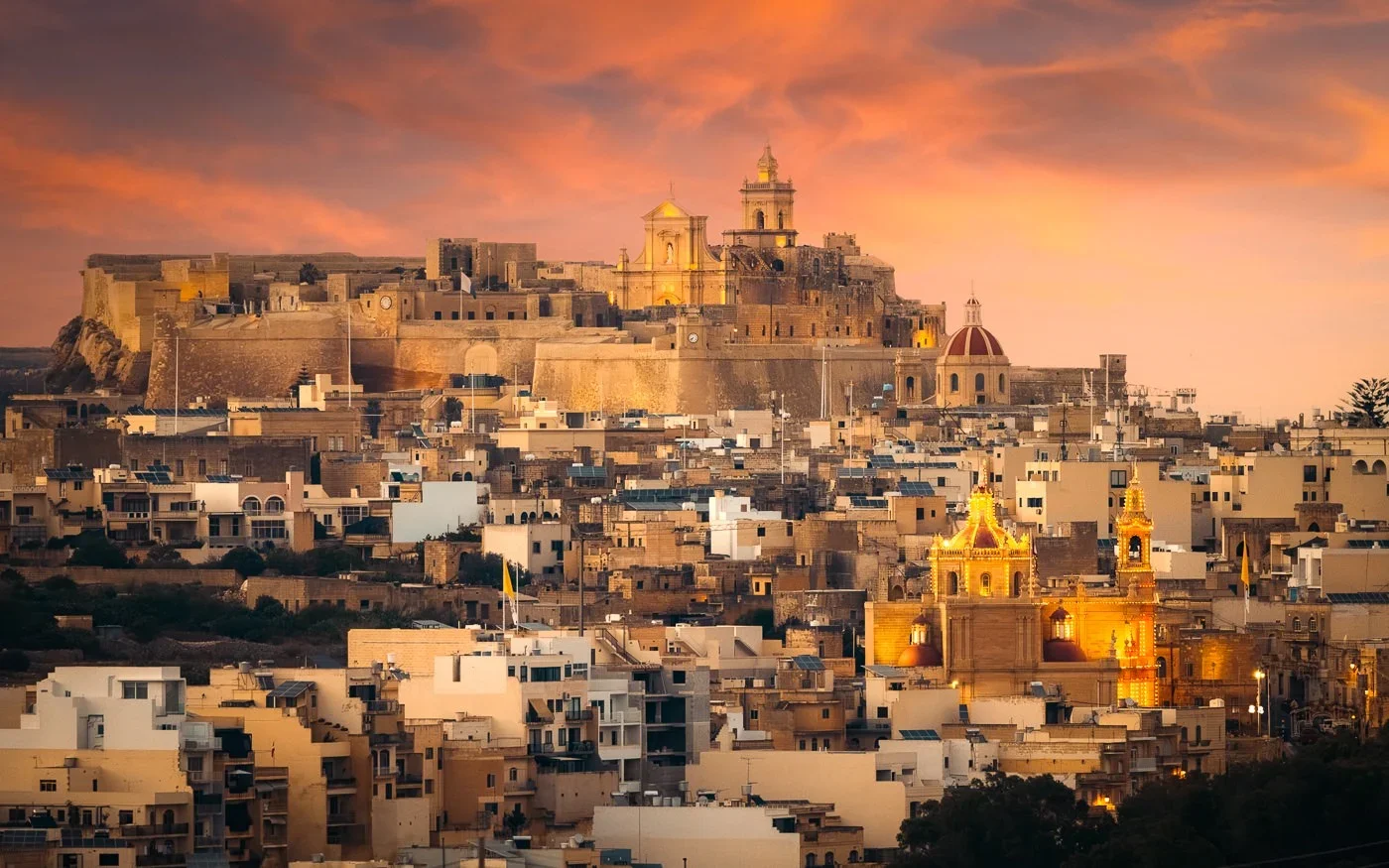
The Citadel of Victoria rising above Gozo: a medieval fortified city visible from almost everywhere on the island, its cathedral, palace, and grain silos crowning a limestone hill in one of the Mediterranean's most dramatically positioned urban centres
Victoria & The Citadel
Victoria's old city is crowned by the Citadel — a compact fortified medieval city within a city, its cathedral, bishop's palace, and grain silos ringed by massive bastions that offer 360-degree views across the entire island. The Citadel was where the entire population of Gozo retreated at night during the centuries of Arab and Ottoman raids — the history of that fear is visible in the thickness of the walls. The Cathedral of the Assumption inside the Citadel is famous for its extraordinary trompe l'oeil ceiling — a painted vault that mimics a dome (the real dome was never built due to lack of funds).
Ġgantija Temples
Just outside Victoria, the Ġgantija Temples are among the world's oldest free-standing stone structures — built between 3600 and 3200 BC, over a thousand years before Stonehenge and the Great Pyramid of Giza. The two temples are remarkably well-preserved, their massive coralline limestone blocks still standing to shoulder height. The name means "giant's tower" in Maltese — early inhabitants assumed only giants could have moved such stones. A UNESCO World Heritage Site and one of the most genuinely extraordinary prehistoric sites in the world.
Gozo's Coast & Countryside
Gozo is greener and more agricultural than Malta — its valleys are cultivated with tomatoes, grapes, and citrus, and its coastline alternates between dramatic red sandstone cliffs and turquoise bays. The former Azure Window at Dwejra (collapsed in 2017) has been replaced as Dwejra's main attraction by the Inland Sea — a lagoon connected to the open sea by a narrow cave tunnel, and one of the finest dive sites in the Mediterranean. Ramla Bay is the finest beach on Gozo — a long arc of distinctive red-orange sand backed by low hills and a Roman villa.
Experience Snapshot
Malta's Northern Village — Beaches, Sanctuary & a Slower Pace
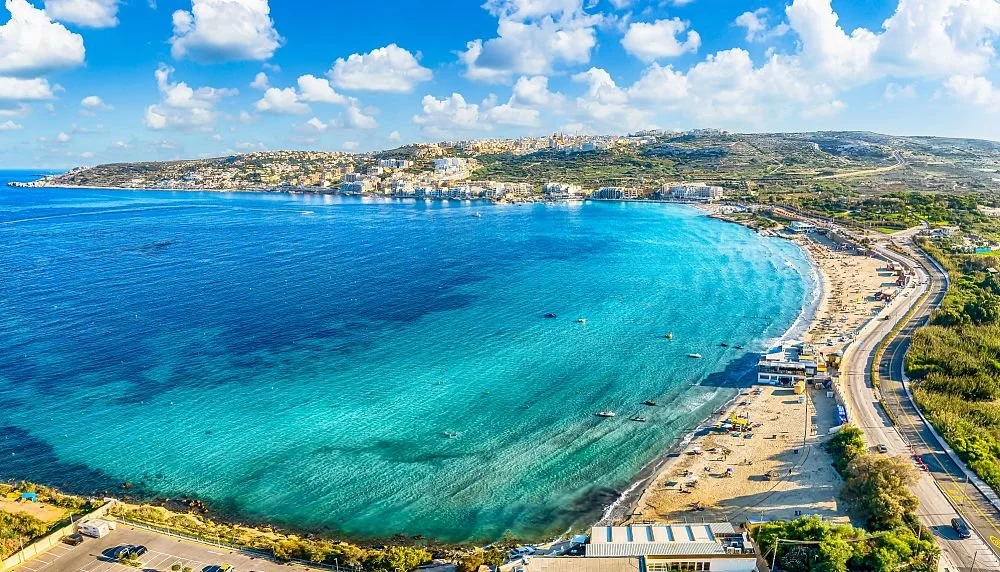
Mellieħa Bay: Malta's largest and most family-friendly beach — a long, gently shelving arc of sand in the island's quiet north, far from the development of the southern coast
Culture & Vibes
Mellieħa is one of Malta's most characterful villages — stacked on a hillside above the bay, its main street lined with restaurants and the massive parish church of Our Lady of Victory at its peak. The Mellieħa Sanctuary (inside the parish church) is one of the most venerated sites in Malta — a cave chapel containing an image of the Madonna attributed, in tradition, to St Luke himself. The level of genuine faith devotion visible here (Maltese pilgrims climbing the steps on their knees, votive offerings covering every wall) is deeply moving regardless of one's own beliefs.
Mellieħa Bay (Għadira) is Malta's largest sandy beach — gently shelving, clean, and family-friendly, with good water sports facilities. The Marfa Ridge to the north, a narrow limestone peninsula, has some of Malta's most dramatic coastal scenery and the ferry terminal for Gozo.
Experience Snapshot
Malta's Most Spectacular Waters — Comino's Turquoise & the Southern Sea Caves
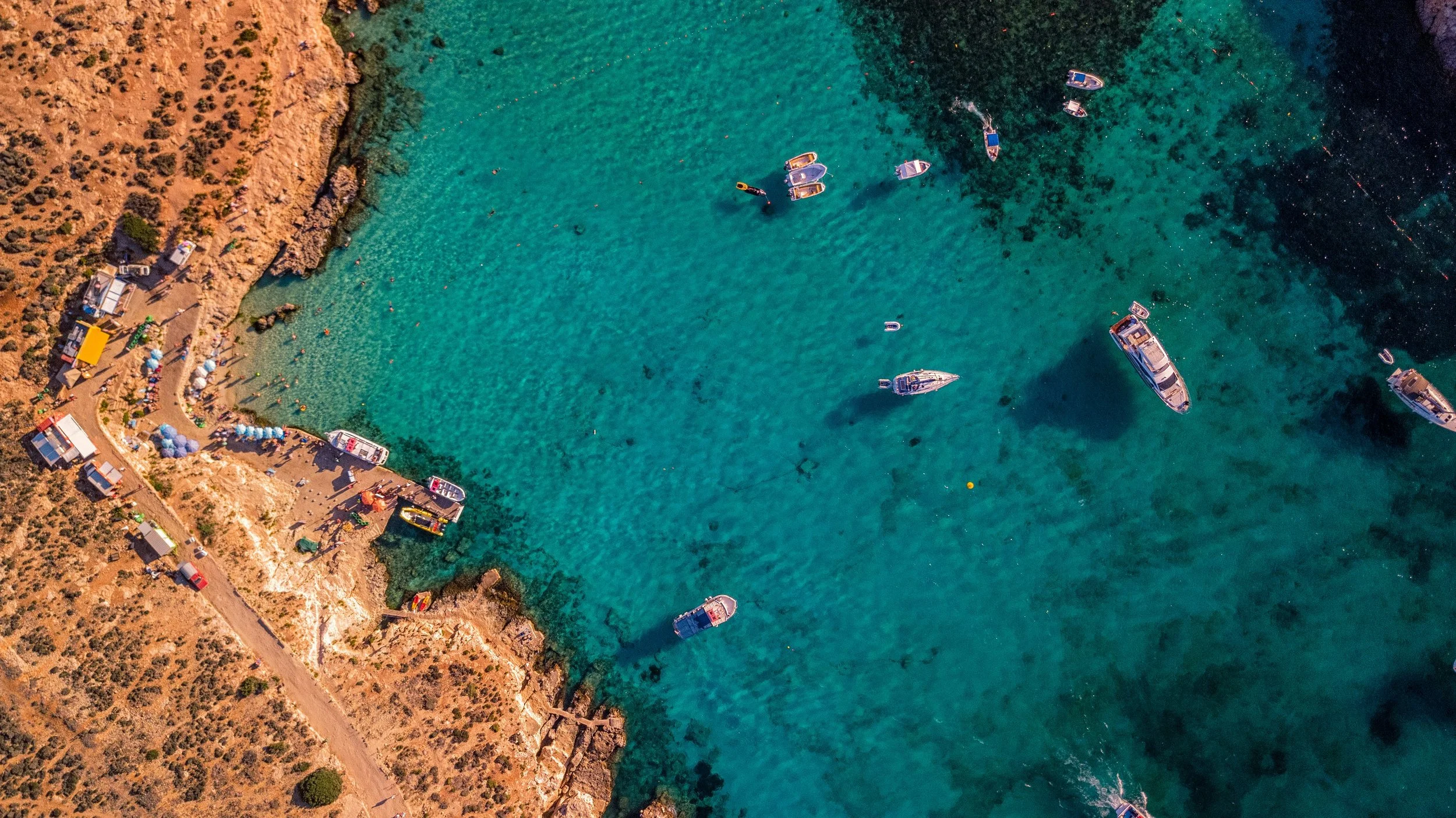
The Blue Lagoon, Comino: a channel of water between the tiny island of Comino and the uninhabited islet of Cominotto, its colour — an impossibly vivid turquoise over white sand — making it one of the most photographed places in the Mediterranean
The Blue Lagoon, Comino
Comino is a tiny island of just 3.5 square kilometres between Malta and Gozo, with a permanent population of approximately four people. The Blue Lagoon — a natural channel of turquoise water over white sand between Comino and the islet of Cominotto — is Malta's most visited single attraction and justifiably so. The water is an extraordinary shade of pale turquoise, the visibility is 20–30 metres, and the swimming and snorkelling are exceptional. Ferries run from Sliema, Valletta, and the Gozo ferry terminal at Ċirkewwa — the crossing takes 25–45 minutes depending on the departure point. Arrive early (before 10am) to secure a spot before the day tripper boats arrive en masse.
The Blue Grotto
On Malta's southern coast near the village of Żurrieq, the Blue Grotto is a dramatic complex of sea caves whose walls and water glow an intense, phosphorescent blue from sunlight refracting through the shallow water. Small traditional luzzu boats carry visitors through the caves from the Żurrieq quay — the trip takes approximately 25 minutes and is best in the morning when the light is directly into the cave mouths. Combine a Blue Grotto boat trip with a visit to the nearby Ħagar Qim and Mnajdra temples (prehistoric megalithic temples overlooking the sea, among the world's oldest and best preserved) for a complete southern Malta day.
Experience Snapshot
The Fishing Village — Luzzu Boats, Sunday Markets & the Finest Seafood in Malta
Marsaxlokk harbour on a Sunday morning: the colourful luzzu fishing boats bobbing alongside the quay, the fish market in full cry, and the smell of fresh seafood and strong coffee — the most authentically Maltese morning you can have
Culture & Vibes
Marsaxlokk (pronounced mar-sa-SHLOCK) is the largest and most active fishing village in Malta — its natural harbour sheltered by the Delimara Peninsula and traditionally the home of Malta's fishing fleet. The brightly painted luzzu boats — blue, red, yellow, and green, each with the Eye of Osiris painted on the prow in a tradition maintained since Phoenician times — line the quay in their dozens and are one of Malta's most photographed sights. The Sunday market along the waterfront is primarily a fish market in the morning (fresh swordfish, tuna, lampuki, dentici, octopus) transitioning to a general market (lace, crafts, produce) by midday.
The village's restaurants are the finest seafood on Malta — unpretentious, fresh, and dramatically cheaper than Valletta or Sliema equivalents. A lunch of grilled fresh fish and a carafe of local white wine on the Marsaxlokk waterfront is one of the island's simplest and most complete pleasures.
Experience Snapshot
The Three Cities — Ancient, Atmospheric & Almost Entirely Undiscovered
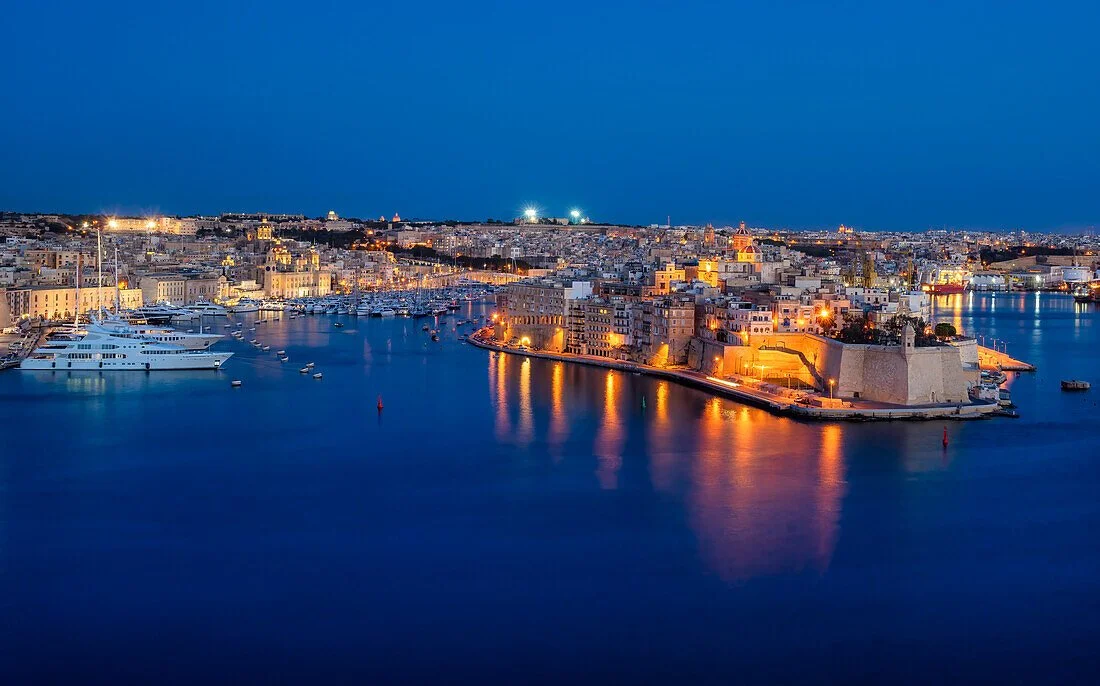
Birgu's waterfront at night: the superyacht marina of the Three Cities reflected in the Grand Harbour, with the lights of Valletta glittering across the water — one of Malta's most spectacular evening views and barely known to most visitors
Culture & History
Birgu (also called Vittoriosa — "the victorious") was the first base of the Knights of St John when they arrived in Malta in 1530, and it pre-dates even that as a Bronze Age and Roman settlement. The Inquisitor's Palace (the only surviving Inquisitor's Palace in the world — a deeply uncomfortable and fascinating museum of the Maltese Inquisition, 1574–1798) is one of Malta's most important and least-visited monuments. Fort St Angelo, at the tip of the Birgu peninsula, was the command centre of the Great Siege of 1565 and is now partially open to visitors.
The Maritime Museum in the former British naval bakery tells the story of Malta's extraordinary maritime history. The Dockyard Creek and Vittoriosa Marina, now filled with superyachts, sit within walls that sheltered the British Mediterranean Fleet for 150 years. The water taxi (dgħajsa) from Senglea across to Valletta is one of the great small travel experiences in Malta — a five-minute crossing in a traditional wooden boat that has operated this route for centuries.
Experience Snapshot
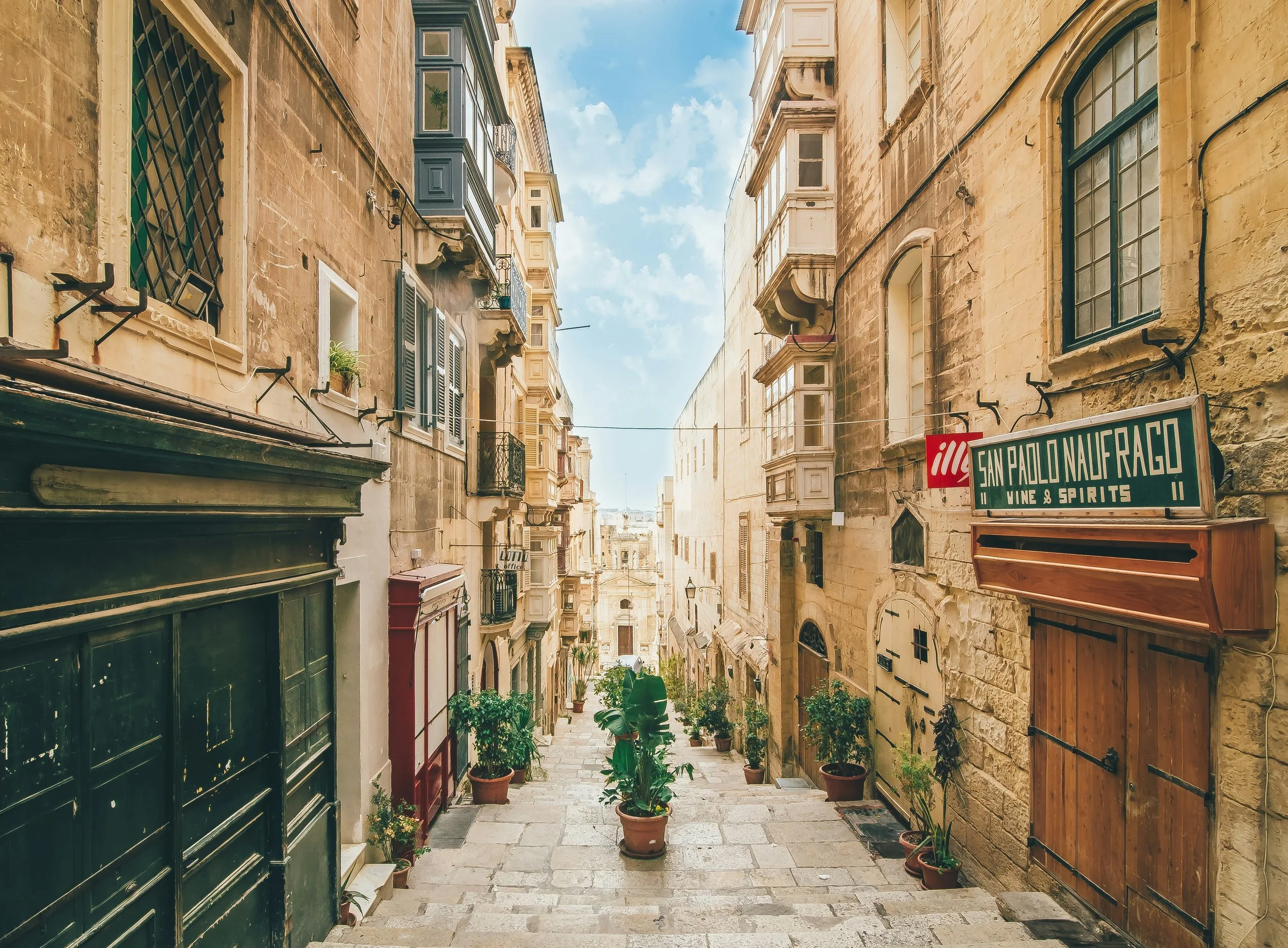
Malta rewards the curious traveller who ventures beyond the obvious — every village has a festa, every harbour has a story, and every piece of limestone has been shaped by hands going back seven thousand years
Getting There & Around
Flights: Malta International Airport is well-connected to all major European cities, with Air Malta, Ryanair, easyJet, Wizz Air, British Airways, and Lufthansa among the carriers. Flight time from London is approximately 3 hours; from Rome, 1.5 hours. There are no direct long-haul flights — North American travellers connect through a European hub.
Getting around: Malta is small (27km long, 14km wide) — a car hire makes the island easily navigable in a day. Public buses (Tallinja) are inexpensive and cover all the main routes, though they can be slow and crowded in summer. The Valletta–Sliema ferry is the most pleasurable way to cross the harbour (runs every 30–45 minutes). The Gozo ferry from Ċirkewwa (north Malta) to Mġarr harbour (Gozo) runs approximately every 45 minutes and takes 25 minutes — no booking required for foot passengers.
Practical Notes
Currency: Euro (€). ATMs widespread. Credit cards accepted almost universally in tourist areas. Language: Maltese (Malti) and English are both official languages — English is spoken fluently throughout the islands, making Malta one of the most accessible destinations in the Mediterranean for English speakers. Driving: Drive on the left (British legacy). Roads are generally good but narrow in villages — patience is rewarded. Parking in Valletta is very limited; use the park-and-ride or arrive by ferry. Electricity: British three-pin plugs (Type G), 230V.
Suggested Itinerary — 7 Days in Malta
Day 1–2: Valletta (St John's Co-Cathedral, Grand Harbour, Upper Barrakka, Noni for dinner). Day 3: Mdina and Rabat (arrive at 9am, afternoon Rabat catacombs, evening in Mdina after tour groups leave). Day 4: Gozo (full day — Citadel, Ġgantija Temples, Ramla Bay, lunch at Ta' Rikardu, back by evening ferry). Day 5: Blue Lagoon Comino (morning, by ferry from Mellieħa or Sliema — arrive early), afternoon Sliema promenade. Day 6: Southern Malta (Blue Grotto morning boat, Ħagar Qim temples, Marsaxlokk lunch). Day 7: Birgu and Three Cities (morning Inquisitor's Palace, Fort St Angelo, afternoon dgħajsa to Valletta for final afternoon).
Malta is an island that fits in your pocket
and takes a lifetime to understand.
Seven thousand years of history in 316 square kilometres,
the clearest water in the Mediterranean, and a Sunday fish market
that has been running since before the Knights arrived.