
Travel Guide
Kenya
Nairobi | Masai Mara | Amboseli
Laikipia & Samburu | The Swahili Coast
Safari · Culture · Coast · Where to Stay, Eat & Explore

Welcome to Kenya
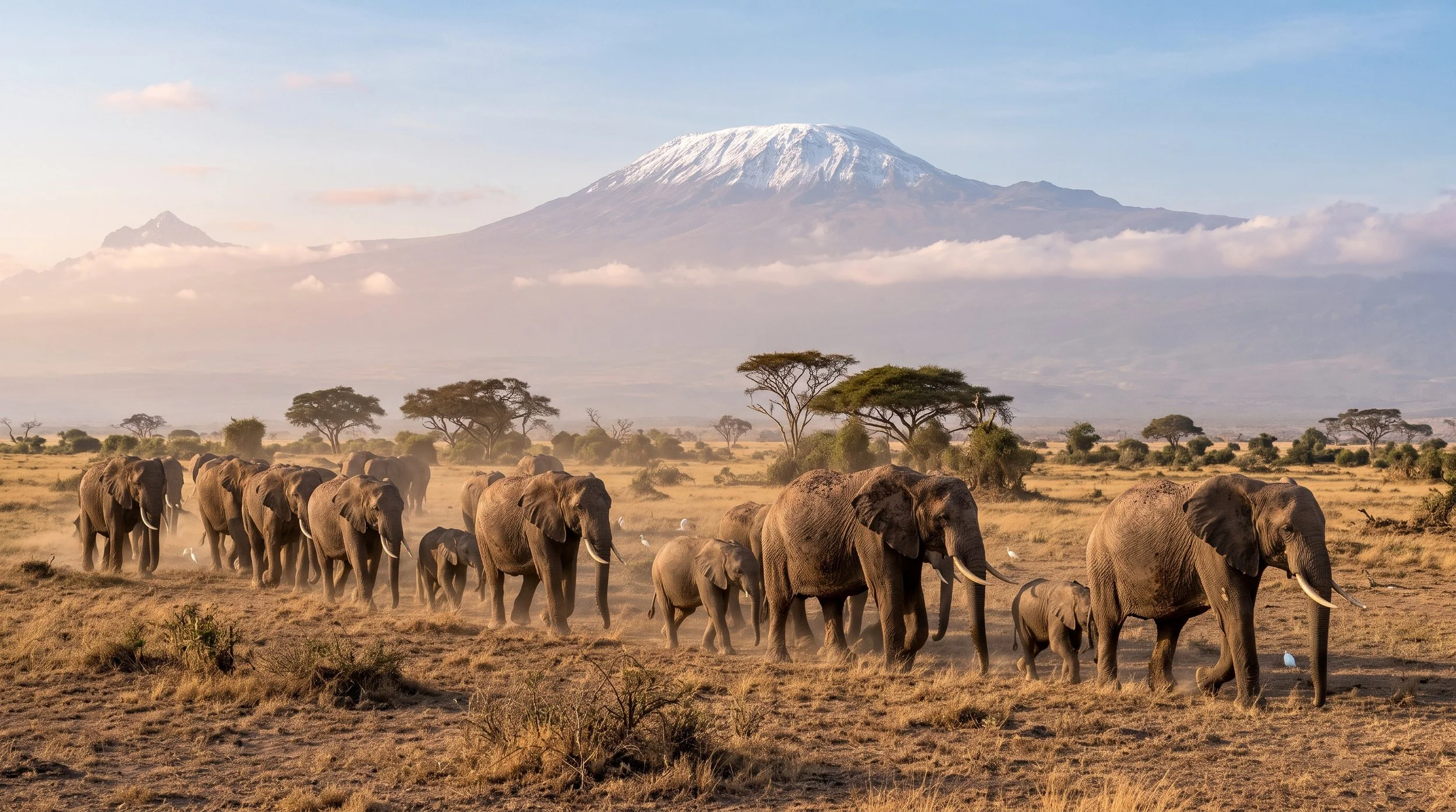
Kenya is where the modern safari was born — and it still delivers the Africa of your imagination: lions lounging on golden plains, elephants walking beneath snow-capped Kilimanjaro, Maasai warriors in red shúkà robes, and the thundering spectacle of the Great Migration. It is also one of Africa's easiest safari countries to reach from New York, with nonstop flights, a vibrant capital and an outstanding range of lodges and camps.
This guide covers five distinct experiences: Nairobi, the safari capital with a national park inside the city; the Masai Mara, Kenya's classic big-cat country; Amboseli, home of the great tuskers; the wild conservancies of Laikipia and Samburu; and the Swahili Coast of Diani and Lamu. Together they make one of the most complete safari-and-beach journeys anywhere.
Best Time to Visit
- January – February (Short Dry): Warm, sunny and excellent for game viewing, with fewer visitors than peak season. A wonderful time for the coast.
- March – May (Long Rains): Lush and green, with heavy afternoon rain. Some camps close; those that remain offer lower rates.
- June – October (Long Dry): Peak safari season. The Great Migration usually reaches the Masai Mara from around July. Book 9–12 months ahead.
- November – December (Short Rains): Brief showers, beautiful green landscapes, and good value before the holidays.
- July – October: The wildebeest herds are usually in the Masai Mara, with dramatic Mara River crossings.
- November – June: The herds move back to Tanzania's Serengeti, but the Mara's resident lions, leopards and cheetahs make it excellent year-round.
- Year-round: Amboseli's elephants, Laikipia's rhinos and Samburu's 'special five' species are reliable in every season.
- Clear early mornings give the best Kilimanjaro views from Amboseli.
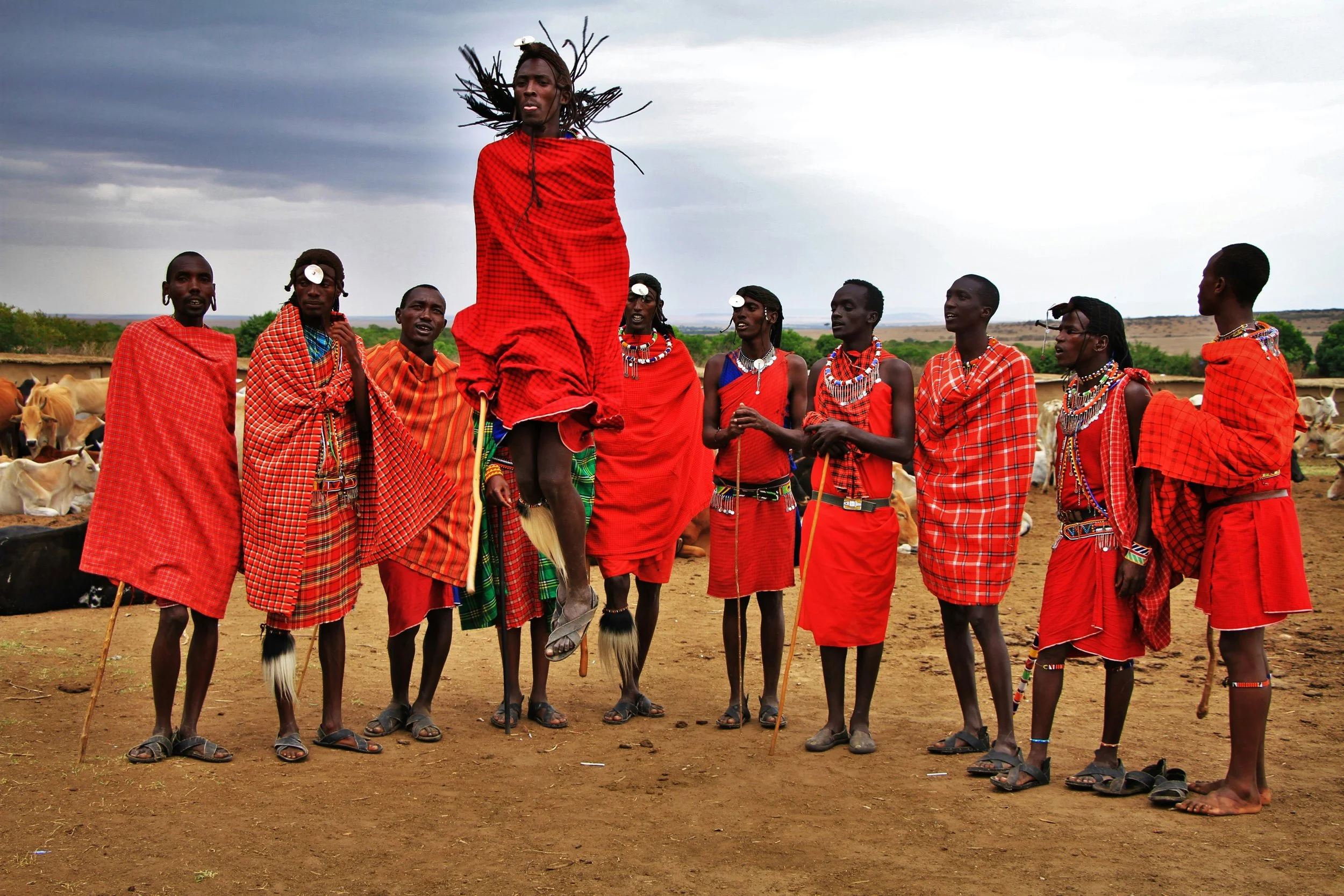
Maasai culture remains vibrant across southern Kenya — community conservancies now share tourism income directly with Maasai landowners
Culture & Character
Kenya is home to more than 40 ethnic communities, from the Kikuyu and Luo to the Maasai, Samburu and the Swahili people of the coast. Swahili and English are the official languages, and Kenyans are known for their warmth, humour and entrepreneurial energy. Nairobi is one of Africa's great tech and creative hubs.
A few words go a long way: Jambo (hello), Asante sana (thank you very much), Karibu (welcome) and, of course, Hakuna matata (no worries). Always ask before photographing people, and choose community-run cultural visits so your spending supports the families you meet.
Food & Drink — What to Know
Kenyan food is hearty and social. Nyama choma (grilled meat, usually goat or beef) is the centrepiece of any gathering, served with kachumbari (tomato-onion salad). Ugali (maize meal) and sukuma wiki (sautéed greens) are everyday staples, while the coast brings Swahili pilau, biryani, coconut fish curries and mandazi (lightly sweet fried dough). Kenya grows some of the world's finest tea and coffee; Tusker lager is the classic safari sundowner, and dawa (vodka, lime and honey) is the cocktail of the bush.
Planning Your Kenya Safari: What You Need to Know
Reserves vs. conservancies: The national reserves and parks (Masai Mara, Amboseli, Samburu) can be busy in peak season. Private conservancies bordering them limit vehicle numbers and allow off-road tracking, night drives and walking safaris — they are often the single biggest upgrade you can make to a Kenyan safari.
Getting around: Short bush flights from Nairobi's Wilson Airport (Safarilink, AirKenya) connect the parks in about an hour, saving long road days. Luggage limits are strict — usually around 15 kg per person in soft-sided bags.
Park and conservancy fees: Daily fees apply in every park and conservancy and are usually included in lodge rates — always confirm when booking.
Accommodation tiers: Kenya offers everything from comfortable lodges and classic tented camps to some of the most spectacular luxury properties in Africa. I am happy to match the right camps to your style and budget.
The Safari Capital — Wildlife, Conservation & Creative Energy
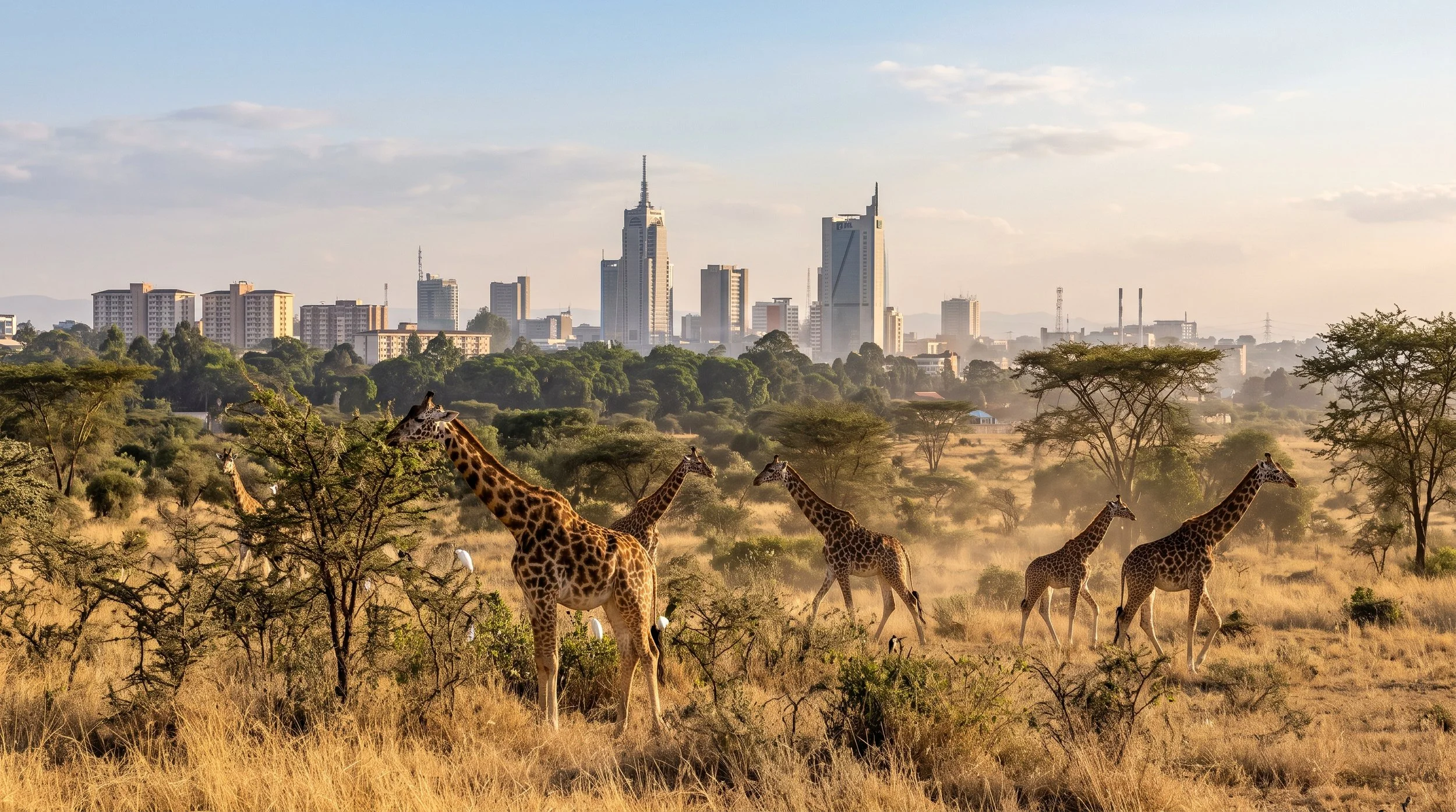
Nairobi National Park — the only national park in the world with a capital city's skyline as its backdrop
Culture & Vibes
Nairobi is a dynamic, fast-growing city with a leafy, relaxed side in the suburb of Karen, named after Karen Blixen of Out of Africa. Here you can visit the Sheldrick Wildlife Trust, which has rescued and raised hundreds of orphaned elephants, and watch the babies at their late-morning mud bath. At the Giraffe Centre, you can feed endangered Rothschild's giraffes from a raised platform.
Early risers can take a game drive in Nairobi National Park, home to lions, buffalo and one of Kenya's most important black rhino sanctuaries. Then explore the city's creative side: the Nairobi National Museum, the Kazuri Beads women's workshop, and the galleries and design shops of Westlands and Karen.
Food
Must Try: Nyama choma with kachumbari, a cup of Kenyan coffee at a farm or café, and the famous open-fire grill at Carnivore. Nairobi's modern restaurant scene is excellent — from playful Kenyan comfort food to elegant garden dining in Karen.
Experience Snapshot
The Classic Safari — Big Cats, Endless Plains & the Great Migration
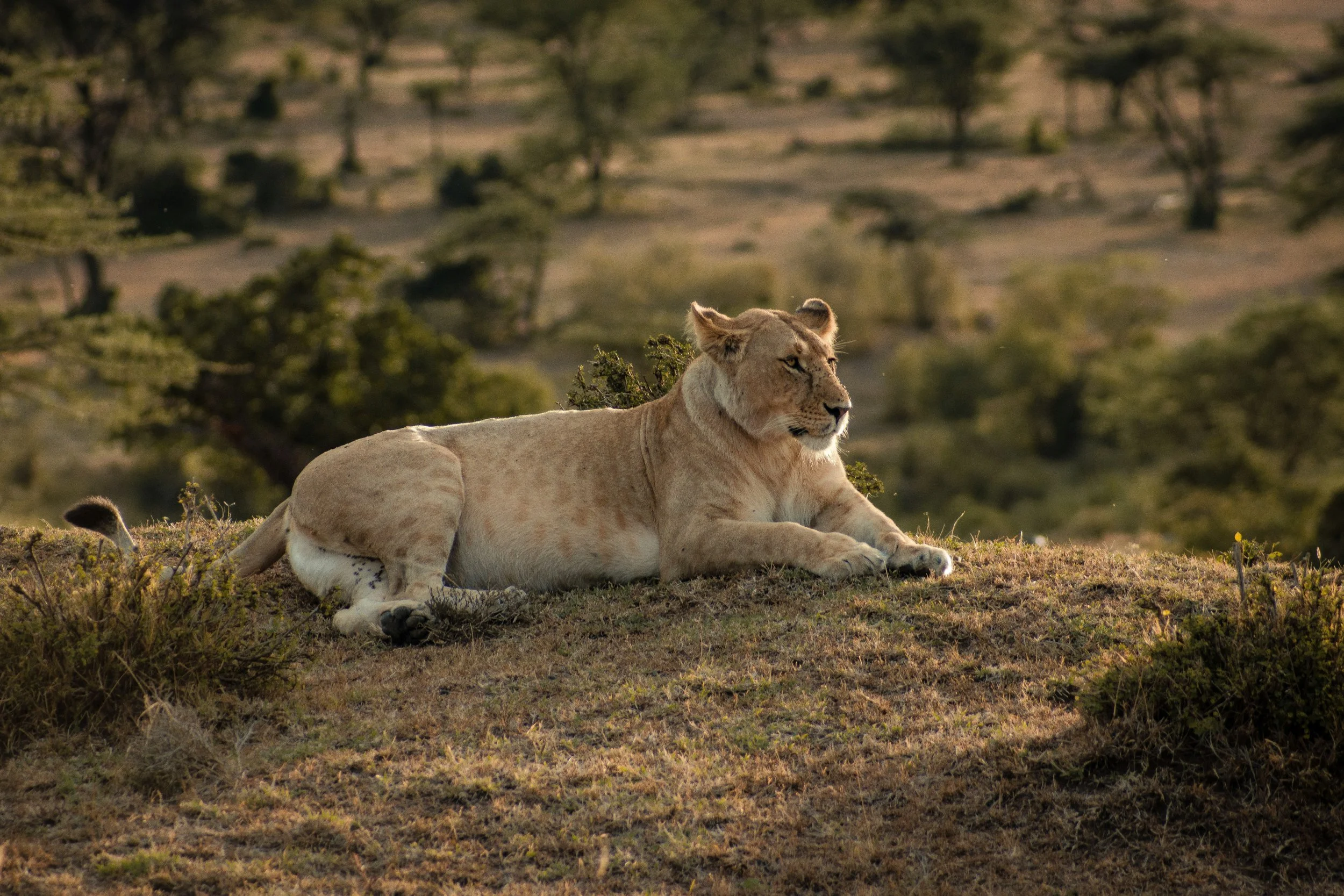
The Masai Mara holds some of the highest densities of lions, leopards and cheetahs in Africa
Culture & Vibes
The Masai Mara's golden plains, scattered with acacias and crossed by the Mara and Talek rivers, are one of the most wildlife-rich landscapes on earth. Bordering the reserve, private conservancies such as Olare Motorogi, Naboisho and Mara North are leased from Maasai landowners, limit vehicle numbers, and offer walking safaris, night drives and off-road tracking.
Between roughly July and October, more than a million wildebeest and zebra arrive from the Serengeti, and the dramatic Mara River crossings draw photographers from around the world. The rest of the year, resident lion prides, cheetahs and leopards keep the Mara outstanding. A sunrise hot-air balloon flight with a champagne bush breakfast is a classic Mara experience.
Food
All meals are at your camp — bush breakfasts on the plains, sundowners on a hilltop, and lantern-lit dinners under the stars are the rituals that make a Mara safari unforgettable.
Experience Snapshot
Elephants Beneath Kilimanjaro
Amboseli's elephants — among the most studied in the world — with Kilimanjaro rising across the border in Tanzania
Culture & Vibes
Amboseli's dry, open plains are fed by underground springs from Kilimanjaro, creating lush swamps that draw elephants, buffalo, hippos and huge flocks of birds. The park's elephants have been studied for more than 50 years by the Amboseli Trust for Elephants, and they are famously relaxed around vehicles. Some of the last great 'tuskers' — bulls with tusks that sweep the ground — live in this ecosystem.
Kilimanjaro is often hidden in cloud by midday, so set out early. Climb Observation Hill for sweeping views over the swamps, and consider a stay in one of the private conservancies on the park's edge for walking safaris and night drives.
Food
Breakfast with a Kilimanjaro view is the essential Amboseli moment. Camps serve fresh, generous meals, and sundowners overlooking the plains as the mountain glows pink are pure magic.
Experience Snapshot
Rhino Sanctuaries, Wild Conservancies & the 'Special Five'
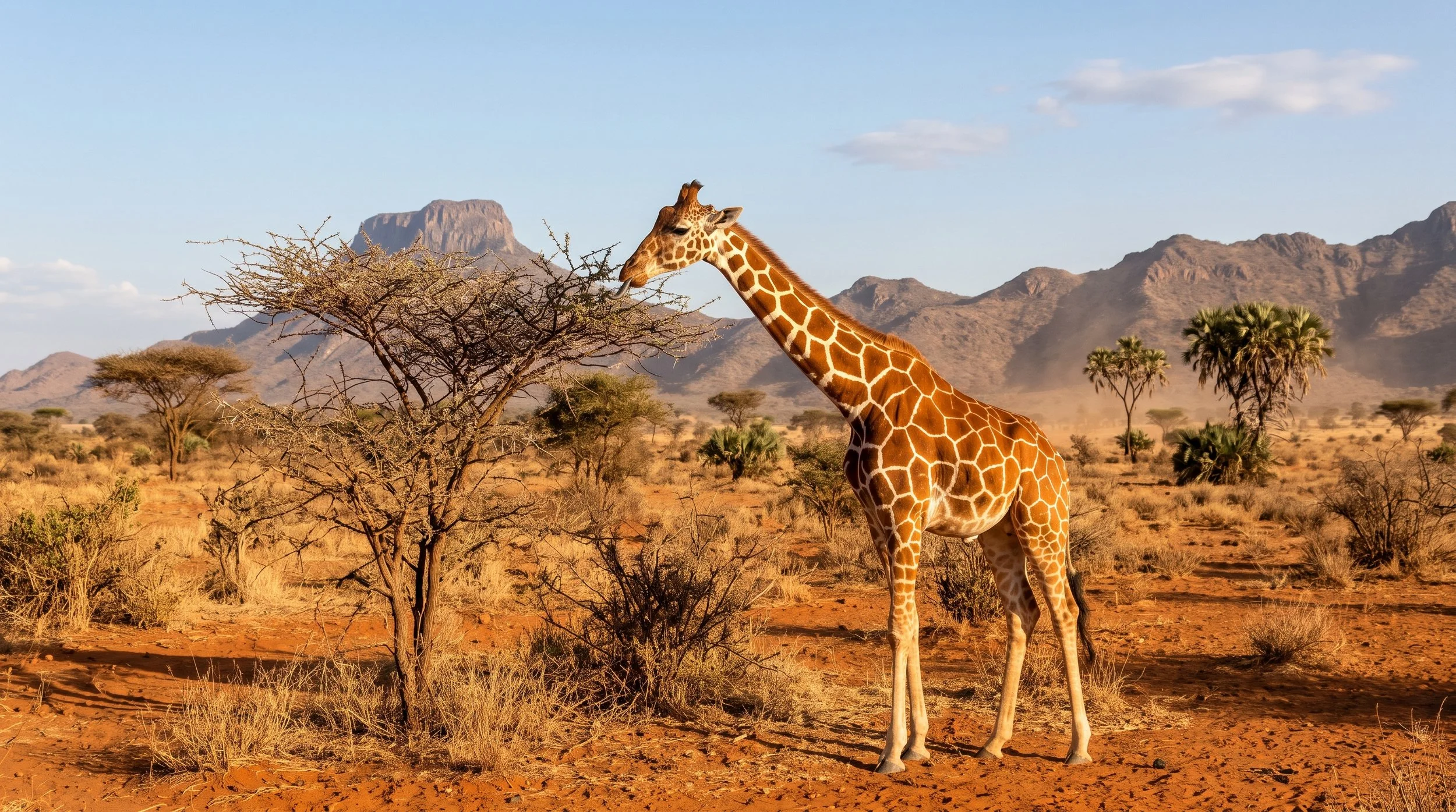
The reticulated giraffe — one of Samburu's 'special five' species found only in Kenya's dry north
Culture & Vibes
On the Laikipia Plateau, Ol Pejeta Conservancy is home to the largest black rhino sanctuary in East Africa and the last two northern white rhinos on earth, guarded around the clock. Nearby, Lewa Wildlife Conservancy, part of the Mount Kenya UNESCO World Heritage Site, pioneered community conservation and protects rhinos and Grevy's zebras.
Farther north, Samburu National Reserve is dry, dramatic country along the Ewaso Nyiro River, with its own 'special five': Grevy's zebra, reticulated giraffe, Somali ostrich, gerenuk and beisa oryx. The Samburu people, cousins of the Maasai, are known for their beaded jewellery and warm welcome.
Food
Lodge dining here often features produce from the conservancies' own gardens. Bush dinners by the river and breakfasts on a rocky kopje are highlights.
Experience Snapshot
Diani Beach & Lamu — White Sand, Dhows & Swahili Soul
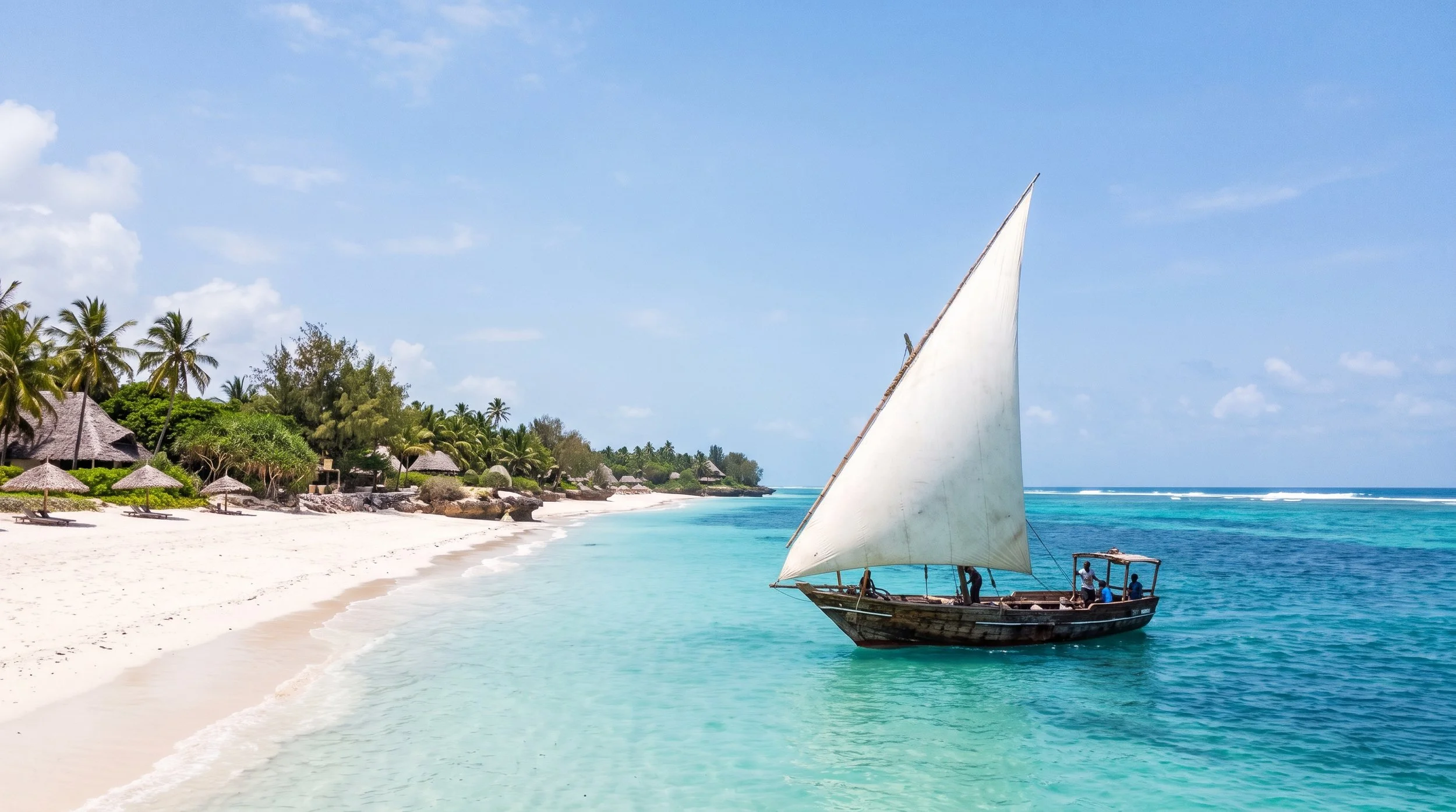
A traditional dhow off the Kenyan coast — the Swahili trading culture of the Indian Ocean is more than a thousand years old
Culture & Vibes
South of Mombasa, Diani Beach is a long stretch of powder-white sand lined with palms and protected by a coral reef. Snorkel and dive at Kisite-Mpunguti Marine Park, sail a dhow to Wasini Island, and look for rare colobus monkeys in the coastal forest.
To the north, Lamu Old Town — a UNESCO World Heritage Site and the oldest continuously inhabited Swahili town in East Africa — has no cars: donkeys and dhows are the transport. Stay in nearby Shela or on Manda Island for beaches and quiet luxury. Lamu Island and Manda are reached by short flights; check the State Department advisory, which flags parts of Lamu County on the mainland.
Food
Swahili coconut fish curries, grilled lobster and prawns, pilau, samosas and fresh tropical juices. A dinner inside a coral cave at Diani is one of Kenya's most memorable meals.
Experience Snapshot
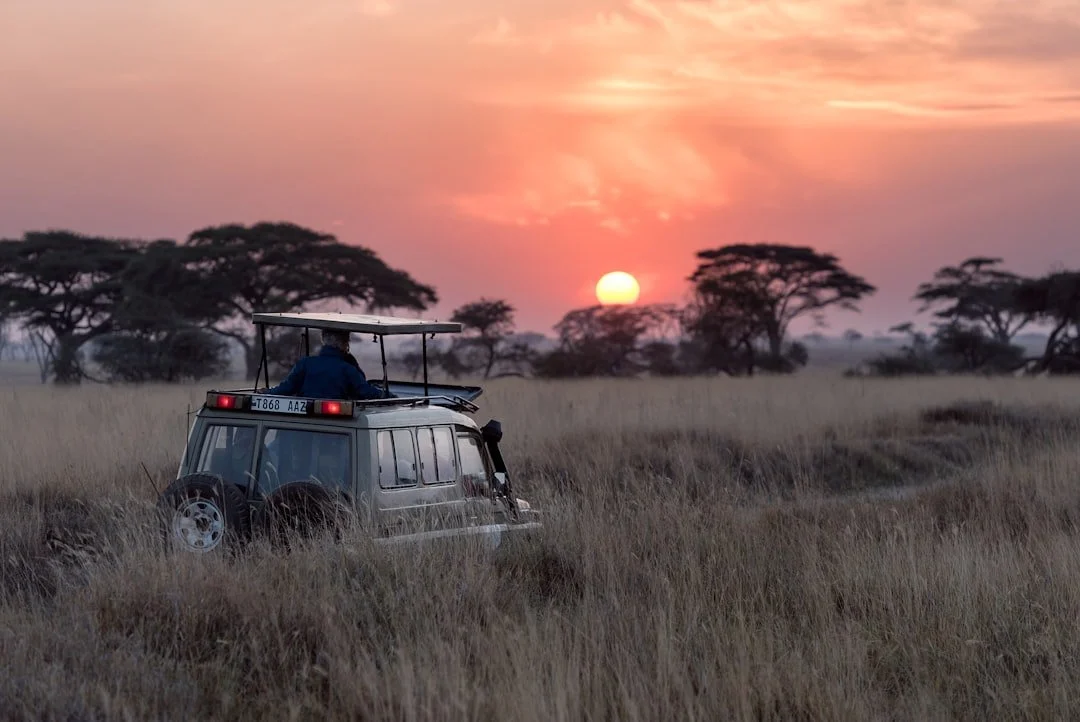
Early morning on safari — the golden hour when the bush comes alive
Getting There & Around
Flights: Kenya Airways flies nonstop from New York (JFK) to Nairobi's Jomo Kenyatta International Airport. Domestic travel: Light aircraft from Nairobi's Wilson Airport connect to Mara, Amboseli, Laikipia and Samburu airstrips; fly to the coast via Ukunda (Diani) or Manda (Lamu). Pack in soft bags and keep to roughly 15 kg per person for bush flights.
Visas & Entry
US citizens need an approved Electronic Travel Authorisation (eTA) before flying (standard fee about $30). As of late 2026, the application also requires mandatory Kenyan inbound travel health insurance. Apply at least two weeks ahead on the official portal, and confirm current requirements before you travel.
Health & Safety
Malaria: Antimalarials are recommended for safari areas and the coast; Nairobi's risk is low. A yellow fever vaccination is recommended — consult a travel clinic at least six weeks before departure. Water: Drink bottled or filtered water. Safety: Safari camps are very safe. In Nairobi, use private transfers and normal city awareness, and check the US State Department advisory.
Money & Currency
The currency is the Kenyan Shilling (KES). US dollars are widely accepted at lodges, and mobile money (M-Pesa) is used everywhere. Plan to tip safari guides and camp staff — your advisor will share current guidelines.
Culture & Etiquette
Always ask before photographing people. Dress modestly in towns and on the coast, especially in Lamu. Single-use plastic bags are banned in Kenya — leave them at home. Choose community-run cultural experiences so tourism income reaches the families you visit.
Suggested Itinerary Combinations
7 days: Nairobi (1 night) + Masai Mara conservancy (3) + Amboseli (2) + Nairobi (1). 10 days: Nairobi (1) + Masai Mara (3) + Amboseli (2) + Diani Beach (4). 14 days: Nairobi (2) + Laikipia or Samburu (3) + Masai Mara (4) + Lamu or Diani (5). Schedule a call and I will build a custom itinerary around your travel style and timeline.
Kenya gives you the safari of your imagination — and then some.
The roar of a lion before dawn. A baby elephant splashing in the mud.
A dhow sail at sunset on the Indian Ocean.
Come once, and Africa will call you back.