
Travel Guide
Japan
Tokyo | Hakone & Mt. Fuji | Kyoto
Nara & Osaka | The Japanese Alps | Hiroshima & Miyajima
Temples · Onsen · Bullet Trains · Where the Ancient and the Ultra-Modern Share a Platform

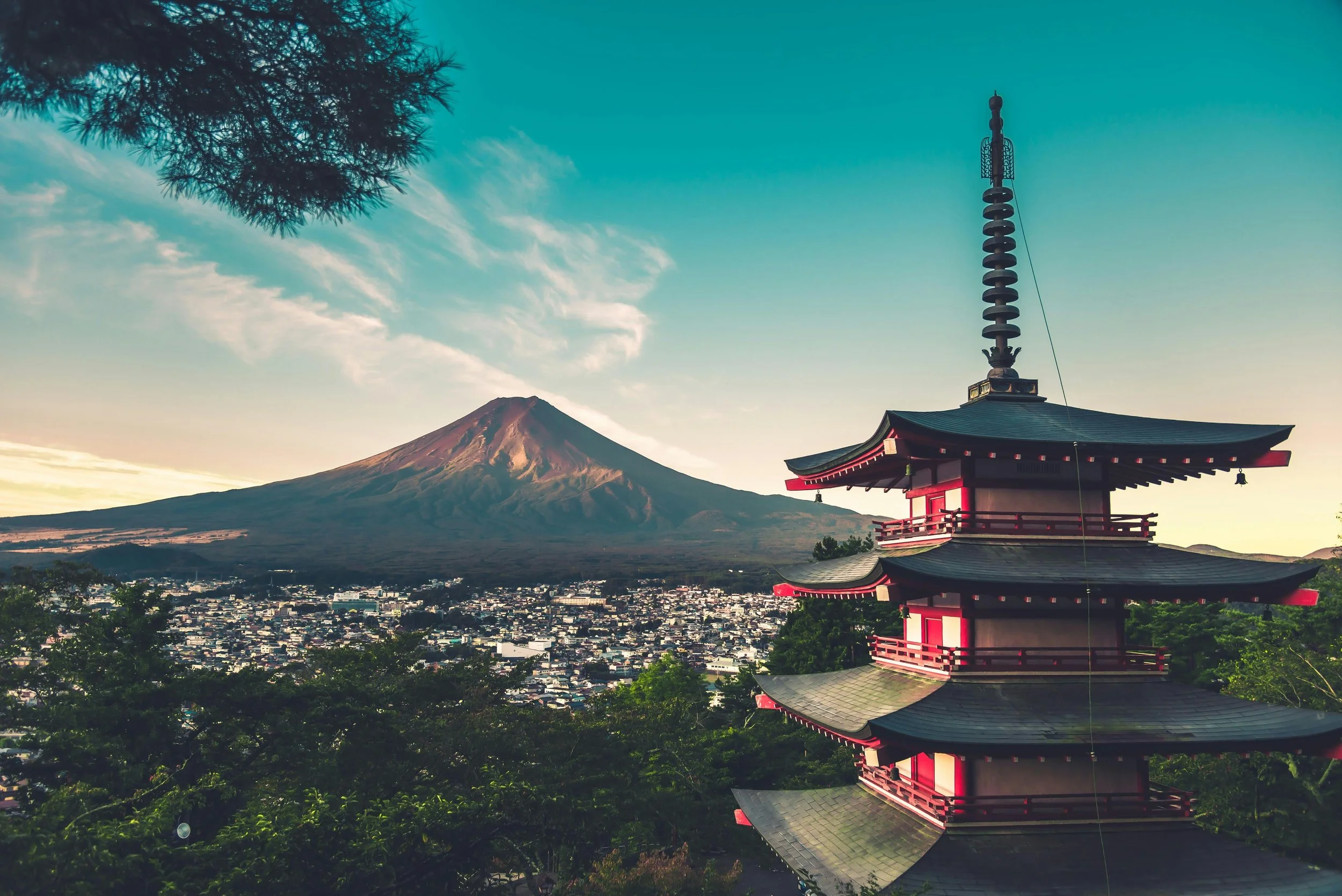
Welcome to Japan — Where Every Detail Is the Point
Japan is the destination that converts even the most seasoned traveler. It is a country where a train arriving 40 seconds late warrants an apology, where a convenience-store sandwich is better than most airport lounges, and where a 400-year-old family inn will remember how you take your tea by the second morning. The word for it is omotenashi — wholehearted hospitality that anticipates what you need before you ask — and it shapes every part of a well-planned Japan journey.
What makes Japan so rewarding is its range. In a single week you can stand in the neon heart of the world's largest city, soak in a hot spring with Mt. Fuji on the horizon, kneel in a tatami room as a tea master whisks matcha in a ritual unchanged since the 16th century, and walk a thatched-roof mountain village that looks like a woodblock print come to life. The shinkansen (bullet train) stitches it all together so smoothly that moving between these worlds becomes part of the pleasure.
This guide follows the classic arc — Tokyo, Hakone and Mt. Fuji, Kyoto's living cultural heritage, Nara and Osaka, the mountain villages and castle towns of the Japanese Alps, and Hiroshima with the sacred island of Miyajima — a complete first (or fifth) journey through one of the most refined travel experiences on earth.
Best Time to Visit
- Late March – Early April: Cherry blossom season — the most famous and most booked weeks of the year. Bloom dates move north and up in altitude, so Tokyo and Kyoto peak first while the Alps follow weeks later. Book luxury hotels 9–12 months out.
- Mid-April – May: Mild, green, and lovely. The Tateyama Kurobe Alpine Route's towering snow walls are at their best from mid-April into May. Avoid Golden Week (late April – early May), Japan's busiest domestic holiday stretch.
- June – August: June brings the rainy season (tsuyu) to most of the country; July and August are hot and humid in the cities. Summer is, however, prime time in the Alps — Kamikochi's hiking trails and cool mountain air are at their best.
- October – Early December: Autumn foliage (koyo) is Japan's second great season and, for many, its finest. The Alps turn first in October; Kyoto's maples typically peak mid-November into early December. Clear skies, comfortable temperatures.
- December – February: Cold, crisp, and far less crowded. Clear winter days give the best views of Mt. Fuji, the Alps are blanketed in snow (Shirakawa-go's illuminated farmhouses, the snow monkeys of Nagano), and Kyoto's temples are beautifully quiet.
- Cherry blossom and autumn foliage dates shift every year — the forecasts are published in the weeks before, so build a little flexibility into the Kyoto portion of a spring or fall itinerary.
- Typhoon risk is highest from August through September. Disruption is usually short, but avoid booking a tight connection on the day of an international flight home.
- The Tateyama Kurobe Alpine Route operates seasonally — in 2026, from April 15 to November 30 — and is closed through the winter. Kamikochi is similarly open from roughly late April to mid-November.
- Mt. Fuji is famously shy — it hides behind cloud on many days, especially in summer. Winter and early mornings offer the best odds of a clear view.
- Japanese school holidays and the New Year period (around December 29 – January 3) see many restaurants and some attractions close, while trains and hotels fill quickly.
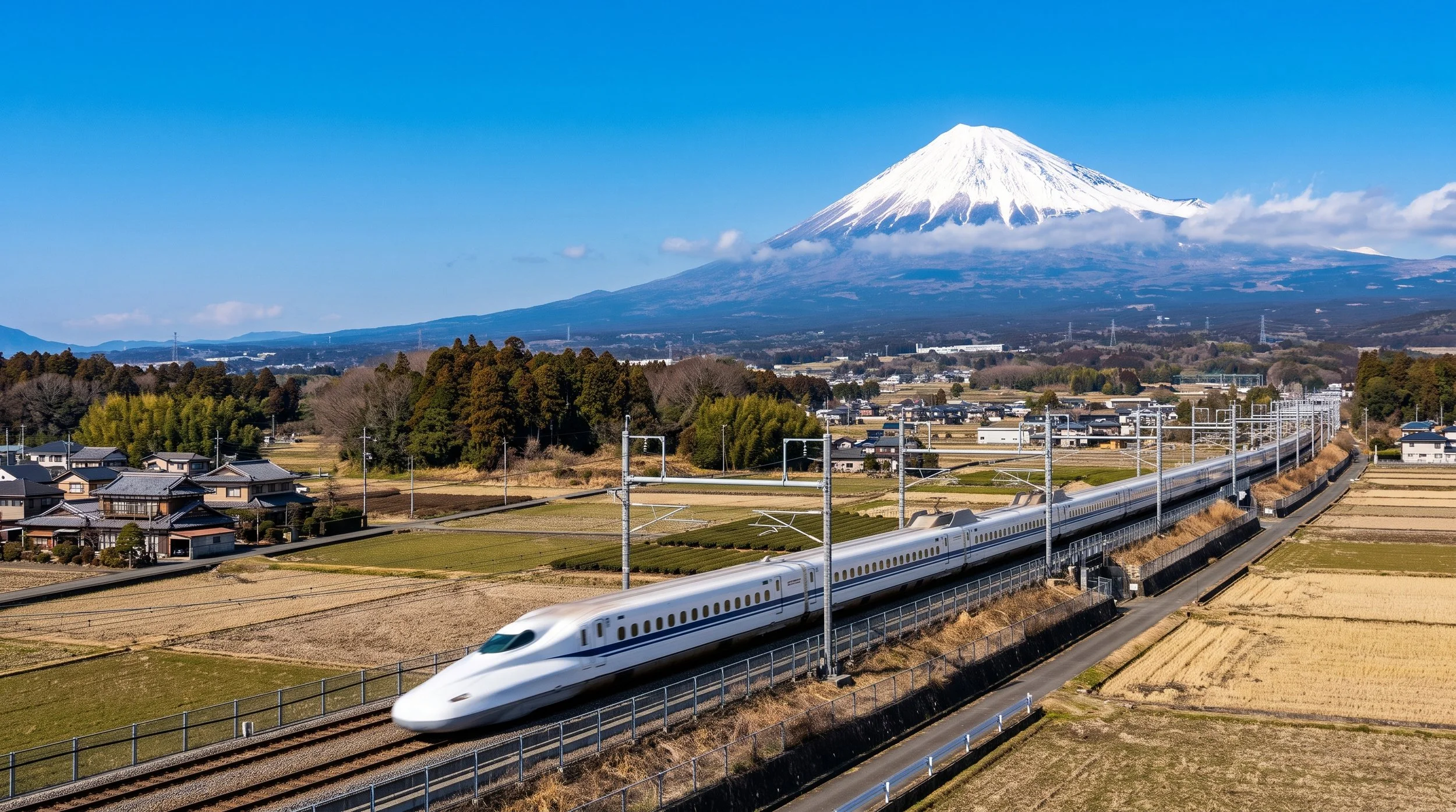
The shinkansen gliding past Mt. Fuji: Japan's bullet trains are fast, silent, and spotless — and the right-hand window seat between Tokyo and Kyoto is the one to request
Japanese Food — Seasonal, Precise & Deeply Regional
Japanese cuisine (washoku) is UNESCO-recognized intangible cultural heritage, and the depth goes far beyond sushi. Every region — often every town — has its own specialty, and dishes change with the season so precisely that a menu in early November reads differently from one in late November. Eating your way through Japan is, for many travelers, the highlight of the trip.
Must Try: Omakase sushi (the chef's selection, course by course, at a counter — the finest experience of Japanese precision you can have at a dinner table), kaiseki (Kyoto's multi-course seasonal haute cuisine, the ancestor of the tasting menu), ramen (regional styles vary dramatically — rich tonkotsu, light shoyu, miso), tempura made to order at the counter, wagyu (try Hida beef in the Alps — a rival to Kobe), okonomiyaki (savory pancakes, made differently in Osaka and Hiroshima, with fierce local loyalty), matcha in every form, and the humble but spectacular depachika — the gourmet food halls in the basements of department stores.
A City of Cities — Neon, Shrines & the Greatest Food Scene on Earth
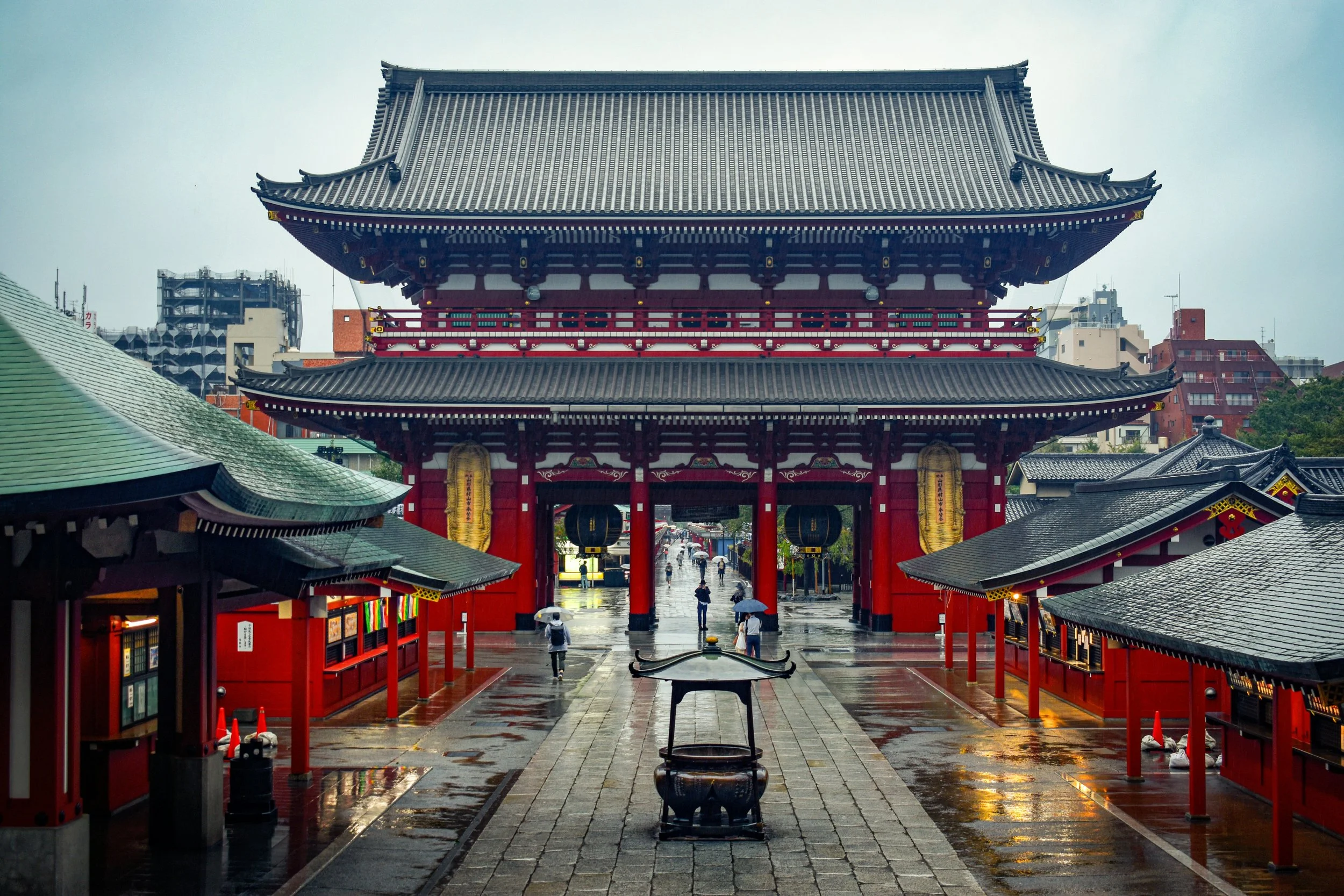
Senso-ji, Tokyo's oldest temple, with the modern city rising behind it — the contrast between centuries is part of Tokyo's everyday texture
Neighborhoods & Culture
Asakusa is old Tokyo — Senso-ji Temple, the Kaminarimon (Thunder Gate) with its giant red lantern, and the Nakamise shopping street lined with traditional snack and craft stalls. Arrive early morning or after dark for a quieter, more atmospheric visit. Meiji Jingu, a Shinto shrine set in a forest of 100,000 trees right beside Harajuku, is one of the most peaceful places in the city. Yanaka survived both the 1923 earthquake and WWII bombing and remains a charming neighborhood of temples, wooden houses, and artisan shops.
For the modern side: Shibuya Crossing (watch it from above at Shibuya Sky's open-air rooftop at sunset), Ginza for flagship luxury and department stores, Omotesando for architecture-as-shopping (its boutiques were designed by some of the world's leading architects), and teamLab's immersive digital art museums — Planets in Toyosu and Borderless at Azabudai Hills. After dark, Shinjuku delivers neon at full volume, while its tiny bars in Golden Gai and the lantern-lit alley of Omoide Yokocho show the intimate side of Tokyo nightlife.
Food
Tokyo holds more Michelin stars than any city in the world, but the real magic is the range — a counter of eight seats where a sushi master serves you piece by piece, a ramen shop with a line out the door at 11am, a yakitori stand under the railway tracks in Yurakucho. The Tsukiji Outer Market remains a wonderful morning food walk (tamagoyaki, fresh oysters, tuna), even though the wholesale market itself moved to Toyosu. Top omakase and kaiseki counters book up weeks or months in advance and often only through a hotel concierge or advisor — this is precisely where planning ahead pays off.
Experience Snapshot
Hot Springs, Lake Views & Japan's Sacred Mountain

The red torii of Hakone Shrine standing in the waters of Lake Ashi, with Mt. Fuji rising beyond — Hakone at its most serene
The Hakone Loop
The classic way to experience Hakone is a loop by mountain railway, cable car, ropeway, and boat. The Hakone Tozan Railway switchbacks up through the forest; the Hakone Ropeway floats over Owakudani, a steaming volcanic valley where eggs boiled black in the sulfur springs are said to add seven years to your life; and a sightseeing cruise crosses Lake Ashi to the vermilion lakeside torii of Hakone Shrine. Art lovers shouldn't miss the Hakone Open-Air Museum (sculpture set across hillside lawns, with an excellent Picasso pavilion) or the Pola Museum of Art, hidden in the forest. The Hakone Free Pass covers most of the loop.
Mt. Fuji & the Five Lakes
For the closest views of Fuji, head to Lake Kawaguchiko, the most popular of the Fuji Five Lakes — the north shore offers the classic reflection shot, and the Chureito Pagoda (398 steps up the hillside) frames the mountain behind a five-story pagoda, most famously in cherry blossom season. The official climbing season on Fuji itself runs from early July to early September; climbers now pay a mountain fee and register in advance, and the climb is a serious overnight undertaking best arranged with a guide.
The Ryokan Experience — What to Expect
A ryokan stay is one of the most memorable nights in Japan. You'll remove your shoes at the entrance, change into a yukata (light cotton robe), and bathe before a multi-course kaiseki dinner — often served in your room. Futons are laid out on the tatami while you dine. Onsen etiquette matters: wash thoroughly before entering the bath, and no swimsuits. Many public baths still restrict visible tattoos, so for travelers with tattoos (or anyone who prefers privacy), a room with its own private open-air bath is the way to go.
Experience Snapshot
A Thousand Years as Japan's Capital — Temples, Tea, Geisha & Gardens
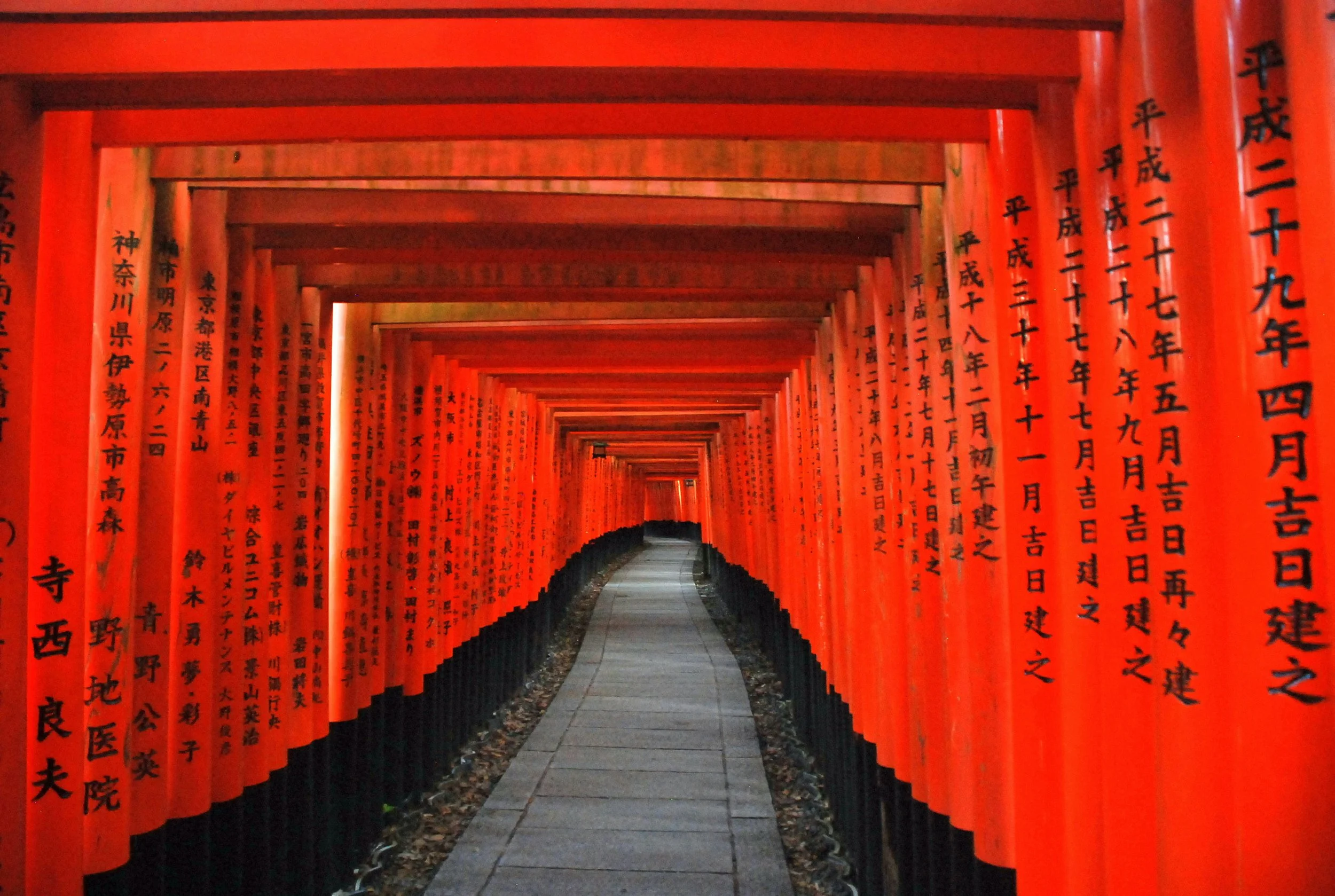
The vermilion gates of Fushimi Inari Taisha — thousands of torii winding up a sacred mountain, each donated by a business or family
The Essential Sites
Fushimi Inari Taisha — the mountain path of thousands of vermilion torii — is best walked at sunrise, when the lower gates are empty; most visitors turn back long before the summit, so the upper trail is peaceful at almost any hour. Kiyomizu-dera, the wooden temple balcony built out over the hillside without a single nail, overlooks the city; the cobbled lanes of Sannenzaka and Ninenzaka below lead toward Gion. Kinkaku-ji (the Golden Pavilion), Ryoan-ji's enigmatic rock garden, and Ginkaku-ji (the Silver Pavilion), linked to the cherry-lined Philosopher's Path, complete the classic circuit. In the west, Arashiyama's bamboo grove, the Zen gardens of Tenryu-ji, and the hillside villa garden of Okochi Sanso make for a beautiful morning — again, arrive early.
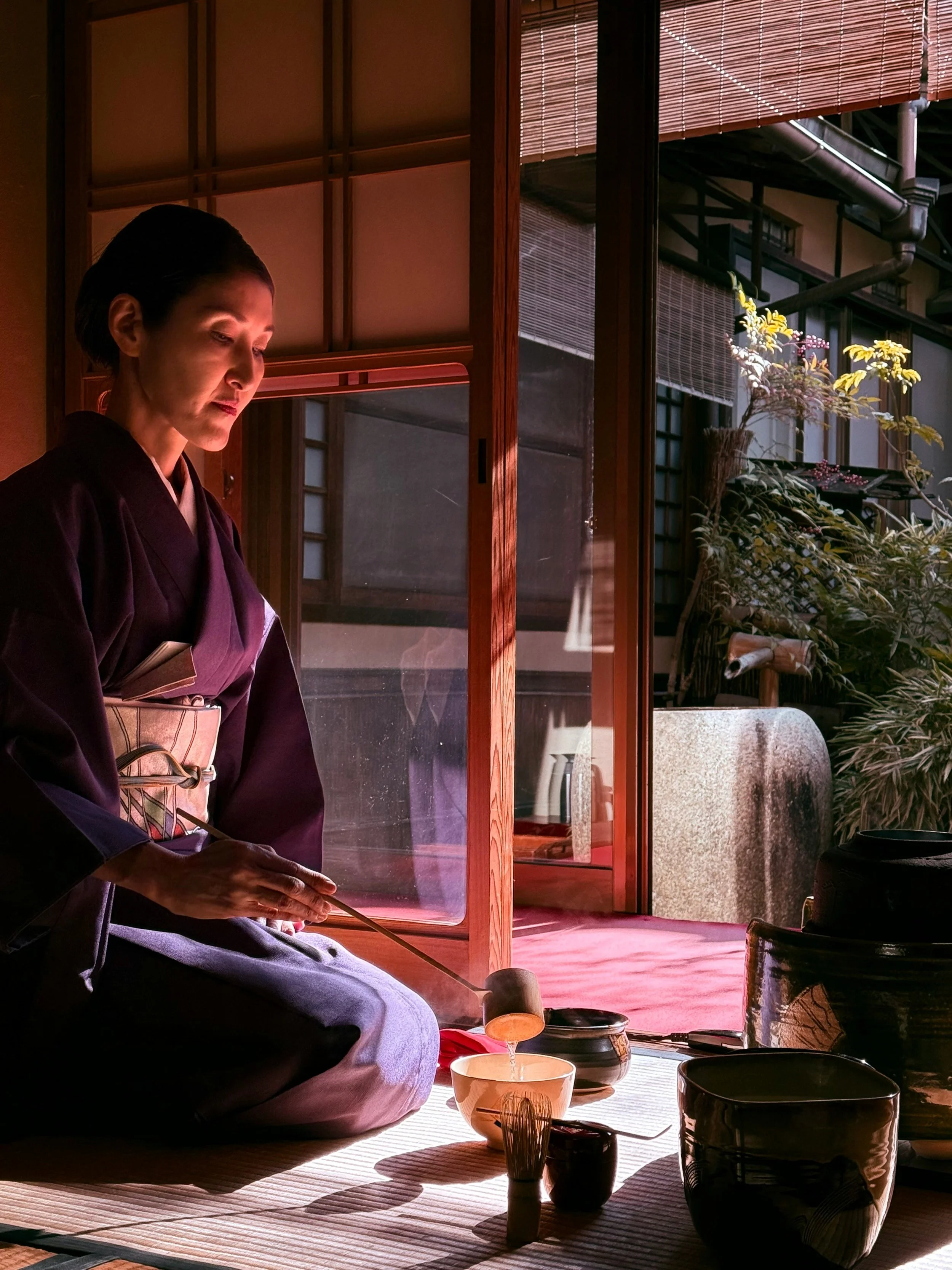
A private tea ceremony in Kyoto: every movement — the folding of the silk cloth, the turn of the bowl — is part of a ritual refined over more than four centuries
Kyoto Cultural Experiences
What sets a truly great Kyoto stay apart is access. With the right introductions, the city opens doors that are closed to the casual visitor:
Private tea ceremony — in a historic teahouse or temple sub-temple, hosted by a tea master who explains the philosophy behind each gesture. Dinner with a maiko or geiko — an evening of conversation, traditional dance, and drinking games with an apprentice or fully trained geisha, arranged through an introduction to an ochaya (teahouse); this is one of the most exclusive cultural experiences in Japan. Zen meditation (zazen) with a monk at a temple such as one of the sub-temples of Myoshin-ji or Daitoku-ji. Kaiseki dinner at a historic restaurant where the menu follows the micro-seasons. Artisan workshops — Kyo-yuzen silk dyeing, incense blending, lacquer, or sweet-making (wagashi) with a master craftsperson. A Fushimi sake brewery tour in the old canal-side district where Kyoto's sake has been brewed for centuries. An after-hours or early-access temple visit, which some temples offer through special arrangement, especially during the spring and autumn illuminations.
Respecting Gion
Gion is a living neighborhood, not a theme park, and local residents have pushed back hard against overtourism — some private lanes are now closed to visitors, and photographing maiko without permission is strongly discouraged. The respectful (and far more rewarding) way to experience geisha culture is a properly arranged private dinner or performance, where you can actually talk with a maiko rather than glimpse her hurrying to an appointment.
Experience Snapshot
Bowing Deer & a Giant Buddha — Then Japan's Kitchen After Dark
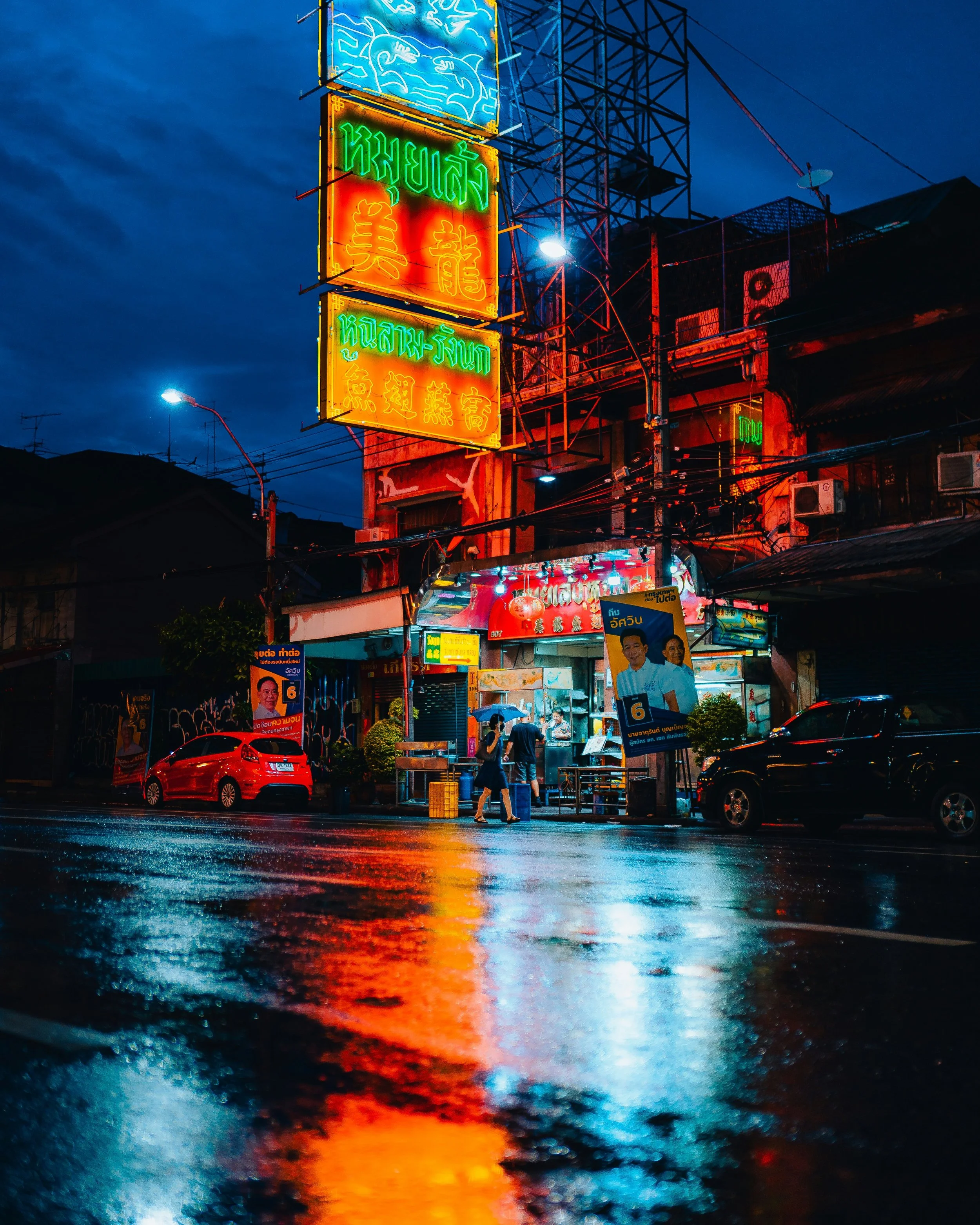
Dotonbori at night: Osaka's canal-side entertainment district, all neon signs and sizzling street food — the city's unofficial motto is kuidaore, "eat until you drop"
Nara
Nara's highlights sit together in one beautiful park. Todai-ji houses a bronze Buddha about 15 meters tall inside what was, for centuries, the largest wooden building in the world. Around it, more than a thousand sacred deer wander freely — buy the special deer crackers (shika senbei) and many will bow politely before eating. Kasuga Taisha shrine, with its paths lined by some 3,000 stone and bronze lanterns, and the gardens of Isuien round out a perfect day. Nara is roughly 35–45 minutes by train from both Kyoto and Osaka.
Osaka
Osaka is where Japan lets its hair down. Dotonbori, with its giant mechanical crab and running-man Glico sign, is the classic first stop for takoyaki (octopus dumplings) and okonomiyaki. Kuromon Market is a covered lane of seafood, wagyu skewers, and fresh fruit; Shinsekai keeps a retro charm and is the place for kushikatsu (crispy fried skewers — and the rule is no double-dipping in the shared sauce). For history, Osaka Castle rises over its moats and park, and the Umeda Sky Building's open-air observatory gives a sweeping night view of the city.
Experience Snapshot
Thatched-Roof Villages, Castle Towns, Snow Walls & Mountain Valleys
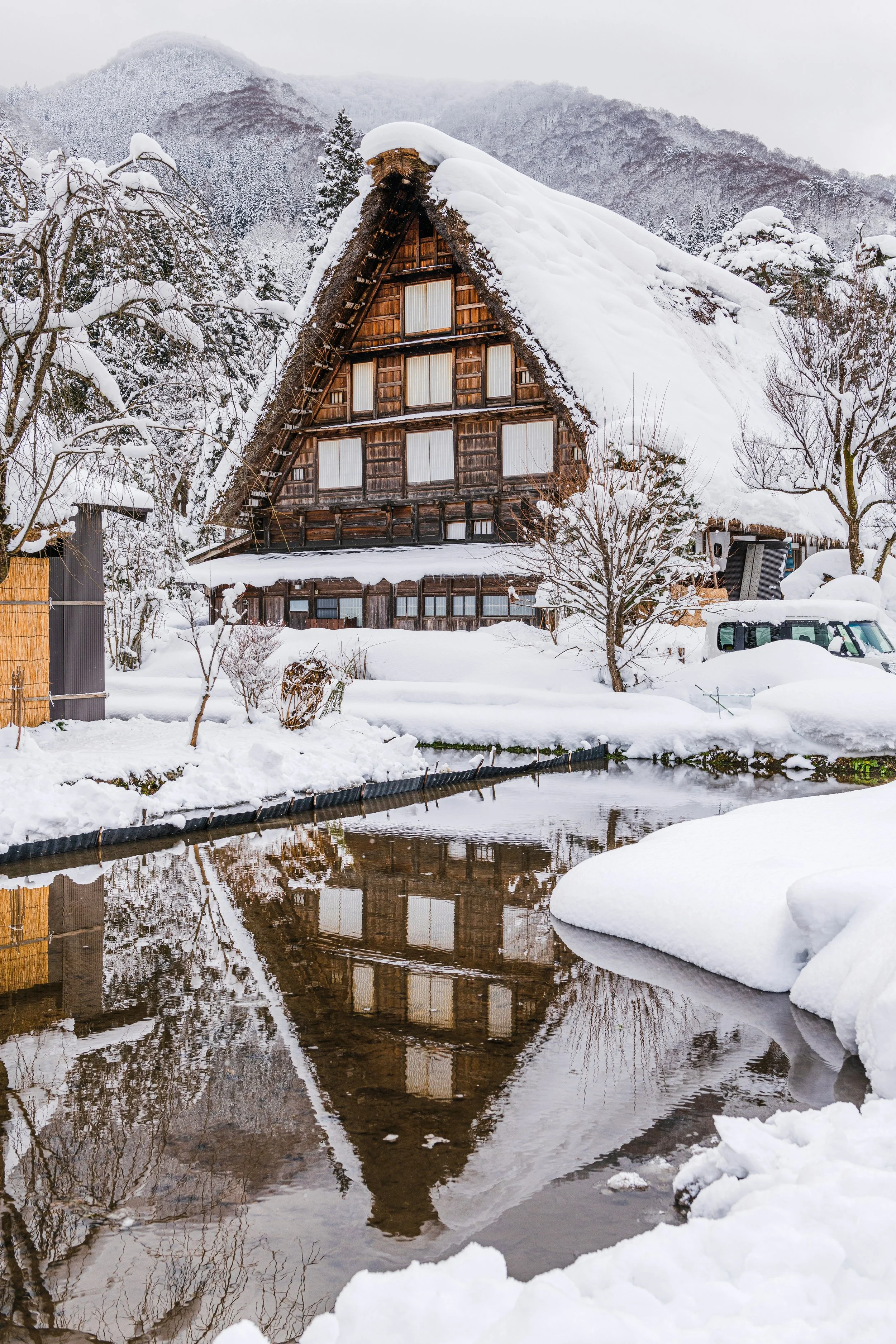
Shirakawa-go in winter: steep thatched farmhouses built to shed heavy mountain snow, their roofs shaped like hands pressed together in prayer
Takayama, Shirakawa-go & Kanazawa
Takayama's Sanmachi Suji district preserves Edo-period merchant houses, sake breweries (look for the cedar balls hanging over the doorways), and two lively morning markets along the river. Its spring and autumn festivals, with towering ornate floats, are among Japan's most beautiful. Shirakawa-go, about an hour away by bus, is a village of gassho-zukuri farmhouses whose steep thatched roofs were built to withstand heavy snow — climb to the Shiroyama viewpoint for the postcard view, and on select winter evenings the village is illuminated under snow (these nights require advance reservations). Kanazawa, reached easily by shinkansen from Tokyo, is a city of samurai and geisha districts and Kenroku-en, ranked among Japan's three great gardens. The city produces nearly all of Japan's gold leaf — expect to find it on everything from lacquerware to soft-serve ice cream.
Kamikochi, the Alpine Route & Nagano
Kamikochi is a high mountain valley inside Chubu Sangaku National Park — clear rivers, larch forest, and the jagged Hotaka peaks above. Private cars are banned, which keeps it pristine; the easy riverside walk from Taisho Pond past the Kappa Bridge to Myojin Pond is suitable for most fitness levels. The Tateyama Kurobe Alpine Route crosses the Northern Alps by cable car, trolley bus, and ropeway — in spring, buses drive through a corridor of snow walls that can tower well over 10 meters high, and the route also passes Kurobe Dam, Japan's tallest. Matsumoto Castle, one of only five castles designated a National Treasure, is an original 16th-century keep in striking black lacquer. And in winter, the snow monkeys of Jigokudani soak in their hot spring — one of the most charming wildlife sights in Asia.
Hands-Free Travel — Send Your Luggage Ahead
The Alps circuit involves buses, mountain trains, and ropeways that are not designed for large suitcases. Japan's luggage-forwarding service (takkyubin) is the solution: your hotel sends your bags ahead to your next hotel (usually arriving the next day), so you travel with only an overnight bag. It is inexpensive, completely reliable, and transforms a multi-stop Japan itinerary.
Experience Snapshot
A City of Peace & the Island of the Floating Torii
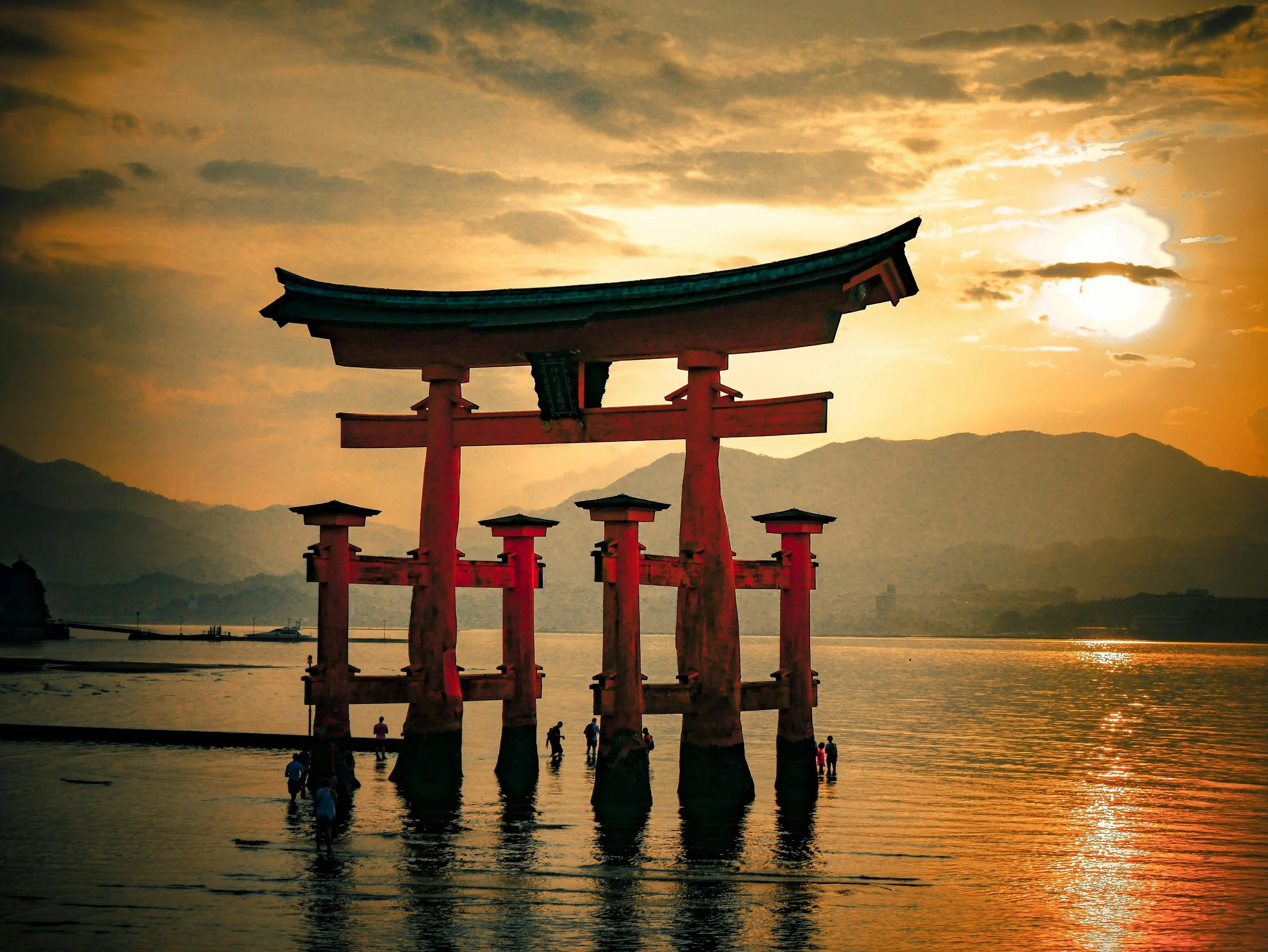
The great torii of Itsukushima Shrine appears to float on the sea at high tide — at low tide, you can walk right up to its base
Hiroshima
The Peace Memorial Park and Peace Memorial Museum tell the story of August 6, 1945 with great dignity — the experience is emotional and unforgettable, and it is the reason most travelers come. The skeletal Atomic Bomb Dome, preserved exactly as it stood after the blast, and the Children's Peace Monument, draped in thousands of colorful paper cranes, are deeply affecting. A local guide adds enormous context. Beyond the memorial, Hiroshima is a warm, green, and thoroughly modern city, with the beautiful Shukkei-en garden and Hiroshima Castle nearby.
Miyajima
A short ferry ride from the mainland, Miyajima (officially Itsukushima) has been considered sacred for centuries. Itsukushima Shrine is built on pillars over the water, and its great torii — check the tide tables — appears to float at high tide. The ropeway up Mt. Misen offers sweeping views of the Seto Inland Sea, gentle deer roam the streets, and after the last day-trippers depart in the evening, the illuminated torii and quiet lanes are pure magic. A small visitor tax is collected on arrival.
Experience Snapshot
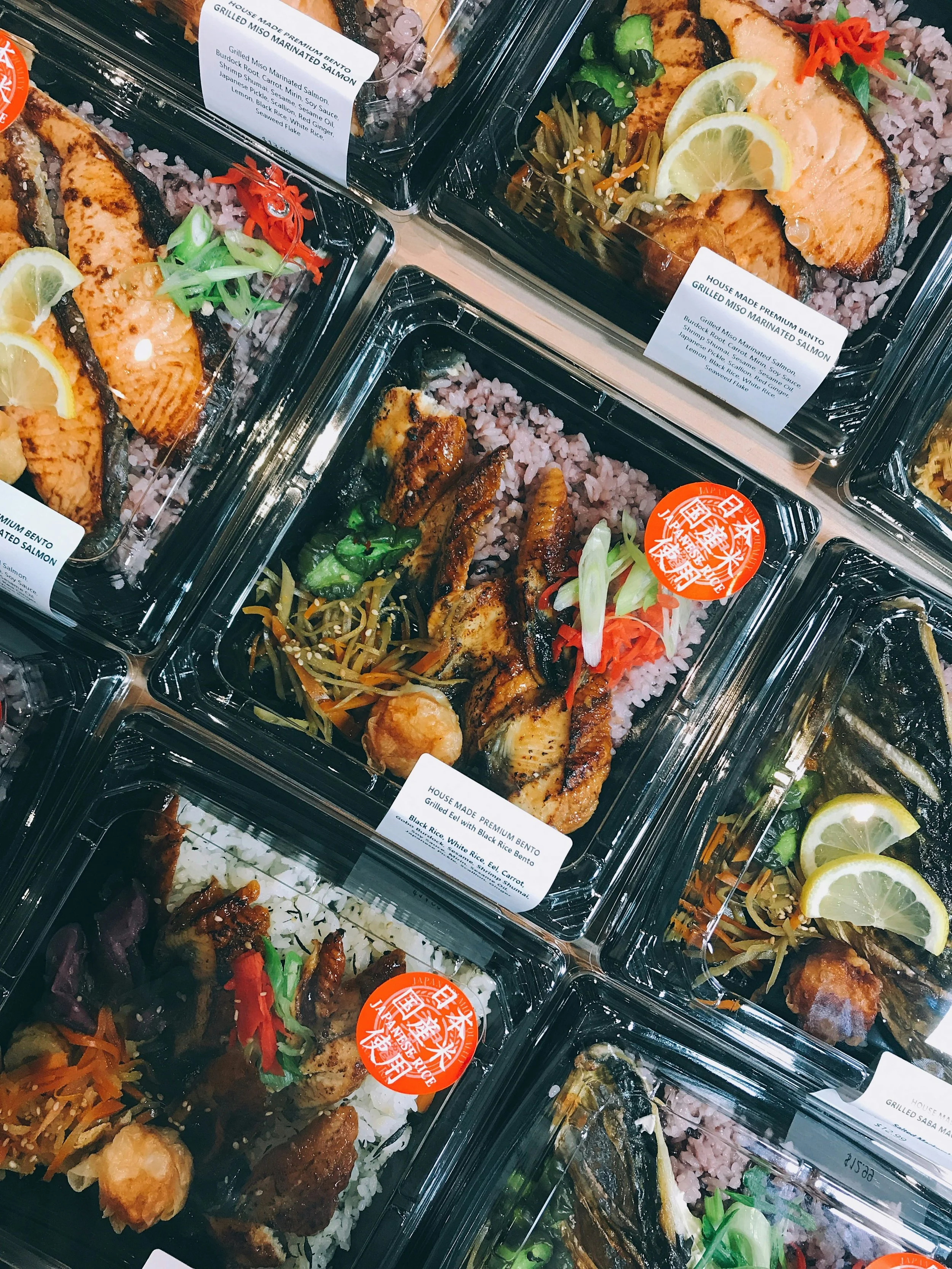
An ekiben (station bento box) on the shinkansen — every major station sells regional versions, and choosing one is a small Japanese ritual of its own
Getting Around
International Entry: Most U.S. flights arrive at Tokyo's Haneda (closest to the city) or Narita; Kansai International (Osaka) is the best gateway for Kyoto and western Japan. An open-jaw ticket — into Tokyo, out of Osaka — avoids backtracking. U.S. passport holders can visit visa-free for up to 90 days; complete the free Visit Japan Web registration before departure to speed through immigration and customs.
The Shinkansen: Japan's bullet trains connect Tokyo to Kyoto in about 2 hours 15 minutes, with Osaka, Hiroshima, and Kanazawa all on the network. Green Car (first class) offers wider seats and a quieter cabin. On the Tokyo–Osaka–Hiroshima line, large suitcases (total dimensions over 160 cm) require a reserved seat with an oversized-baggage space — another reason to forward luggage.
The Japan Rail Pass: A 7-day nationwide pass costs around ¥50,000 for Ordinary class, with prices raised to about ¥53,000 through overseas agents from October 1, 2026. After major price increases since 2023, it is no longer automatically worthwhile — for many itineraries, individual shinkansen tickets or a regional pass cost less. We'll calculate the right choice for your exact route.
In the cities: A Suica or PASMO IC card (now easily added to an iPhone's Apple Wallet) covers subways, buses, and even convenience-store purchases. For a 50+ traveler or anyone wanting a seamless trip, a private driver for transfers and a private guide for key days in Tokyo and Kyoto make an enormous difference.
Money, Taxes & Tipping
The currency is the Japanese yen (JPY). Credit cards are now widely accepted in hotels, department stores, and most restaurants, but cash is still useful at small eateries, shrines, temples, and markets — 7-Eleven ATMs accept foreign cards reliably. Tipping is not customary and can cause confusion; exceptional service is simply the standard. Two newer costs to know: Japan's departure tax tripled to ¥3,000 per person from July 1, 2026 (it is included in your airfare), and Kyoto's accommodation tax rose on March 1, 2026 to a tiered rate that reaches ¥10,000 per person, per night for rooms priced at ¥100,000 and above — something we factor into every Kyoto hotel quote.
Etiquette & What to Know
Shoes: Remove them in ryokan, homes, many restaurants, and temple halls — look for the step up at the entrance, and wear easy slip-on shoes and presentable socks. Quiet: Phone calls on trains are frowned upon, and conversations are kept low. Eating on the go: Walking while eating is considered impolite in many places; eat at the stall or find a spot to stand. Trash: Public bins are rare — carry a small bag for your own. Onsen: Bathe before entering, no swimsuits, and note that many public baths restrict tattoos. Walking: Japan involves a lot of walking and plenty of stairs (especially at temples and stations) — comfortable shoes, forwarded luggage, and a private driver for longer days keep the pace enjoyable.
Health & Safety: Japan is one of the safest countries in the world, with excellent healthcare and tap water that is safe to drink everywhere. No special vaccinations are required for U.S. travelers. Some common medications (including certain decongestants and ADHD medications) are restricted in Japan — check before you pack, and bring prescriptions in their original packaging.
Japan doesn't just meet your expectations — it quietly exceeds them, one detail at a time.
A temple bell at dawn in Kyoto. Steam rising off a hot spring with Fuji in the distance.
A thatched village under snow. A torii floating on the evening tide.
And everywhere, the sense that someone has thought carefully about exactly what you need.