
Travel Guide
Greece
Athens | Milos | Paros | Naxos
Crete | Epirus & Meteora
Islands · History · Food · The Greece the Crowds Miss
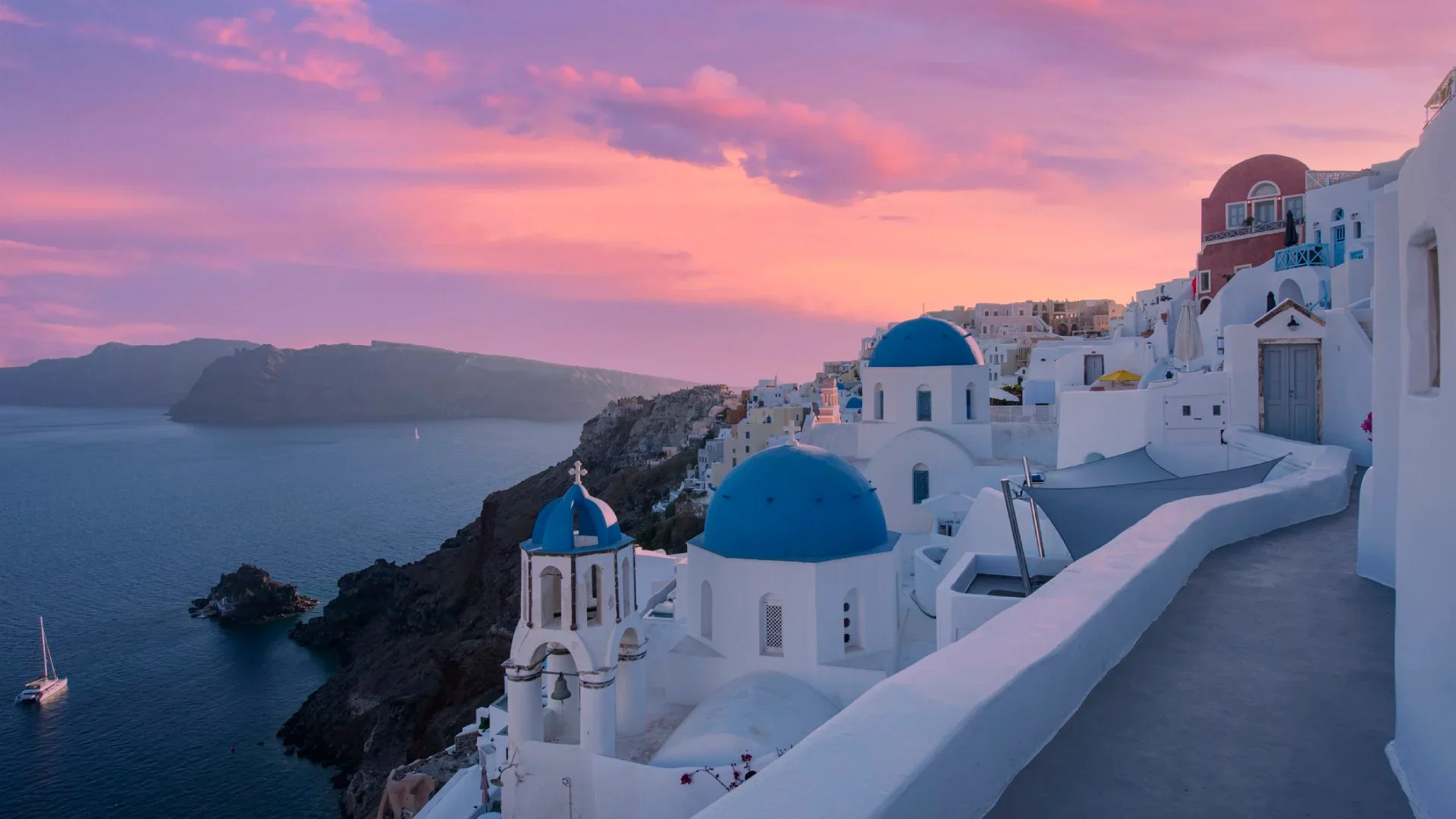
Welcome to Greece — Beyond the Postcard
Greece is one of the most visited countries in Europe, and for a reason: the light here is extraordinary, the food is extraordinary, the history is extraordinary, and the sea is a colour that photographs routinely fail to capture. The problem is that most of the 43 million annual visitors see only two of its six thousand islands — and both of them are genuinely crowded from June through September.
This guide is built around a different proposition: that the Greece most worth experiencing is the one most visitors never find. The volcanic beach of Sarakiniko on Milos, which looks like it belongs on the moon. The port of Naoussa on Paros at sunset, where the fishing boats bob in front of whitewashed walls and nobody is trying to sell you anything. The Portara arch on Naxos, standing alone above the sea at dusk, the last thing left of a temple that was never finished. The pink-sand beach at Elafonisi in Crete, reachable by helicopter. The monasteries of Meteora, built directly onto vertical rock pillars by monks who wanted to be closer to God — and, not incidentally, unreachable to everyone else.
These six destinations — Athens, Milos, Paros, Naxos, Crete's Lasithi region, and the mainland mountains of Epirus and Meteora — represent the full breadth of what Greece actually is. Come with time, come with curiosity, and leave the Santorini sunsets to the Instagram influencers.
Best Time to Visit
- Late April – June: The finest window. Weather is warm, sea is swimmable from late May, flowers are out, and crowds are manageable everywhere except Athens. The best time for the mainland and islands equally.
- September – October: The second golden window. The crowds have thinned, the sea is at its warmest, and the light is extraordinary. Many locals consider October the best month in Greece.
- July – August: Peak season — hot, busy, expensive. Milos and Paros are significantly quieter than Santorini and Mykonos but still busy. Naxos and Crete handle summer crowds best. Book everything well in advance.
- November – March: Most island hotels close. Athens, Meteora, and Epirus are excellent in winter — Meteora especially, when mist clings to the rock pillars and the monasteries are almost entirely yours.
- Greek Easter (date varies, usually April) is the most important celebration in the Greek calendar — atmospheric and extraordinary to witness, but accommodation books out many months in advance.
- Ferry services between islands run frequently from May–October. In the shoulder and off-season, connections reduce significantly — check schedules before committing to multi-island itineraries.
- The Meltemi wind blows across the Aegean from July through mid-September — refreshing on beaches but can make ferry crossings rough and cancel small boat trips.
- Domestic flights from Athens to the islands are excellent value and save significant time — Olympic Air and Sky Express connect Athens to Milos, Naxos, and other islands year-round.
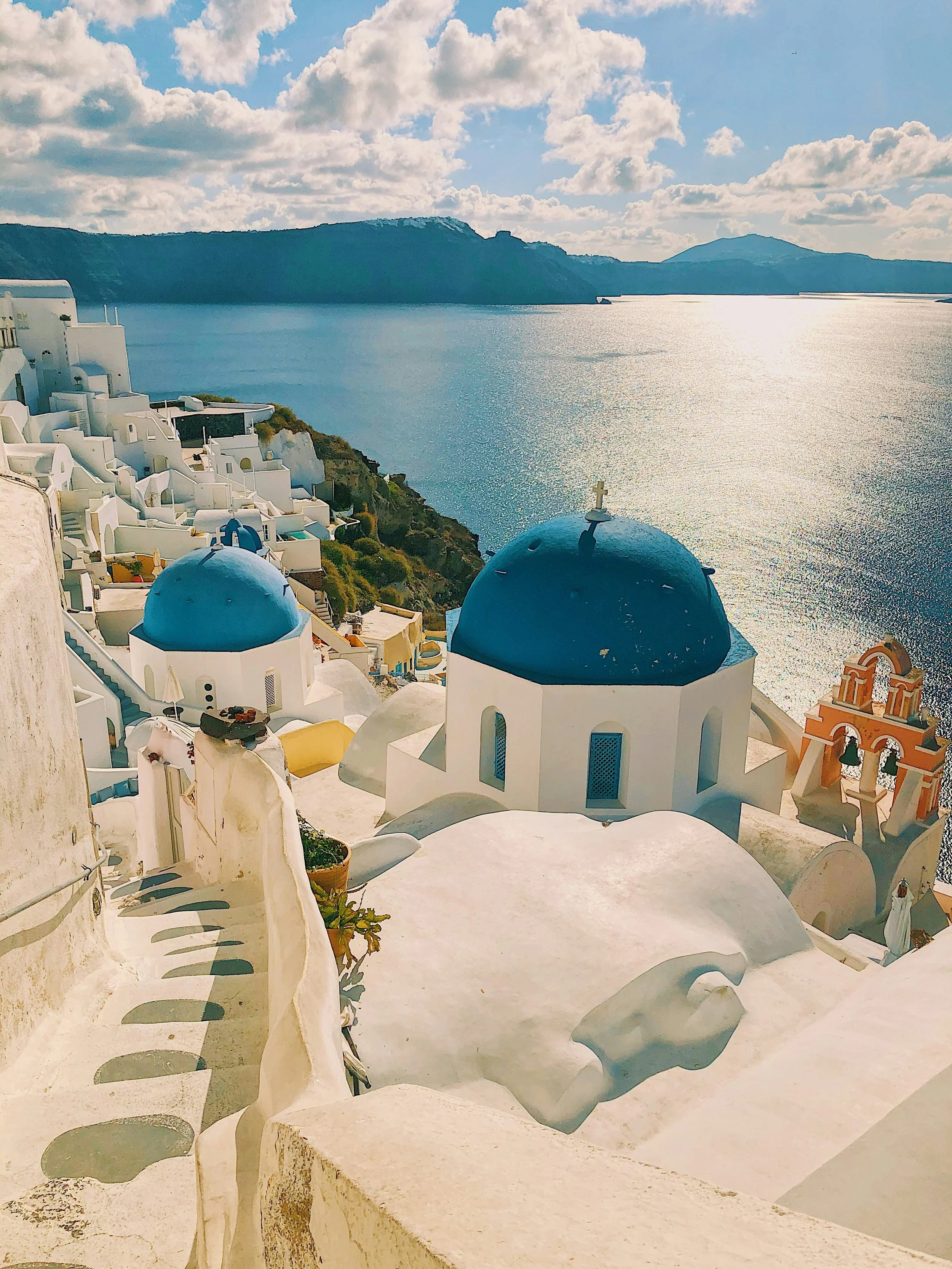
Greece rewards those who slow down — a taverna table, a carafe of local wine, and the Aegean light doing what no photograph can quite replicate
Greek Food — What to Know
Greek food is one of the great Mediterranean cuisines and is routinely underestimated by visitors who have only encountered its tourist-facing versions. The real thing — eaten in a village taverna, or at a family-run fish restaurant on a working harbour — is some of the best food in Europe.
Must Try Everywhere: Grilled octopus (the best is always hanging in the sun outside the restaurant), fresh Greek salad with proper feta (the block kind, not crumbled), spanakopita and tiropita from a local bakery, loukoumades (fried dough balls with honey — the original doughnut), fresh grilled fish priced by the kilo, and a shot of tsipouro or raki after dinner, which is almost always poured without being asked for and is never charged.
Regional differences matter: Cretan cuisine is the most distinctive — influenced by centuries of Venetian and Minoan heritage. Naxos produces the best cheese and potatoes in Greece. Paros is known for its white wine. Epirus has mountain-driven food — game, wild herbs, cheese from sheep that have grazed on alpine meadows.
The Ancient City, Fully Reborn — History, Art & the Best Food in Greece
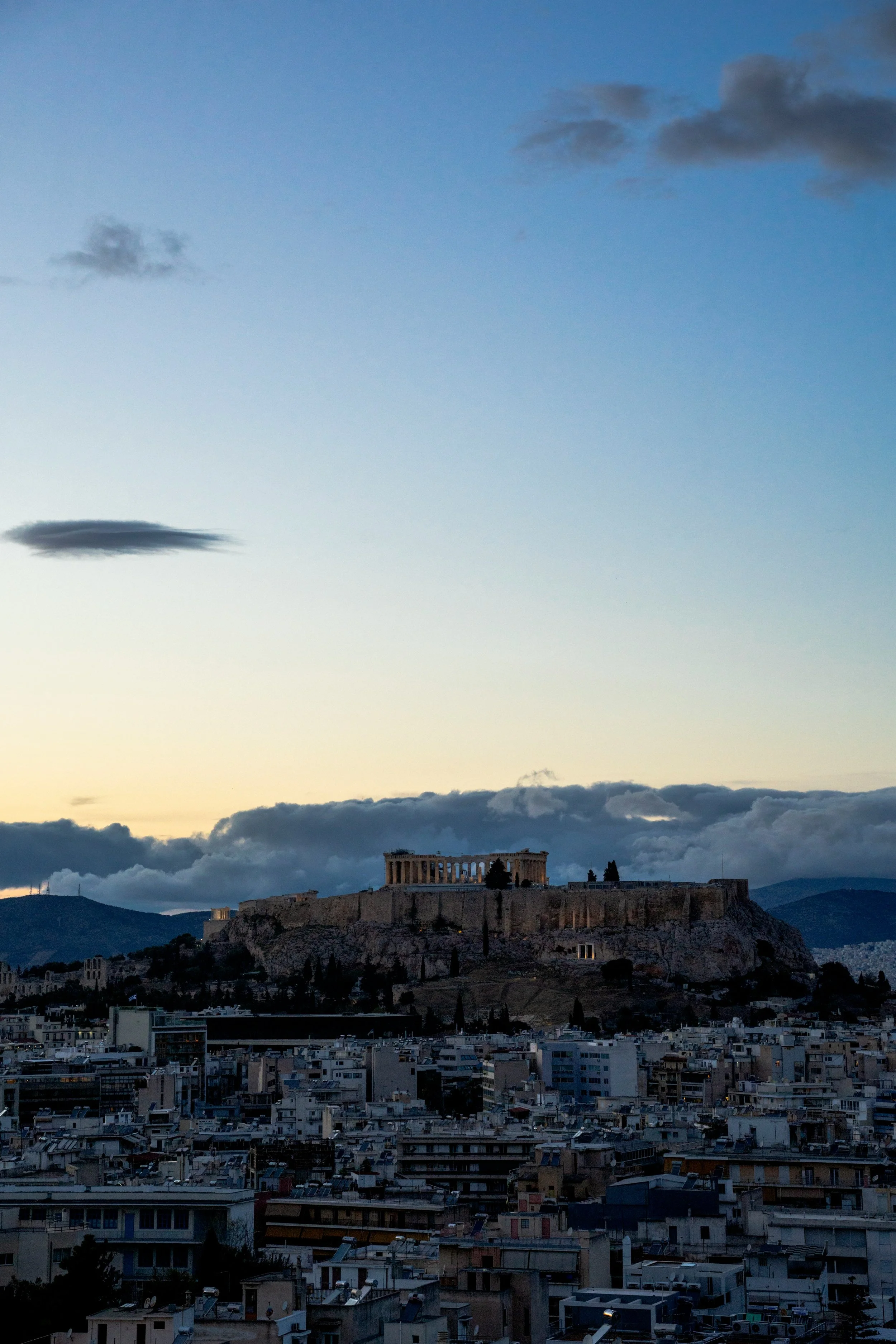
Athens at dusk: the Acropolis lit against the darkening sky, the city sprawling below it in all directions — ancient and modern in a conversation that never quite resolves
Culture & Vibes
Athens has spent the past decade becoming the city it always had the bones to be. The neighbourhood of Monastiraki — flea markets, ancient ruins, rooftop bars — sits at the foot of the Acropolis. Koukaki and Petralona are the neighbourhoods where Athenians actually eat and drink. Kolonaki is old-money elegant. Psyrri is creative and late-night. Exarcheia is gritty and genuinely interesting. The city has more layers than any one visit can exhaust.
The Acropolis requires no selling — it is one of the most powerful sites in the world, and seeing it at first light (the site opens at 8am) before the tour groups arrive is a genuinely moving experience. The Acropolis Museum, directly below it, is one of the finest purpose-built museums anywhere — its glass floors reveal the archaeological site beneath your feet as you walk through it. The National Archaeological Museum is the best collection of ancient Greek art in the world, and is consistently undervisited relative to its quality.
Food
Where to Eat: Orizontes Lycabettus (on top of Lycabettus Hill, panoramic views, the most theatrical dining in Athens), Funky Gourmet (two Michelin stars, extraordinary modern Greek cuisine), Aleria (creative, neighbourhood feel, excellent value), Tzitzikas kai Mermigas (hearty traditional mezedes, always buzzing), and any souvlaki stand in Monastiraki at midnight after a long evening — the ritual is non-negotiable.
The Athens Riviera
Twenty minutes south of central Athens, the Athenian Riviera stretches along the Saronic Gulf — a string of upscale beach clubs, marina towns, and coastal restaurants that most tourists never visit. Vouliagmeni (home of the legendary thermal lake and the Four Seasons Astir Palace), Glyfada, and Varkiza are the anchor points. A day on the Riviera — beach club in the morning, fresh fish lunch on the harbour, drive back through the olive groves — is one of the great Athens experiences and requires almost no planning.
Experience Snapshot
The Volcanic Island — Lunar Landscapes, 73 Beaches & Zero Cruise Ships
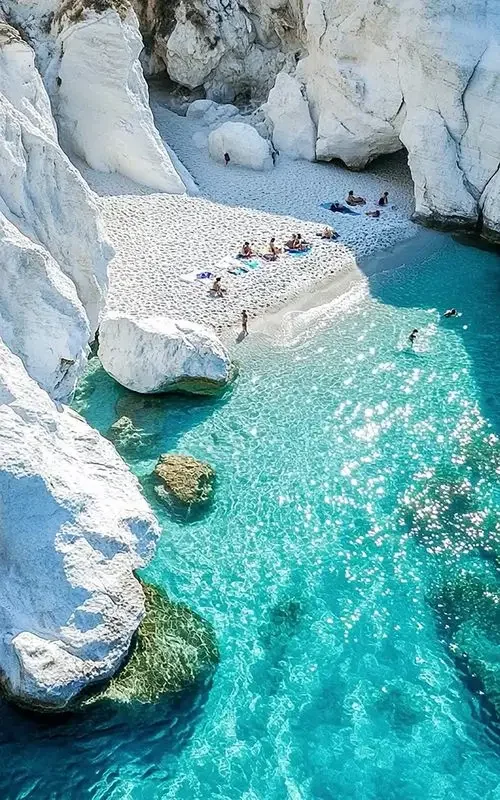
Sarakiniko Beach, Milos: white volcanic rock carved by the wind and sea into shapes that look less like a beach and more like a moonscape — one of the most extraordinary natural formations in Europe
The Island
Milos is a volcanic island in the western Cyclades — the same geological forces that created Santorini's caldera have given Milos a completely different but equally dramatic landscape. The island's coastline is a continuous series of geological revelations: the white pumice moonscape of Sarakiniko, the towering coloured sea stacks of Kleftiko (accessible only by boat — a half-day excursion that ranks among the great Aegean experiences), the red-and-orange volcanic cliffs of Paliochori, and the crystal-green waters of Firopotamos.
The village of Klima is one of the most photographed in Greece — a row of syrmata (traditional boathouses painted in primary colours, with the fishermen's living quarters directly above) built at sea level, accessible only by boat in rough weather. It is a functioning fishing village, not a museum piece, and is extraordinary at both dawn and dusk. Plaka, the hilltop capital, is classic Cycladic — whitewashed, car-free, with views across the island from the Venetian castle above it.
Food
Must Try: Pitarakia (fried cheese pies unique to Milos — eaten warm from any bakery), fresh sea urchin, grilled octopus at a harbourside taverna, and the local thyme honey on yogurt for breakfast. The taverna at Alogomandra Beach serves some of the best fresh fish on the island — arrive by boat if possible, order the catch of the day, and stay longer than you planned.
Experience Snapshot
The Elegant Cyclades — Naoussa, White Wine & a Perfectly Balanced Island
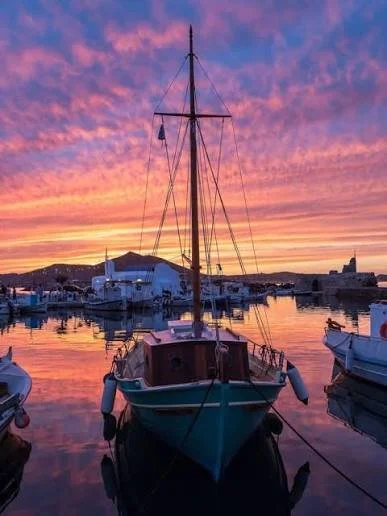
Naoussa at sunset: a crescent harbour of whitewashed walls and fishing boats, the kind of place that makes you understand why people spend their whole lives coming back to the same Greek island
The Island
Naoussa is the jewel of Paros — a small fishing harbour in the north of the island where the tavernas line the waterfront, the fishing boats tie up directly outside the restaurants, and the evening paseo (the Greek evening walk) fills the narrow lanes with people who are in absolutely no hurry. It is one of the most beautiful small towns in the Cyclades and has remained so partly because it is difficult to reach without a car — which keeps it exactly as it should be.
Parikia, the main port town, has a wonderful old quarter — the Kastro neighbourhood, with its labyrinthine Cycladic lanes, is one of the most authentically beautiful in the islands. The Panagia Ekatontapiliani (Church of a Hundred Doors), dating to the 4th century, is the most important early Christian monument in the Cyclades and almost entirely uncrowded. The inland village of Lefkes — marble-paved lanes, Byzantine churches, sweeping views of the island — is the best thing to do on a non-beach day on Paros.
Food & Wine
Paros produces its own local white wine — light, mineral, slightly saline — that pairs with fresh seafood in the way that only a wine made in the same place as its perfect food pairing can. Ask for local Parian wine at any taverna in Naoussa; it is almost never on a formal wine list and is always better than anything on it. Must Try: Grilled fresh fish at a Naoussa harbourside taverna (order whatever the fisherman brought in that morning), local goat cheese, mastelo (Parian goat or lamb cooked in wine and rosemary), and soutzoukakia (spiced meatballs in tomato sauce) at any local taverna in Lefkes.
Experience Snapshot
The Largest Cycladic Island — The Best Food, the Best Beaches, the Best Kept Secret
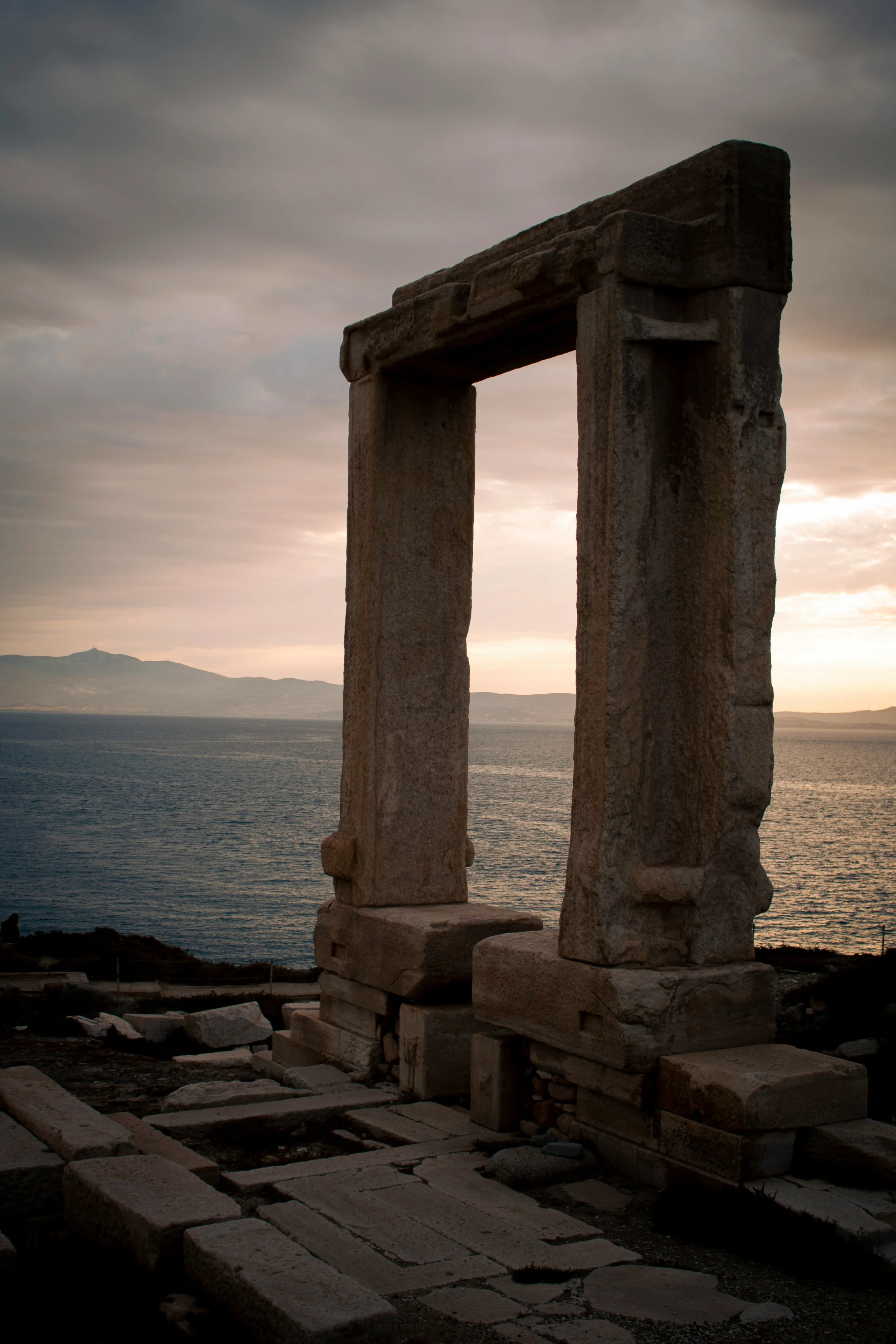
The Portara of Naxos: a marble gateway to an unfinished temple of Apollo, standing alone on a small islet connected to the town by a causeway — one of the most quietly spectacular ancient monuments in Greece
The Island
Naxos Town (Chora) is one of the finest Cycladic towns in the archipelago — the Venetian Kastro, built by the Duchy of Naxos in the 13th century, is a living fortified medieval quarter with winding lanes, Catholic churches, and spectacular views. Below it, the Bourgos quarter stretches down to the waterfront and the famous Portara — a 6th-century marble gateway to a temple of Apollo that was never completed, standing alone on a small islet at the harbour entrance and framing a perfect view of the Aegean at sunset.
The island's interior — accessible by rented car in a full day — is one of the most rewarding drives in the Cyclades. The villages of Halki (Venetian tower-houses, citrus groves, a distillery producing kitron liqueur from citron fruit unique to Naxos), Apiranthos (marble-paved streets, a tiny but excellent archaeology museum, the most architecturally distinct village in the Cyclades), and Koronos (the highest village, stone-built, almost entirely untouched by tourism) represent a Cyclades that the coastal tourists never find.
Food — The Best in the Cyclades
Naxos is the most food-productive island in the Cyclades — it feeds itself and several of its neighbours. Graviera cheese (a firm, nutty sheep's milk cheese, the finest in Greece after Crete's version), Naxian potatoes (renowned throughout Greece — the volcanic soil produces a waxy, flavourful potato unlike anything on the mainland), local pork (Naxian pork has PDO status), and kitron liqueur (unique to the island, made from the leaves of the citron tree — sweet, aromatic, and impossible to find anywhere else) are the essential food experiences of Naxos.
Experience Snapshot
Beyond Chania & Heraklion — Gorges, Pink Sand & Art Hotels on Private Shores
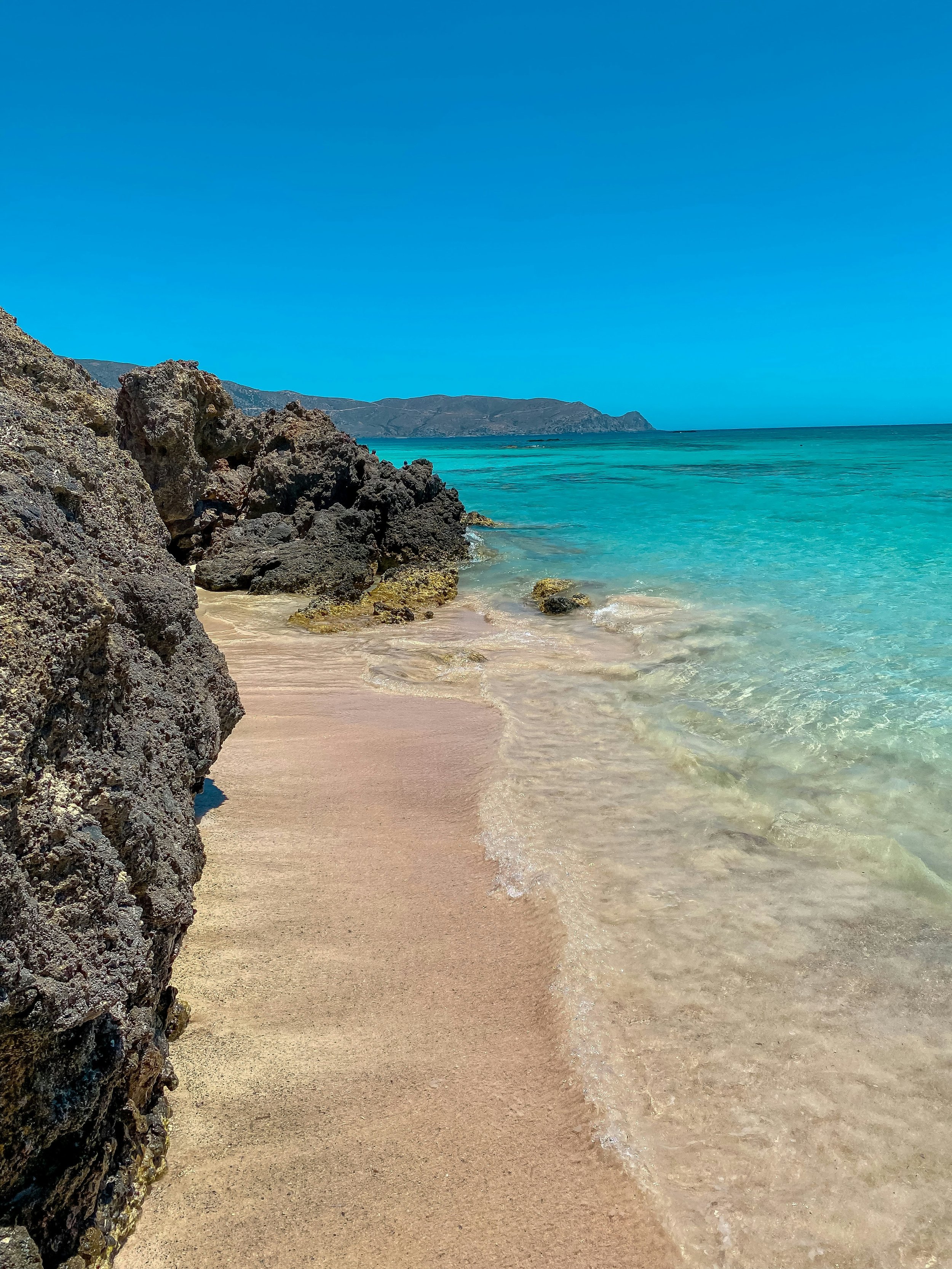
Eastern Crete: where the crowds thin out and the island reveals what it actually is — a dramatic, layered landscape of gorges, palm forests, and sea that turns a different shade of blue every hour
Eastern Lasithi
The Lasithi region — the eastern third of Crete — is where the island's tourist infrastructure thins and its actual character becomes legible. Mirabello Bay is a sweeping arc of coastline backed by mountains, its protected waters holding some of the finest luxury hotels in Greece. Agios Nikolaos, the regional capital, has a pretty lakeside centre and excellent tavernas that serve the local fishing catch without tourist markup. The Lasithi Plateau — a high, flat agricultural plain ringed by mountains and famous for its windmills — is one of the most beautiful inland landscapes in Greece, best visited in April and May when it blooms.
In the southwestern corner of the island, Elafonisi Beach — a shallow lagoon of turquoise water over pink-tinted sand, regularly voted one of the best beaches in Europe — is reachable by road (3.5 hours from Heraklion) or by private helicopter (20 minutes). The new Revery retreat (opening 2025), 24 luxury tented pavilions carved into the cliff above a hidden bay near Elafonisi, represents the finest accommodation in southwestern Crete.
Food — Cretan Cuisine
Cretan food is the finest regional cuisine in Greece — a product of the island's extraordinary biodiversity, its centuries of Venetian influence, and a local food culture that has been continuous for over 4,000 years. Must Try: Dakos (barley rusk topped with fresh tomato, mizithra cheese, and olive oil — the definitive Cretan snack), lamb slow-cooked with herbs in a wood-fired oven, stamnagathi (wild greens, bitter and excellent with olive oil and lemon), fresh Cretan olive oil (among the finest in the world), and kalitsounia (sweet fried pastries filled with fresh cheese and honey — Crete's finest contribution to the pastry canon).
Minos Beach Art Hotel, Agios Nikolaos
Greece's first five-star hotel has been operating since 1960 — Walt Disney stayed here during filming in 1964. Set across a mile of private shore in Mirabello Bay, it hides more than 50 original art installations in a labyrinth of gardens. Private bungalows and three-bedroom villas with freshwater pools overlook the curving, mountainous coastline. Its artist-in-residence programme has been running for decades. It is one of the most distinctive luxury hotel experiences in Greece and is consistently overlooked because it is not in Santorini.
Experience Snapshot
The Other Greece — Alpine Scenery, Cliff Monasteries & the Road Less Taken
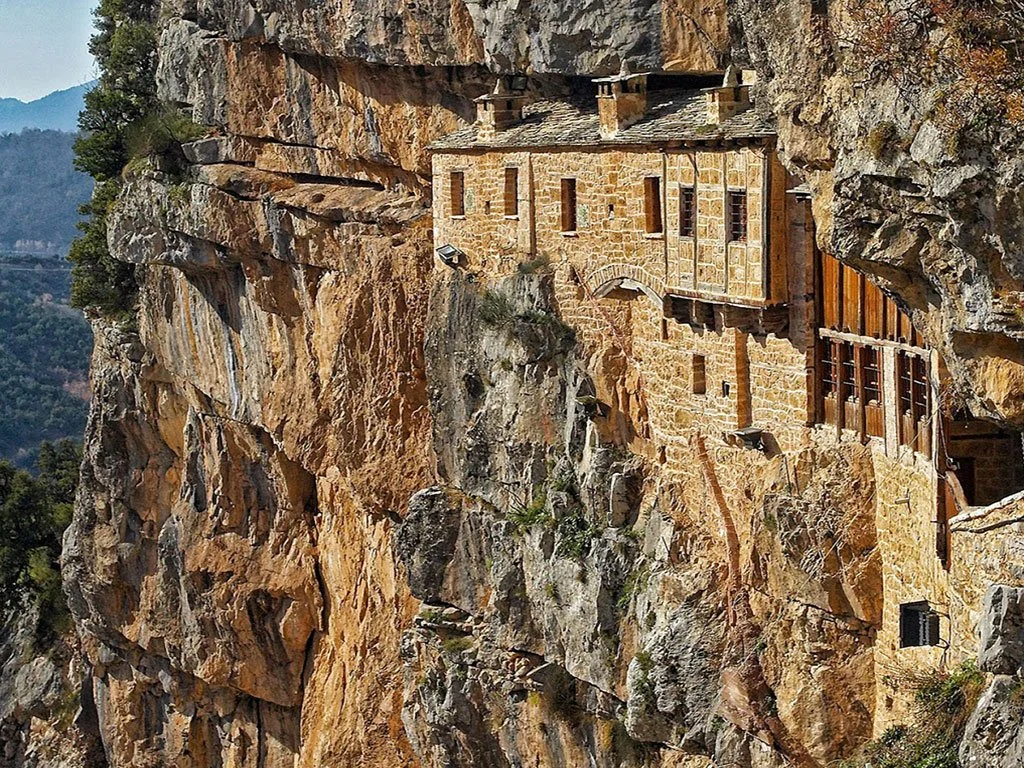
The monasteries of Meteora: built directly onto vertical rock pillars by monks who wanted to be closer to God and unreachable by everyone else — one of the most extraordinary human achievements in the natural world
Meteora
Meteora — meaning "suspended in air" — is a complex of six inhabited monasteries built on top of sandstone rock pillars in the Thessaly region, rising up to 400 metres from the valley floor. They were constructed between the 14th and 16th centuries by monks who hauled building materials up the rock faces in nets, by hand. They are among the most extraordinary buildings in the world, and unlike most world wonders, are still functioning religious communities. The best time to visit is at dawn (before the tour buses) or in late October through April (when the mist clings to the rock pillars and the entire landscape looks like a painting).
Epirus
Epirus is Greece's most sparsely populated region — a landscape of the Pindus mountain range (the spine of Greece), pristine river gorges, and villages that have maintained their stone-built character because the 20th century largely left them alone. The Vikos Gorge (the deepest gorge in the world relative to its width, according to the Guinness Book of Records) is a full-day hike through one of Europe's most spectacular natural landscapes. The town of Ioannina — built on a lake, with a Byzantine-era island in its centre — is the region's capital and one of the most undervisited cities in Greece. The mountain village of Metsovo produces cheese, wine, and smoked meat that belongs on any serious Greek food itinerary.
Elix Retreat, Parga Coast — Michelin Key
On the under-the-radar Epirus coast, the five-star Elix retreat has been operating in the remote Parga area since 2021 — one of the first properties in Greece to receive a Michelin key. Its double-aspect suites feature wraparound terraces and in-suite infinity pools on Karavostasi beach, with private boat trips to the nearby island of Corfu. It is, by a significant margin, the finest hotel on the Epirus coast and represents exactly the kind of luxury experience the region rewards those adventurous enough to seek it.
Food — Mountain Greece
Epirus food is mountain food — game, wild mushrooms, herbs foraged from alpine meadows, lamb from sheep that have spent their lives on high pastures, and cheese that reflects every one of those altitude-driven flavours. Must Try: Trahana (a fermented grain and yogurt soup — ancient, warming, and completely unlike anything in Greek coastal cuisine), pita (not the flatbread — in Epirus, pita means a filled pastry, and the pites of Ioannina are some of the finest savoury pastries in Greece), local trout grilled with mountain herbs, and Metsovone cheese (smoked, semi-hard, produced only in Metsovo — one of the great regional cheeses of Europe).
Experience Snapshot
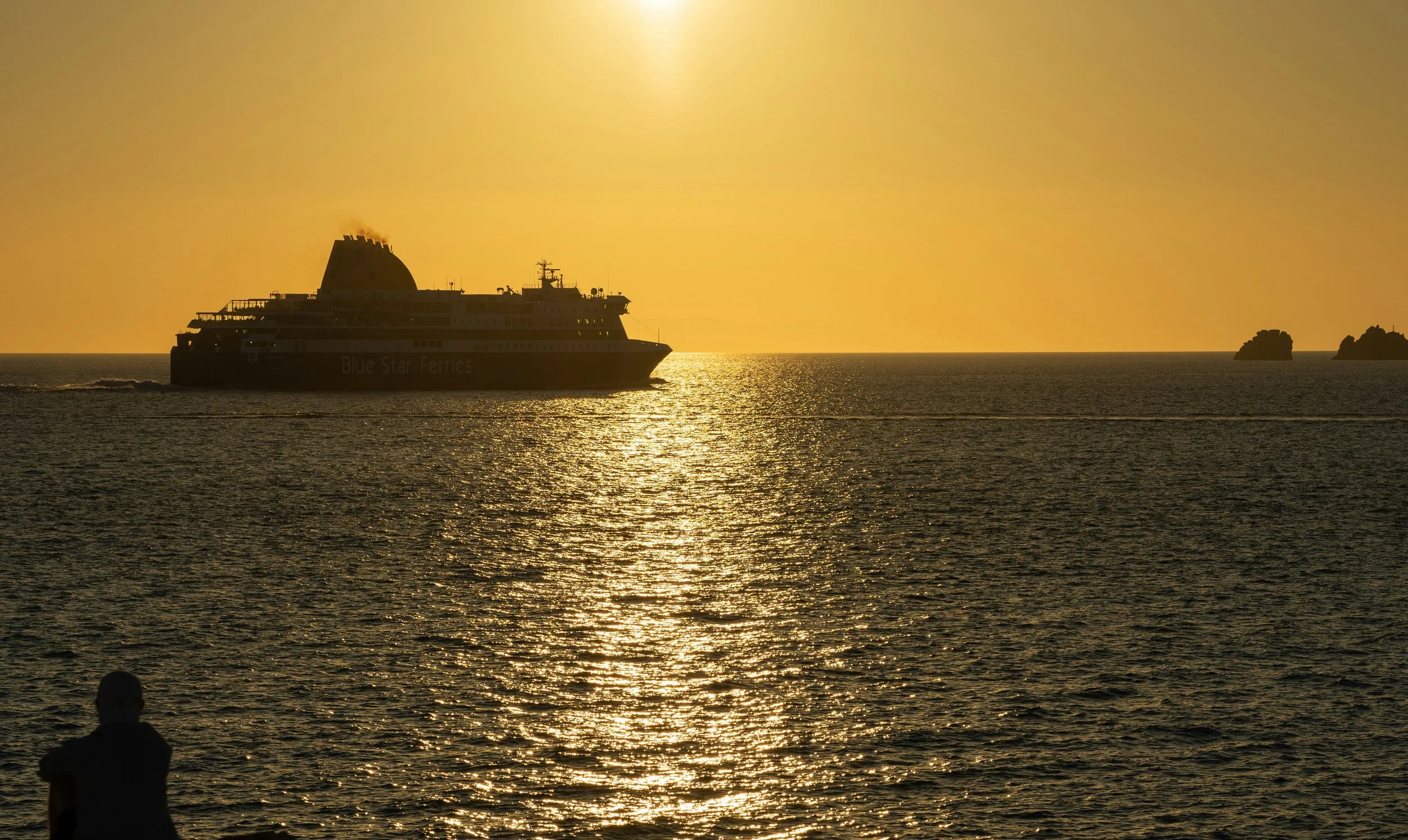
The Greek ferry network connects the islands in a way that rewards those who plan — and occasionally humbles those who don't. Book ahead in July and August, and always check the Meltemi forecast before committing to a small-boat excursion
Getting Around
Athens: Athens International Airport (Eleftherios Venizelos) is the hub for all international arrivals. The Metro line to the city centre takes 40 minutes and costs €9. Taxis are metered and reliable. For the Athens Riviera, a rental car or taxi is best.
Islands: Domestic flights from Athens (Olympic Air, Sky Express) connect to Milos, Naxos, Paros, and major Cretan airports in 45–50 minutes. Ferries are more atmospheric and considerably cheaper — Piraeus port to Milos is 3.5 hours by fast ferry; to Naxos, 3.5 hours; to Paros, 3 hours. Blue Star Ferries, SeaJets, and Golden Star Ferries are the main operators. Book ferry tickets on Ferryhopper.com — the best aggregator for Greek ferry routes. For multi-island itineraries, allow at least one extra day as a buffer for weather cancellations.
Mainland (Epirus & Meteora): A rental car is essential. Athens to Meteora is 4 hours by car or 3.5 hours by train (Thessaloniki line). Athens to Ioannina is 5 hours by car or a short domestic flight. Meteora to the Epirus coast (Parga) is 2.5 hours.
Crete: Heraklion Airport and Chania Airport are the two entry points. A rental car is essential for exploring eastern Crete — the distances are significant and public transport does not reach the best destinations. Allow half a day of driving between Heraklion and Elafonisi.
Language & Money
Greek is the language, but English is widely spoken in tourist areas, hotels, and restaurants. The euro (EUR) is the currency. Greece is moderately priced by western European standards — a meal at a village taverna with wine rarely costs more than €25–30 per person; at a serious restaurant in Athens or a luxury hotel dining room, budget €80–120 per person. Tipping is appreciated but not obligatory — rounding up or leaving 10% at a sit-down meal is the norm.
What to Know
Driving in Greece: Greeks drive with confidence and speed. Mountain roads in Epirus and Crete require attention. International driving licences are not required for EU visitors; US and most non-EU visitors should carry their national licence and an IDP. Rental car insurance is strongly recommended — the roads are excellent but narrow, and the scenery is distracting.
Ferry booking: In July and August, book ferries at least 2 weeks in advance for the popular routes. Overnight ferries (Athens to Crete) are excellent — book a cabin and wake up in Heraklion having saved a night's hotel. Small boat excursions (Kleftiko on Milos, boat trips in Crete) book out quickly in peak season — arrange through your hotel on arrival or pre-book online.
Safety: Greece is extremely safe for travellers. Petty theft is the primary concern in Athens (particularly in the Omonia area and the Metro). The islands and mainland rural areas present almost no concerns.
Greece does not need to be Santorini.
The moonscape of Milos. The harbour of Naoussa at dusk. The Portara standing alone above the Aegean.
The monasteries of Meteora, suspended in air, as they have been for six hundred years.
The Greece worth finding is the one most people fly over on the way to somewhere more crowded.