
Travel Guide
France
Paris | Lyon | The French Riviera
Bordeaux | Annecy
Food · Culture · Vibes · Where to Stay, Eat & Explore
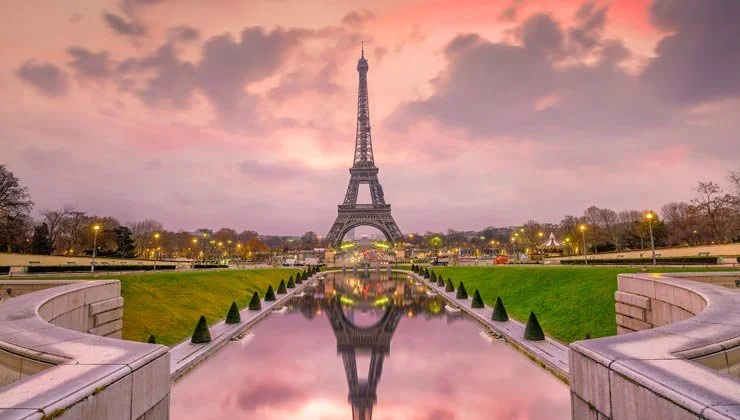
Welcome to France
France is the country the rest of the world measures itself against. The standard for food, wine, fashion, art, architecture, cinema, and the general business of living well was largely set here — and the French carry it not with arrogance but with a deeply ingrained expectation that things should be done properly. Applied to a baguette or a Burgundy or a belle epoque brasserie, that expectation produces results that still stop you in your tracks.
This guide takes you through five destinations that capture the full breadth of the French experience: the incomparable grandeur of Paris, the gastronomic capital of the world in Lyon, the gilded excess of the French Riviera across Nice, Cannes, and Marseille, the vineyards and elegance of Bordeaux, and the Alpine jewel of Annecy.
Best Time to Visit
- Spring (April–June): The finest window for Paris and the Loire Valley — chestnut trees in bloom, outdoor terraces open, before summer crowds arrive.
- Summer (July–Aug): The Riviera and the south are at their most dazzling. Paris in August is gloriously quiet as Parisians leave the city.
- Autumn (Sept–Oct): Harvest season in Bordeaux and Burgundy. Paris in autumn is magnificent.
- Winter (Dec–Feb): Annecy and the Alps for skiing. Paris and Lyon for Christmas markets and cosy bistros.
- July–August is peak tourist season everywhere except Paris, which empties out. Book the Riviera and Bordeaux well in advance.
- Bastille Day (July 14): Fireworks over the Eiffel Tower — one of the great public celebrations in Europe.
- The Cannes Film Festival (May) — extraordinary to witness, extremely expensive to attend.
- Lyon's Fete des Lumieres (early December) — one of the unmissable events in European travel. Book accommodation months ahead.
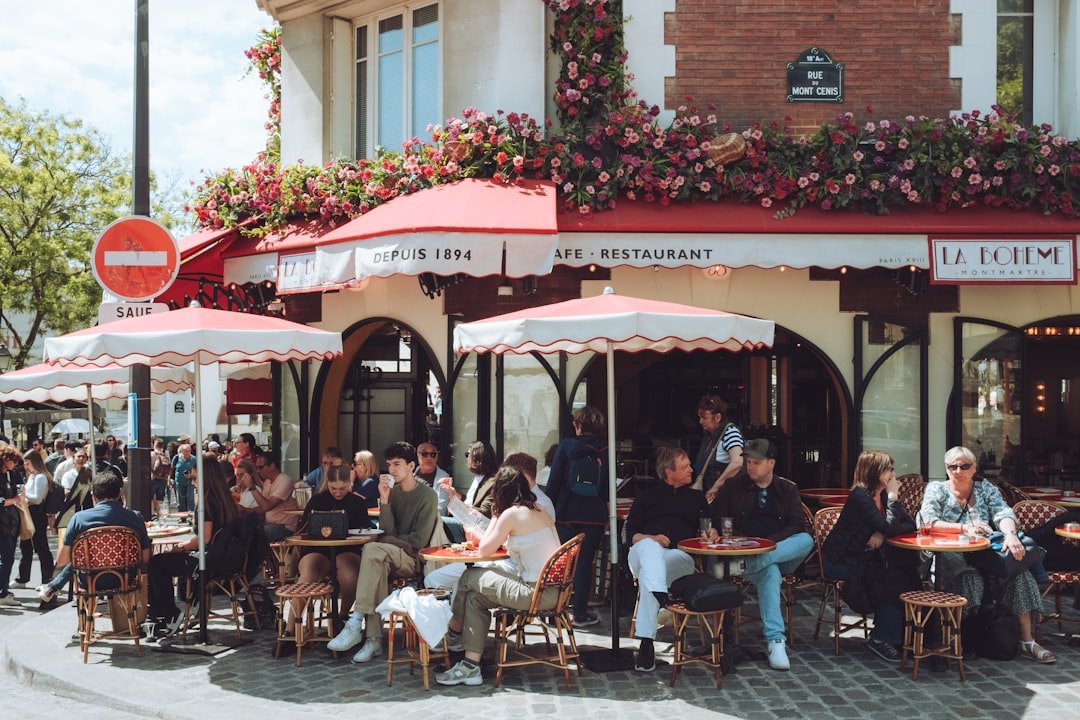
France rewards those who sit down, order slowly, and let the afternoon go wherever it wants
The City of Light — Art, Elegance & the Art of Living
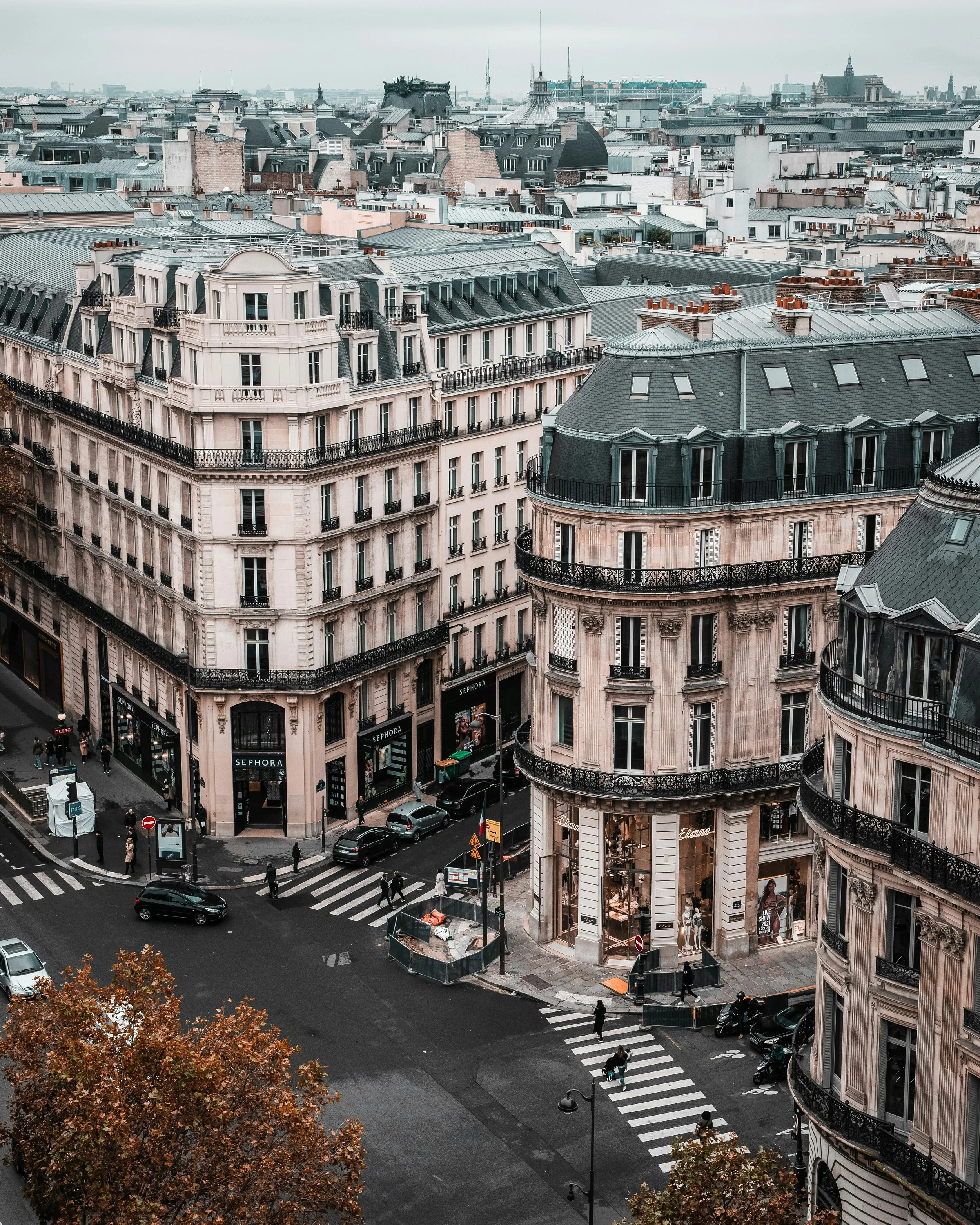
Paris: the city that has been promising to disappoint you for two hundred years and has never once managed it
Culture & Vibes
Paris is the most visited city on earth, and it has earned every visitor. The Haussmann boulevards, the zinc-roofed brasseries, the bookstalls along the Seine, the Eiffel Tower glittering at night, the Louvre's endless galleries — everything you have heard about Paris is true, and when you are finally standing in it, the accumulation of all that beauty produces something close to disbelief.
The secret to Paris is choosing a neighbourhood and living in it. Le Marais is historic, full of galleries and excellent falafel. Saint-Germain-des-Pres is literary cafes and the Luxembourg Gardens. Montmartre is artists' studios on the hill. Canal Saint-Martin is natural wine bars and record shops. No city contains more multitudes.
Food
Must Try: A croissant from a serious boulangerie (Du Pain et des Idees, Poilane, or any with a queue outside), steak frites at a classic bistro, soupe a l'oignon gratinee, duck confit with lentils, a plateau de fromages at any fromagerie, a glass of Sancerre or Burgundy by the carafe, and a Paris-Brest for dessert.
Bistro vs Brasserie: A bistro is small, neighbourhood, and personal — a fixed blackboard menu, the owner in the kitchen. A brasserie is larger, open all day, serving everything from oysters at 11am to steak at midnight. Both are essential. Avoid restaurants with laminated menus and photographs of the food.
Experience Snapshot
The Gastronomic Capital — Where France Actually Eats
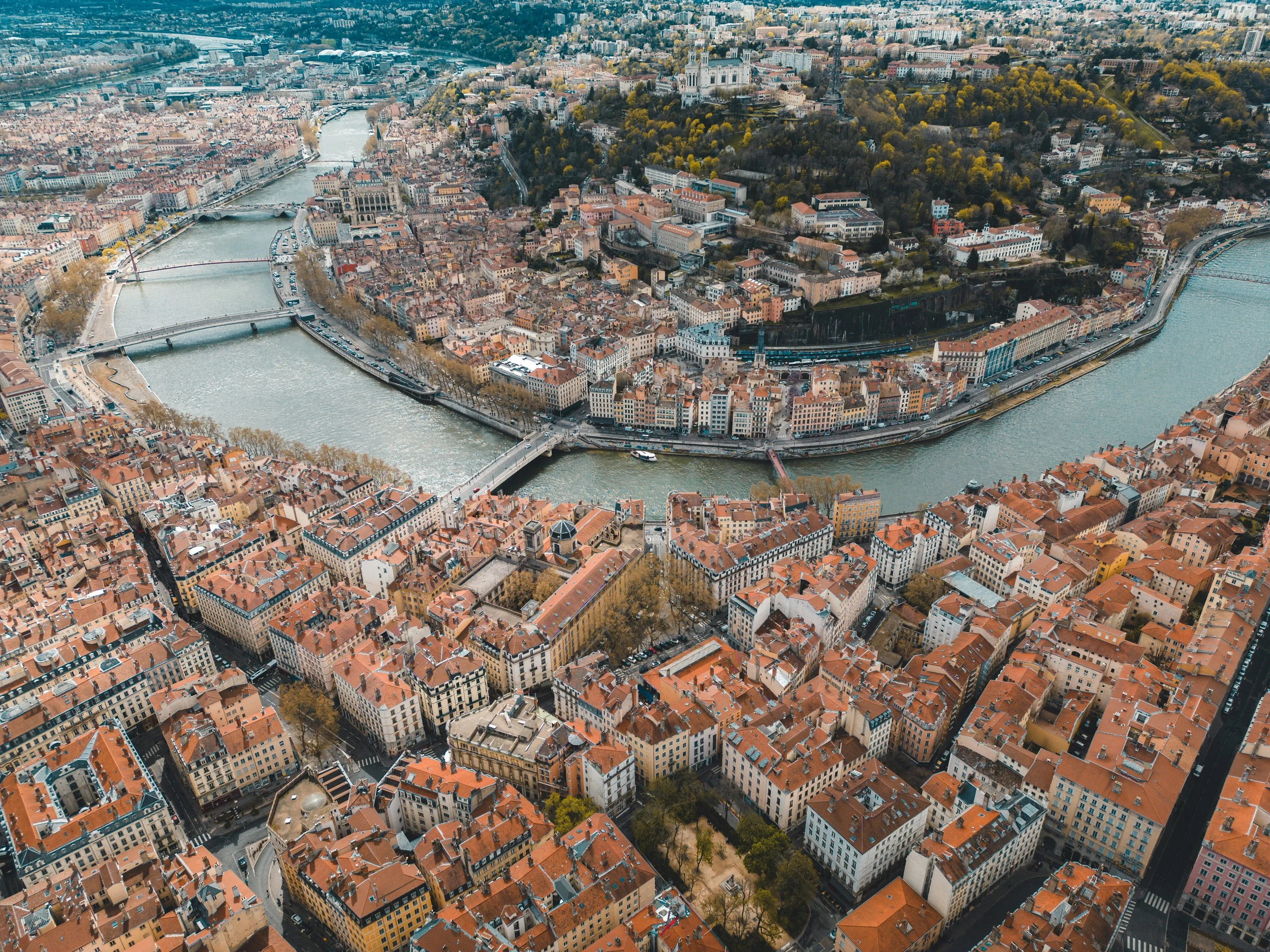
Lyon: the city Paul Bocuse built — where the best meal of your life may cost 18 euros at a checked-tablecloth bouchon
Culture & Vibes
Lyon is the city that Paris pretends not to notice and that the rest of France privately agrees is the best place to eat in the country. Sitting at the confluence of the Rhone and Saone rivers, three hours south of Paris by TGV, it has been the gastronomic capital of the world since the 19th century — a title it wears with the confidence of a city that has never needed to prove anything.
Vieux-Lyon — the largest Renaissance ensemble in France outside Paris — sits at the foot of the Fourviere hill, topped by the basilica commanding one of the great French views. The city is laced with traboules: covered passageways originally used by silk workers, now one of the great pleasures of urban exploration. The Presqu'ile between the two rivers holds the brasseries, squares, and the extraordinary Les Halles de Lyon Paul Bocuse food market.
Food
Lyon's contribution to world cuisine is the bouchon — a small, rustic restaurant serving traditional Lyonnais cooking that has remained unchanged for a century. Checked tablecloths, handwritten menus, communal tables, heavy portions, and wine by the pot (46cl). This is some of the greatest food on earth, served without ceremony.
Must Try: Quenelles de brochet (pike dumplings in a cream sauce — pillowy, rich, extraordinary), salade lyonnaise (frisee with lardons, a poached egg, and croutons in warm vinaigrette), tarte aux pralines roses (a shocking-pink almond tart, one of the great confections of French baking), and cervelle de canut (herbed fresh cheese spread — the name is extremely rude and the taste is wonderful).
The Fete des Lumieres — December
Every year in early December, Lyon transforms into one of the most extraordinary spectacles in Europe. Immersive light installations illuminate the city's buildings, bridges, and riversides — some mapping the full facades of Renaissance buildings, others transforming entire quarters into walk-through art. Over four nights, four million visitors fill a city of 500,000. Book accommodation months in advance.
Experience Snapshot
Nice, Cannes & Marseille — Sun, Sea & Cinematique Glamour
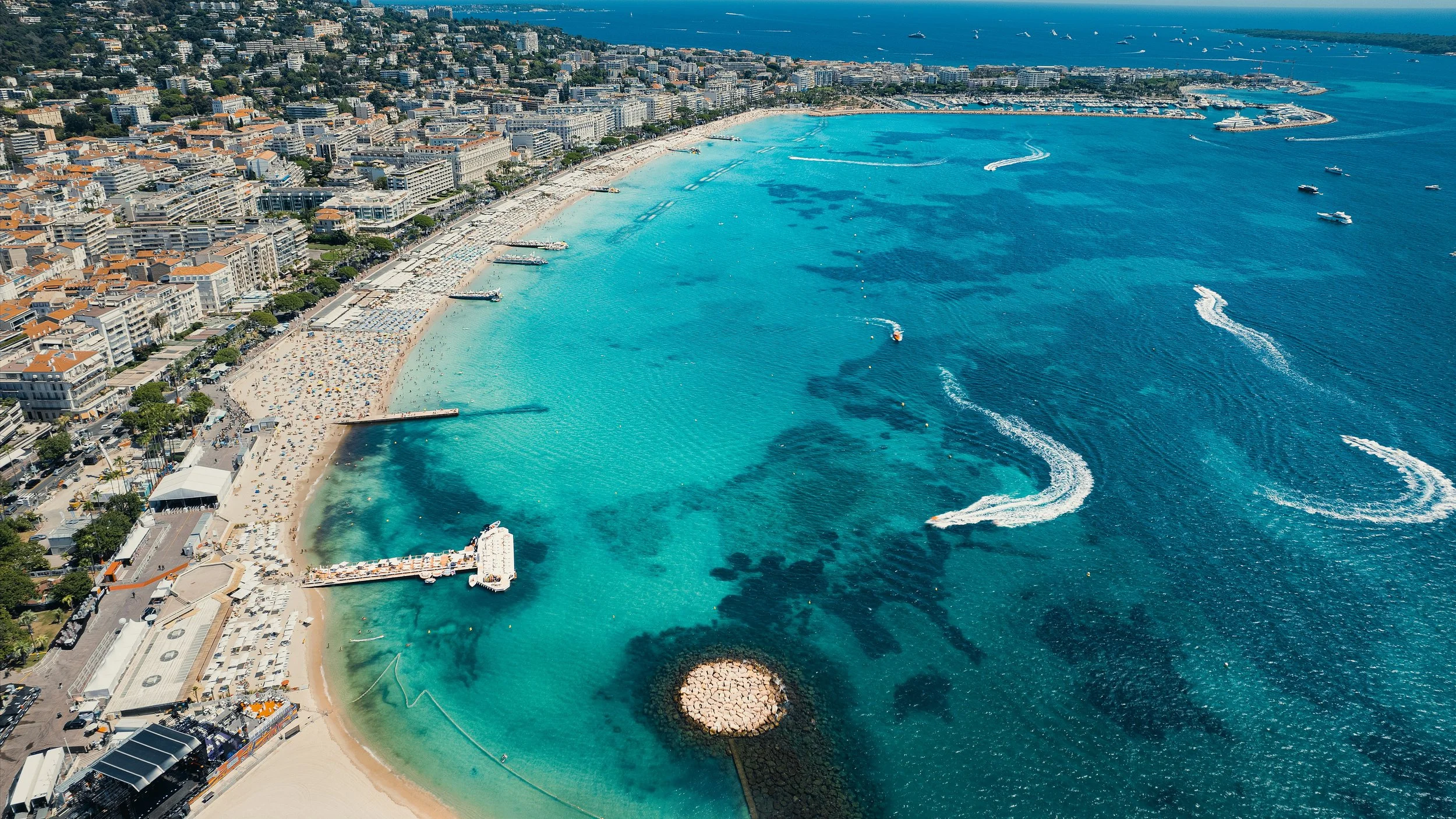
The French Riviera: where the Alps meet the Mediterranean in the most photogenic collision Europe has ever produced
Culture & Vibes
The Cote d'Azur is the 115-kilometre stretch of Mediterranean coast between the Italian border and Marseille — one of the most glamorised pieces of geography in the world. The light here has a particular quality: crystalline, gold-edged, throwing limestone hillsides and ultramarine sea into a contrast that has been drawing artists since Matisse arrived in Nice in 1917 and essentially never left.
Three cities anchor this guide. Nice is the Baroque capital of the Riviera — a Vieille Ville more Italian than French, above the most famous beach promenade in the world, with the Cours Saleya flower and produce market at its heart. Cannes is 30 kilometres west — the film festival in May turns it into the most celebrity-dense square kilometre on earth, but year-round it is a beautiful resort town with the Lerins Islands offshore. Marseille is the anti-Riviera: rough, brilliant, Europe's oldest city, and home to one of the continent's great fish dishes.
Nice
Must Try: Socca (crispy chickpea flatbread cooked on a giant copper pan — a street food specific to Nice, eaten hot with black pepper), salade Nicoise (the original: tuna, anchovies, hard egg, green beans, olives, tomato — no cooked vegetables), pan bagnat (the Nicoise sandwich), and pissaladiere (onion, anchovy, and olive flatbread).
Cannes
Outside film festival week, Cannes is a relaxed and beautiful resort town with the best hotel beach clubs on the Riviera. Le Suquet old quarter is authentically charming. The Lerins Islands (20 minutes by boat) offer pine forests, ancient monasteries, and the cell where the Man in the Iron Mask was imprisoned.
Marseille
Must Try: Bouillabaisse — the great fish stew of Marseille, made properly with rascasse, Saint-Pierre, and congre, served in two courses (the broth first, then the fish) with rouille and grilled bread. It is expensive, time-consuming, and one of the defining dishes of French coastal cooking. Chez Fonfon and Le Miramar are the standard-bearers.
Experience Snapshot
The Wine Capital — Elegance, Chateaux & the Greatest Cellars on Earth
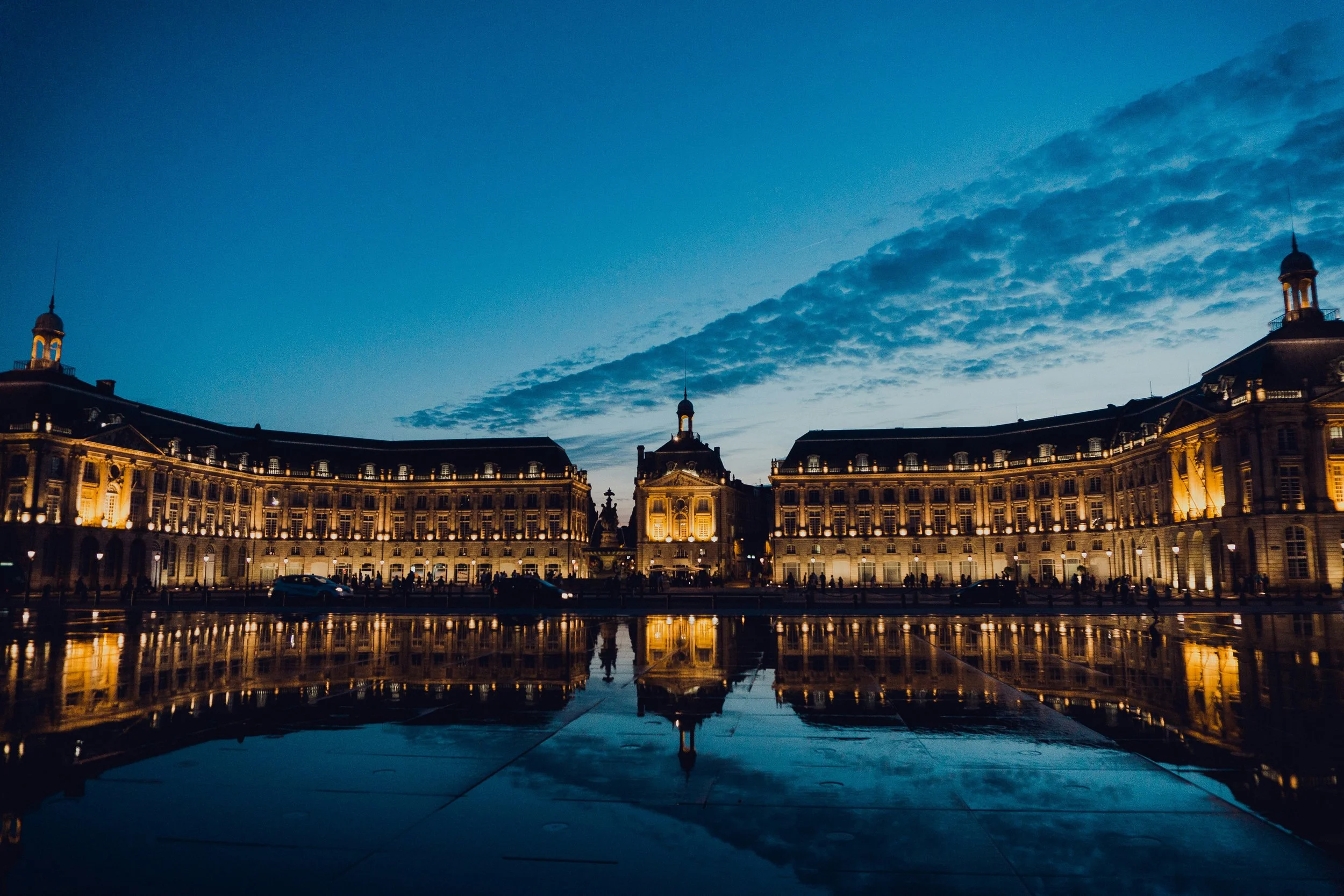
Bordeaux: the city that wine built — and that has spent the past two decades building itself into one of the most beautiful cities in France
Culture & Vibes
Bordeaux is the city that wine built. For three centuries the greatest wine port in the world, the wealth of that trade created the extraordinary uniform neoclassical cityscape that UNESCO designated a World Heritage site in 2007. The Place de la Bourse, reflected in the flat mirror of the Miroir d'Eau (the world's largest reflecting pool), is one of the most satisfying urban spaces in Europe.
La Cite du Vin — an extraordinary building shaped like a wine decanter, opened in 2016 — is both a serious wine museum and one of the best places in France to taste wine from every region. The surrounding chateaux are 30 minutes away by car, and Saint-Emilion village is one of the most beautiful in France and a UNESCO World Heritage site in its own right.
Food
Must Try: Entrecote a la bordelaise (rib steak with a Bordeaux wine and bone marrow sauce), canneles de Bordeaux (small fluted cakes with a caramelised exterior and custardy rum-vanilla centre — one of the great pastries of France), and oysters from Arcachon Bay (the finest oysters in France, eaten with rye bread and chilled Sauternes at the oyster huts).
Saint-Emilion
30 minutes east of Bordeaux, Saint-Emilion is a medieval hilltop village producing some of the world's most sought-after wines (Petrus is just down the road in Pomerol). The village itself — honey-stone houses, a monolithic church carved from the living rock, and narrow streets lined with wine merchants — is a UNESCO World Heritage site. Visit on a weekday morning before the tour groups arrive.
Experience Snapshot
The Venice of the Alps — Crystal Water, Canals & Mountain Light
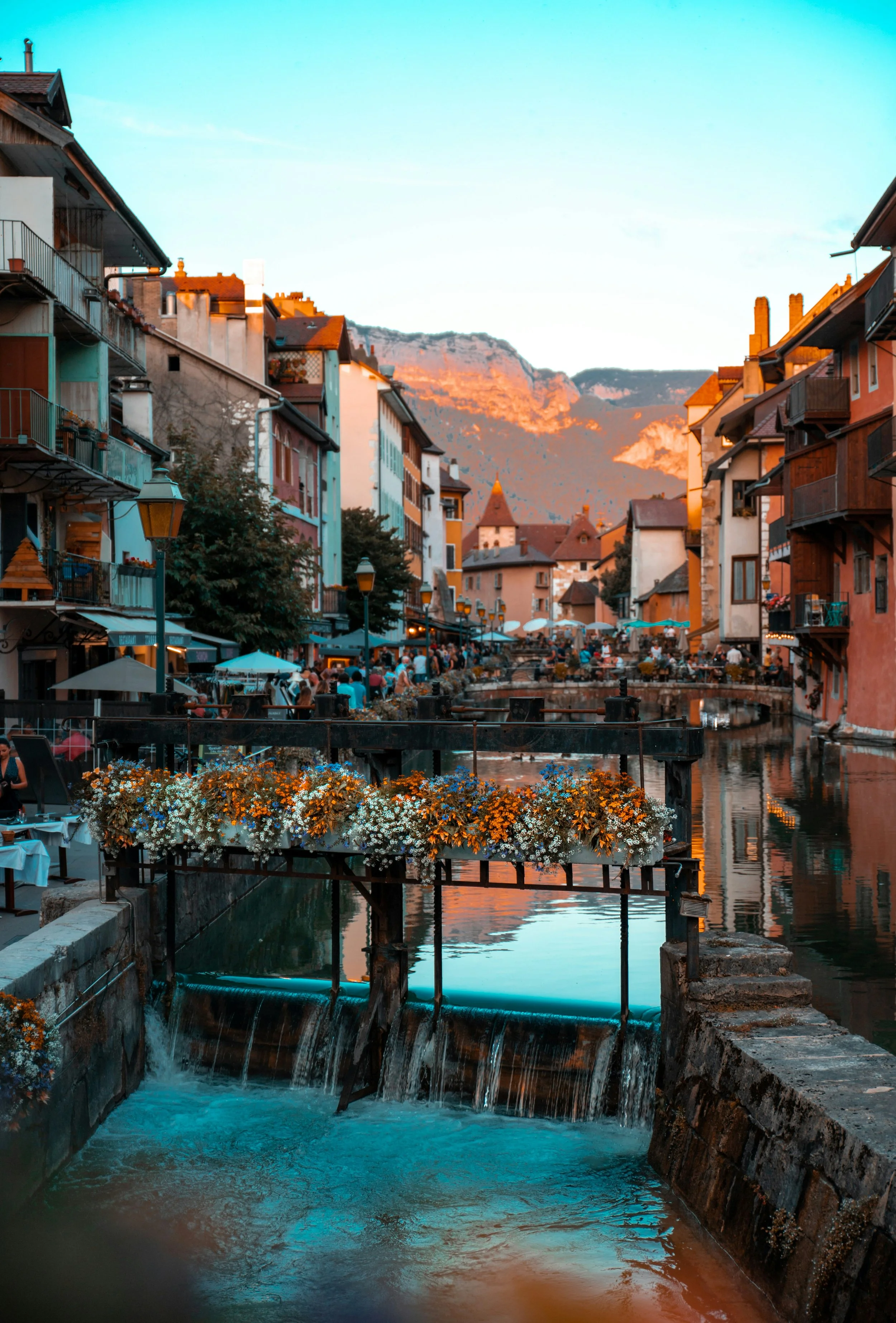
Annecy: the most beautiful small city in France, where a medieval old town built on alpine canals meets the clearest lake in Europe
Culture & Vibes
Annecy is the secret that France keeps from the rest of the world. In the foothills of the Alps, 35 minutes south of Geneva by train, this small medieval city is built on canals that feed into Lac d'Annecy — the cleanest lake in Europe, a body of water of such improbable clarity and colour that photographs of it look manipulated. The old town — canals, the Palais de l'Isle (a 12th-century prison built in the middle of the river like a ship in stone), flower-cascading bridges, and pastel medieval facades — is one of the most beautiful urban environments in France.
In summer, the lake is the focus: swimming, sailing, paddleboarding, kayaking, and cycling the flat path that circles the entire lake through vineyards and Alpine meadows. In winter, the world-class ski resorts of La Clusaz and Le Grand Bornand are 30 minutes away. Annecy is a small city that punches several weight classes above its size.
Food
Haute-Savoie food is mountain food — generous, dairy-heavy, designed to fuel an afternoon on the slopes or a morning on the lake, and deeply, irreversibly delicious.
Must Try: Tartiflette (potato gratin with Reblochon cheese, lardons, and onions baked until molten and golden — the definitive Alpine dish), fondue savoyarde (Comte, Beaufort, and Emmental melted in white wine — the original, made with local cheeses, is incomparably better than anything you have had elsewhere), raclette, filets de perche (lake perch pan-fried in butter — the signature dish of the lakeside restaurants), and a glass of Roussette de Savoie from the local vineyards.
Lakeside Dining: The restaurant terraces in Talloires — 15 kilometres south of Annecy, reachable by bike or boat — are among the most beautiful places to eat lunch in France. Auberge du Pere Bise has held a Michelin star since 1951.
Experience Snapshot
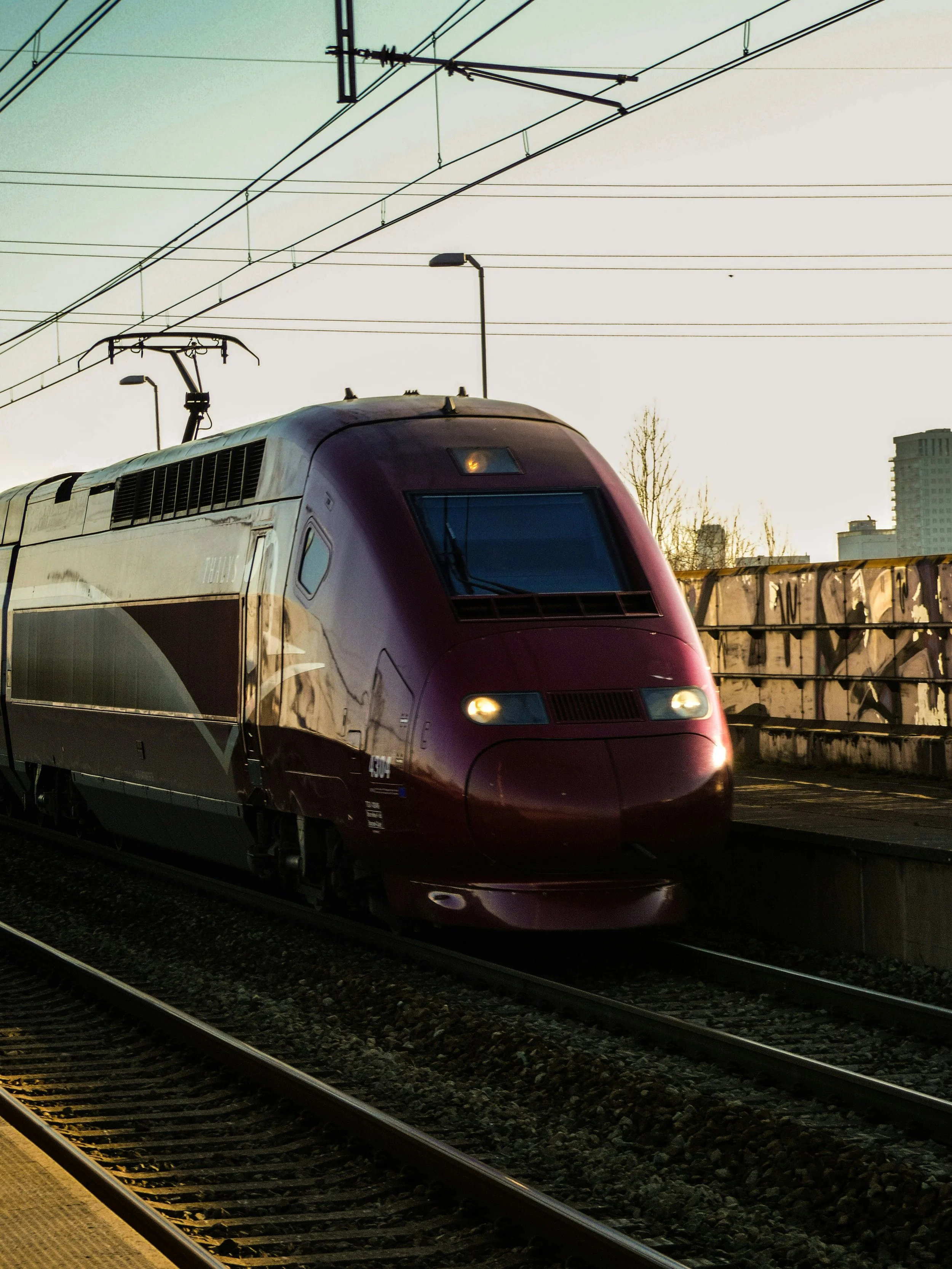
France's TGV network is one of the great pleasures of European travel — Paris to Lyon in 2 hours, Paris to Bordeaux in 2 hours 4 minutes
Getting Around
France's TGV high-speed rail network makes car-free travel genuinely pleasurable. Paris to Lyon: 2 hours. Paris to Bordeaux: 2 hours 4 minutes. Paris to Nice: 5.5 hours (fly if time is precious). Lyon to Nice: 4.5 hours. Annecy is best reached via Lyon (TGV to Lyon, then TER regional train, around 3.5 hours total) or from Geneva airport (35 minutes). Book TGV tickets on SNCF Connect — early booking yields significant savings.
Language & Money
French is the language, and making a genuine effort — even a badly-pronounced bonjour and merci, madame/monsieur — changes the temperature of every interaction. The euro (EUR) is the currency. France is moderately expensive, though the gap between a neighbourhood bistro and a tourist restaurant is often smaller than expected — and the neighbourhood bistro is usually better in every way. Tipping is not obligatory but rounding up or leaving 5-10% at a sit-down meal is appreciated.
Etiquette
Always say bonjour when entering a shop, restaurant, or hotel — the French consider skipping the greeting rude in a way that can colour the entire subsequent interaction. Lunch is a serious meal: 12–2pm, sit-down, with wine. Dinner does not start before 7:30pm and often 8:30pm in cities. Dress with care particularly in Paris, Lyon, and the Riviera — casual shorts in a good restaurant is noticed unfavourably.
Safety
France is a very safe country for travellers. Pickpocketing is the main concern in Paris (the Metro, the Eiffel Tower, Sacre-Coeur) and Nice (the Promenade des Anglais). In Marseille, be sensible about the northern districts after dark. In the Alps, follow hiking trail ratings and weather forecasts carefully — conditions change rapidly.
France does not need to try.
The croissant is perfect. The wine is perfect. The light on the Seine at six in the evening is perfect.
The only question France ever asks is whether you are ready for it.