
Travel Guide
Egypt
Cairo & Giza | Luxor | The Nile
Aswan & Abu Simbel | The Red Sea
Pharaohs · History · The Nile · Where to Stay, Eat & Explore

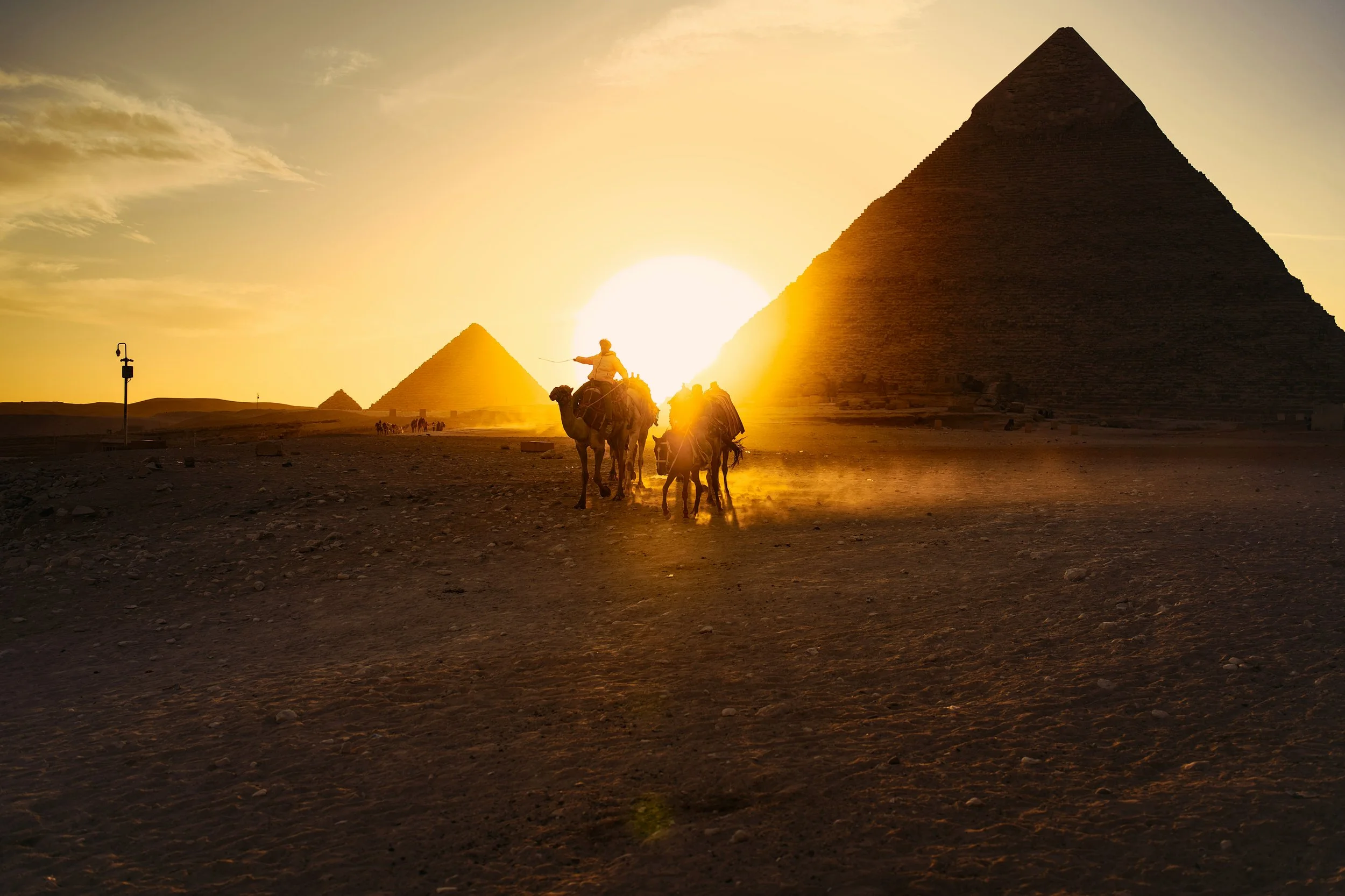
Welcome to Egypt
Egypt is the original travel bucket list. For more than two thousand years, travellers have come to stand beneath the Great Pyramid, wander the forest of columns at Karnak, and drift down the Nile past palm groves and mud-brick villages that look much as they did in the age of the pharaohs. And yet Egypt is not a museum: it is a loud, warm, funny, endlessly hospitable country of more than 100 million people, where the call to prayer, the honk of Cairo traffic and the clink of tea glasses are as much a part of the experience as the monuments.
This guide covers five distinct experiences: the colossal energy of Cairo and the Giza Plateau; Luxor, the world's greatest open-air museum; a slow cruise along the Nile; the soft, Nubian beauty of Aswan and the temples of Abu Simbel; and the turquoise reefs of the Red Sea coast. Together they form one of the most awe-inspiring journeys on earth.
Best Time to Visit
- October – April: The best overall window. Warm, sunny days and cool evenings — ideal for temples, tombs and cruising. December–February is peak season; book cruises and the best hotels well ahead.
- May – June: Heating up fast, especially in Luxor and Aswan. Start sightseeing at dawn and rest through the midday heat.
- July – September: Very hot in Upper Egypt (often above 40°C). Lower prices and fewer crowds; the Red Sea and Mediterranean coasts are at their liveliest.
- Year-round: Nile cruises operate in every season, and the Red Sea is warm enough for diving all year.
- Abu Simbel's Sun Festival (around February 22 and October 22) sends sunlight deep into the temple's inner sanctuary — a spectacular, crowded event.
- Ramadan shifts with the lunar calendar. Sites stay open with shorter hours, alcohol is harder to find outside hotels and cruise ships, and evenings come alive after the sunset iftar meal.
- Friday is the main day of prayer; some sites and shops open later.
- Pack modest, breathable layers — long linen trousers, a light scarf, a sun hat and very comfortable walking shoes.
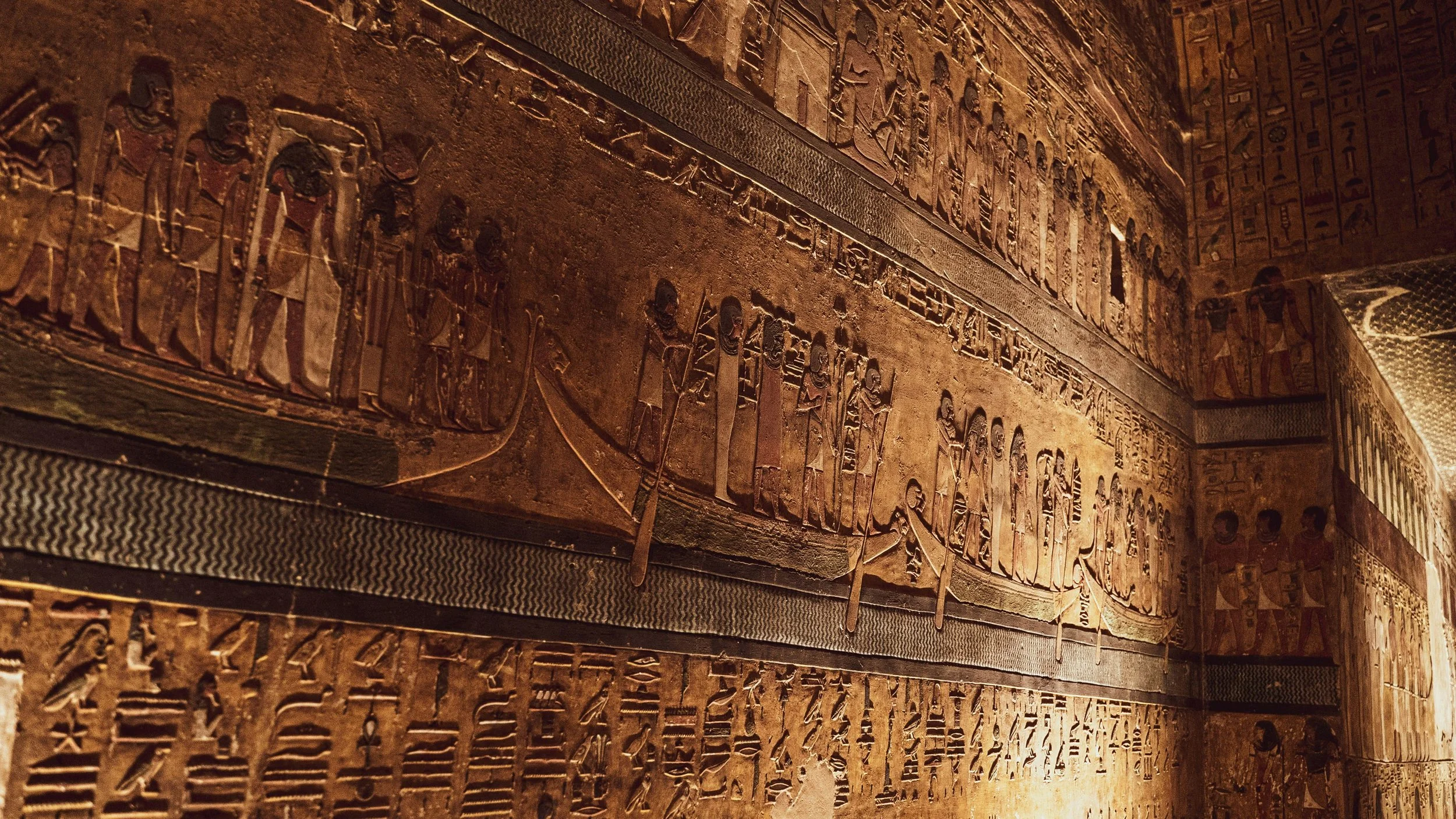
Hieroglyphs still glow with their original pigment in places — temple walls are history books written in stone
Culture & Character
Egyptian history runs in layers that you can see in a single afternoon in Cairo: pharaonic monuments, Greek and Roman ruins, some of the world's oldest Christian churches, and a medieval Islamic city of extraordinary mosques and markets. The Coptic Christian community — one of the oldest in the world — lives alongside the Muslim majority, and both traditions shape daily life.
Egyptians are famously warm, quick-witted and generous with their time. A little Arabic goes a long way: shukran (thank you), salaam alaikum (peace be upon you), and la, shukran (no, thank you) for persistent vendors. Small tips, called baksheesh, are part of everyday life — keep small bills handy for guards, drivers and helpful hands.
Food & Drink — What to Know
Egyptian food is hearty, generous and built for sharing. Koshari (rice, lentils, pasta and chickpeas under spiced tomato sauce and crispy onions) is the national comfort dish. Ful medames (slow-cooked fava beans) and ta'ameya (Egypt's fava-bean falafel) are the classic breakfast. Look for molokhia (a silky green stew), hamam mahshi (stuffed pigeon, a celebration dish), fatta (layered rice, bread and meat with garlic-vinegar sauce), and om ali (warm bread pudding with nuts and cream). Karkadeh (hibiscus tea, hot or iced), fresh sugarcane juice, mint tea and Turkish-style coffee are the drinks to know.
The Grand Egyptian Museum: What You Need to Know
What it is: The Grand Egyptian Museum (GEM), beside the Giza pyramids, opened in full in November 2025 and is the largest museum in the world dedicated to a single civilisation. For the first time, the complete Tutankhamun collection — more than 5,000 objects, including the golden mask and burial treasures — is displayed together.
Highlights: The colossal statue of Ramses II in the Grand Hall, the six-storey Grand Staircase lined with royal statues, the Tutankhamun Galleries, and the restored solar boat of King Khufu.
Planning: Allow at least half a day — ideally a full day — and book timed tickets in advance. Pair it with the pyramids on the same day, or give each its own morning so neither feels rushed. A private Egyptologist guide transforms the experience.
Umm al-Dunya — The Mother of the World
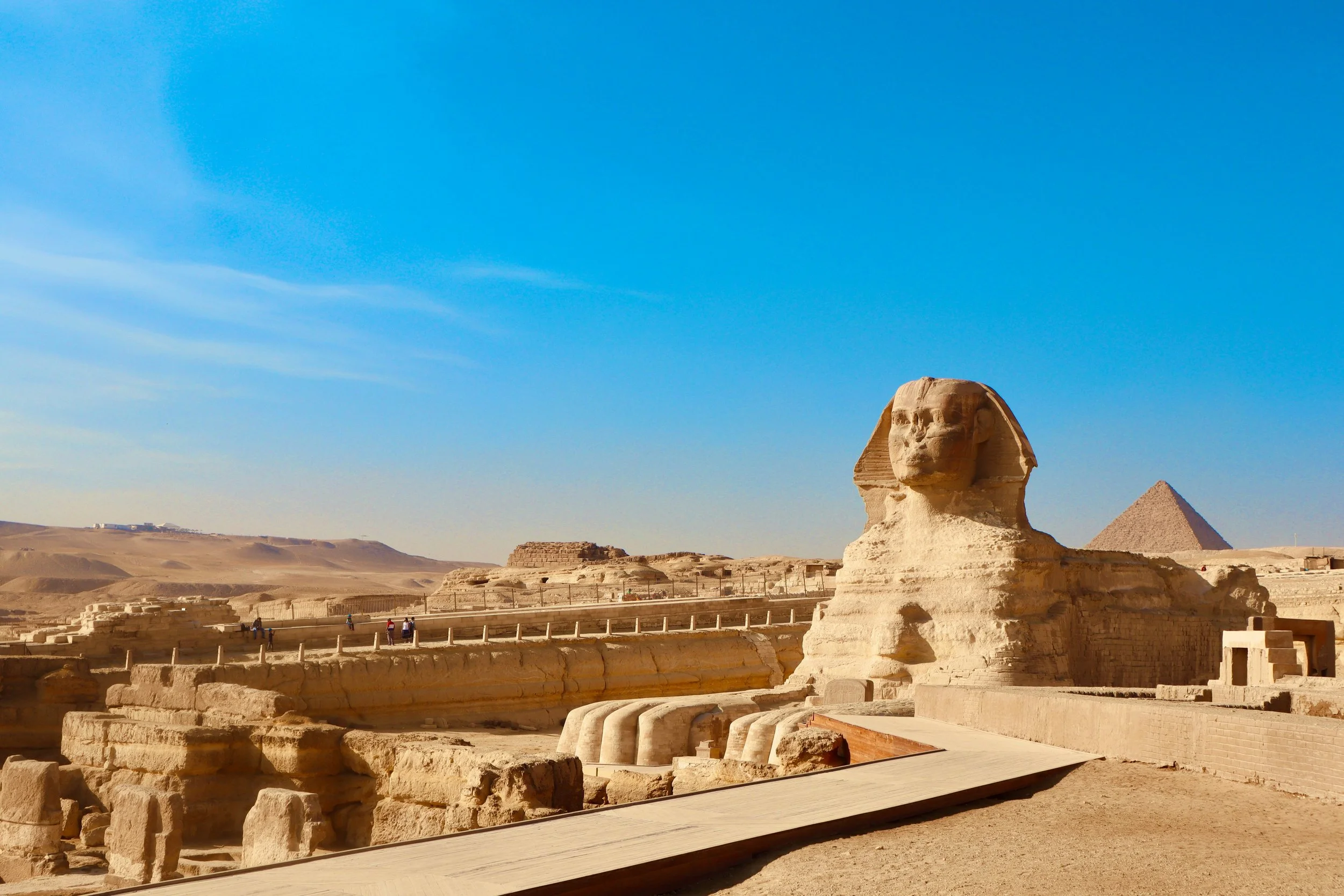
The Great Pyramid of Khufu — the last surviving wonder of the ancient world, and still astonishing in person
Culture & Vibes
Cairo is overwhelming in the best way — a city of more than 20 million people where donkey carts share the road with luxury cars, and minarets rise above apartment blocks in every direction. Out on the Giza Plateau, the pyramids are even more powerful than you imagine: the Great Pyramid was the tallest human-made structure on earth for nearly 4,000 years. Go early, before the tour buses, and take time to stand quietly in front of the Sphinx.
In the city itself, wander Islamic Cairo — the mosque of Sultan Hassan, Al-Azhar, and the medieval lanes of Al-Muizz Street — then lose yourself in the Khan el-Khalili bazaar. Coptic Cairo holds the Hanging Church and the Ben Ezra Synagogue, and the Citadel offers sweeping views from the Mosque of Muhammad Ali. A short drive south, Saqqara is home to the Step Pyramid of Djoser, the oldest stone pyramid in the world.
Food
Must Try: Koshari at a classic koshari house, ful and ta'ameya for breakfast, grilled kofta, and mint tea at El Fishawy, the coffeehouse that has been pouring tea in Khan el-Khalili for more than two centuries.
Dining with a view: Lunch at Khufu's, on the Giza Plateau itself, pairs modern Egyptian cooking with a front-row pyramid view.
Experience Snapshot
Ancient Thebes — The World's Greatest Open-Air Museum
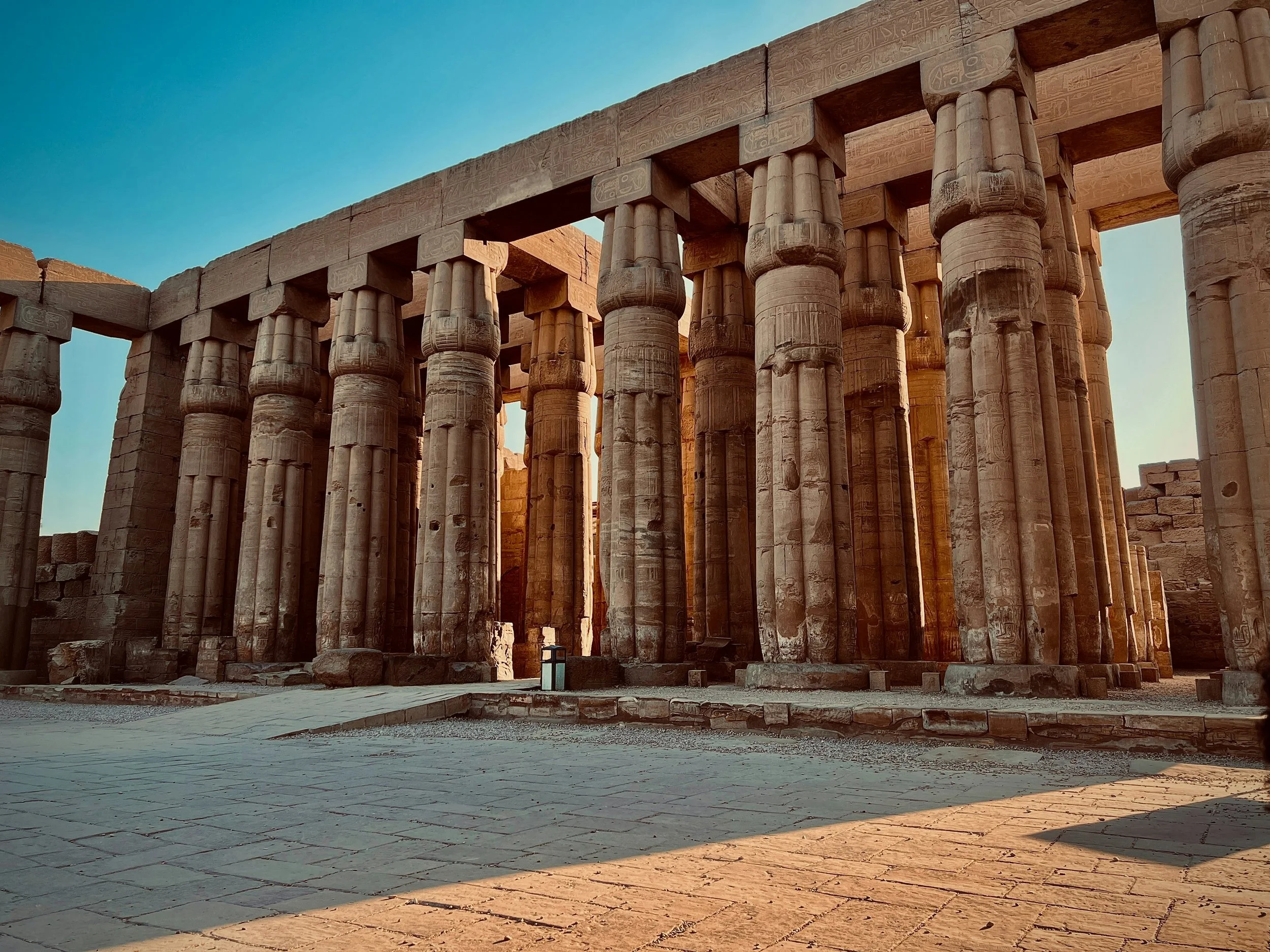
Karnak's Great Hypostyle Hall: 134 giant columns, many still carrying their original carvings
Culture & Vibes
Luxor splits neatly across the Nile. The East Bank, the 'city of the living', holds the vast temple complex of Karnak and the elegant Luxor Temple, linked by the restored Avenue of Sphinxes. The West Bank, the 'city of the dead', is home to the Valley of the Kings, the terraced Temple of Hatshepsut, the vivid reliefs of Medinet Habu, and the twin Colossi of Memnon.
Your standard ticket to the Valley of the Kings includes three tombs; special tickets add the tomb of Tutankhamun and the breathtaking tomb of Seti I. In the nearby Valley of the Queens, the tomb of Nefertari — often called the most beautiful in Egypt — is worth its separate ticket. Save Luxor Temple for after dark, when it is beautifully lit.
The Sunrise Balloon Flight
Balloons lift off from the West Bank before dawn and drift over the temples, villages and sugarcane fields as the sun rises over the Nile. It is one of Egypt's most magical experiences — book with a licensed, well-reviewed operator through your advisor.
Food
Must Try: Home-style Egyptian dishes — stuffed vegetables, slow-cooked tagines of okra or lamb, fresh bread from clay ovens — and sunset drinks on a rooftop overlooking the Nile.
Experience Snapshot
Cruising the River of Life — Edfu, Kom Ombo & Slow Days on Deck
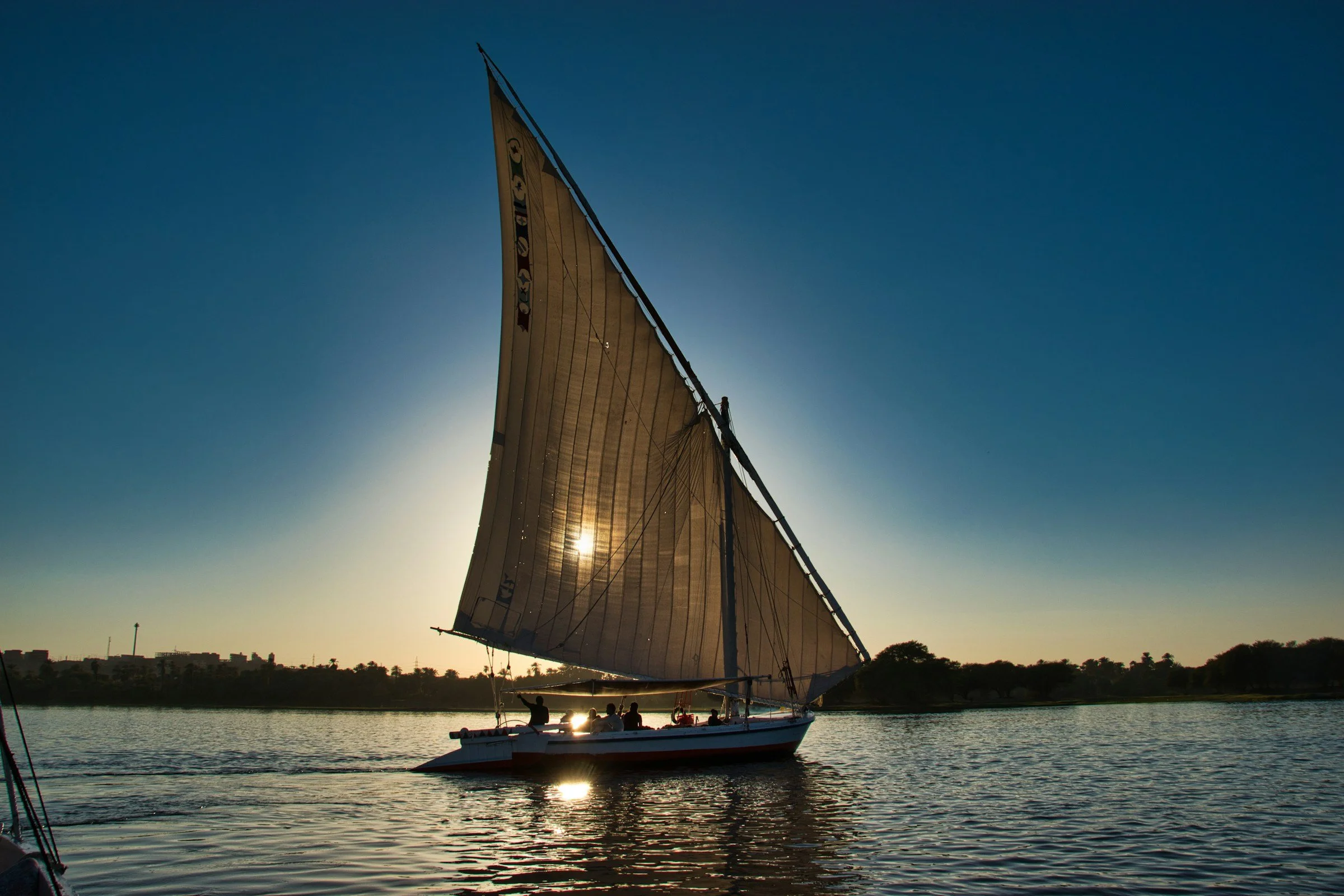
A dahabiya under sail — the most romantic way to travel between Luxor and Aswan
Culture & Vibes
The stretch of Nile between Luxor and Aswan is Egypt at its most peaceful: fishermen in wooden boats, children waving from the banks, water buffalo grazing among the palms, and desert hills glowing beyond the green ribbon of farmland. Sailings stop at the Temple of Horus at Edfu, the best-preserved temple in Egypt, and the riverside double temple of Kom Ombo, dedicated to the crocodile god Sobek.
There are two ways to sail. Luxury cruisers offer pools, spas and polished service. Dahabiyas — traditional two-masted sailing boats with as few as six to ten cabins — feel like a private yacht, moor at quiet islands, and stop at small villages the big ships never reach.
Food
Most cruises are full board, with Egyptian and international dishes served on deck. Ask about an Egyptian cooking demonstration, and do not miss afternoon tea on the sun deck as the boat glides through the Esna lock.
Experience Snapshot
Nubian Warmth, Granite Islands & the Temples of Ramses II
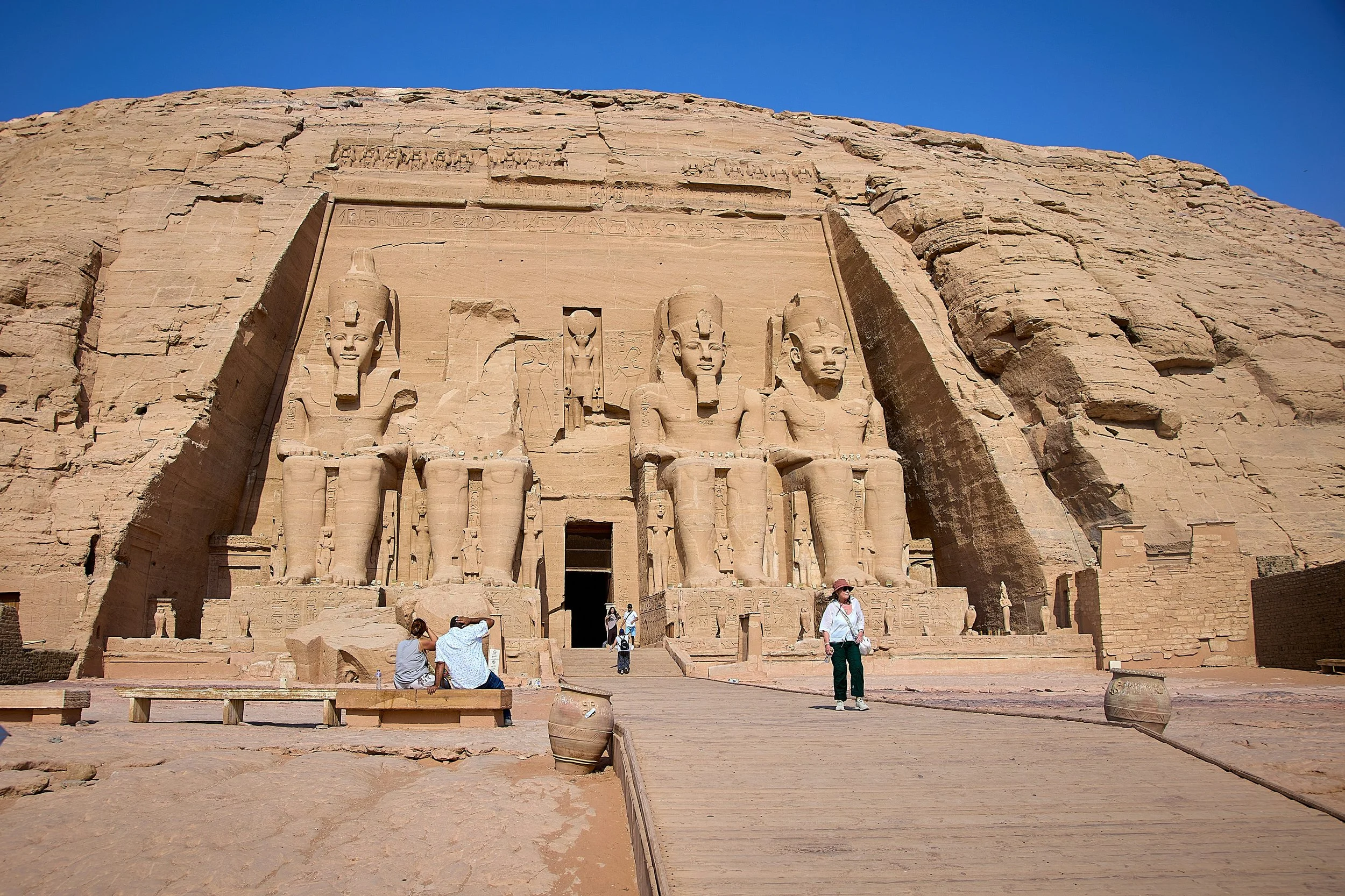
Abu Simbel: four 20-metre statues of Ramses II, moved block by block in the 1960s to save them from the rising waters of Lake Nasser
Culture & Vibes
Aswan is where the Nile is at its most beautiful — wide, blue, and dotted with islands of smooth black granite. The town has a gentle, sunny pace and a strong Nubian identity: brightly painted houses, distinctive music, and a warm welcome. Visit the Nubian Museum, then take a boat to a Nubian village such as Gharb Soheil for tea, henna and lunch with a local family.
On its own island, Philae Temple, dedicated to the goddess Isis, was rescued and relocated by UNESCO when the High Dam was built — and it is magical by boat. Farther south, near the Sudan border, the two temples of Abu Simbel were carved into a mountainside by Ramses II for himself and his queen, Nefertari.
Food
Must Try: Nubian dishes — slow-cooked stews, fresh-baked bread, and spiced lentils — in a village home; and afternoon tea on the famous terrace of the Old Cataract hotel, overlooking the river and Elephantine Island.
Experience Snapshot
El Gouna, Soma Bay & Sahl Hasheesh — Reefs, Resorts & Rest
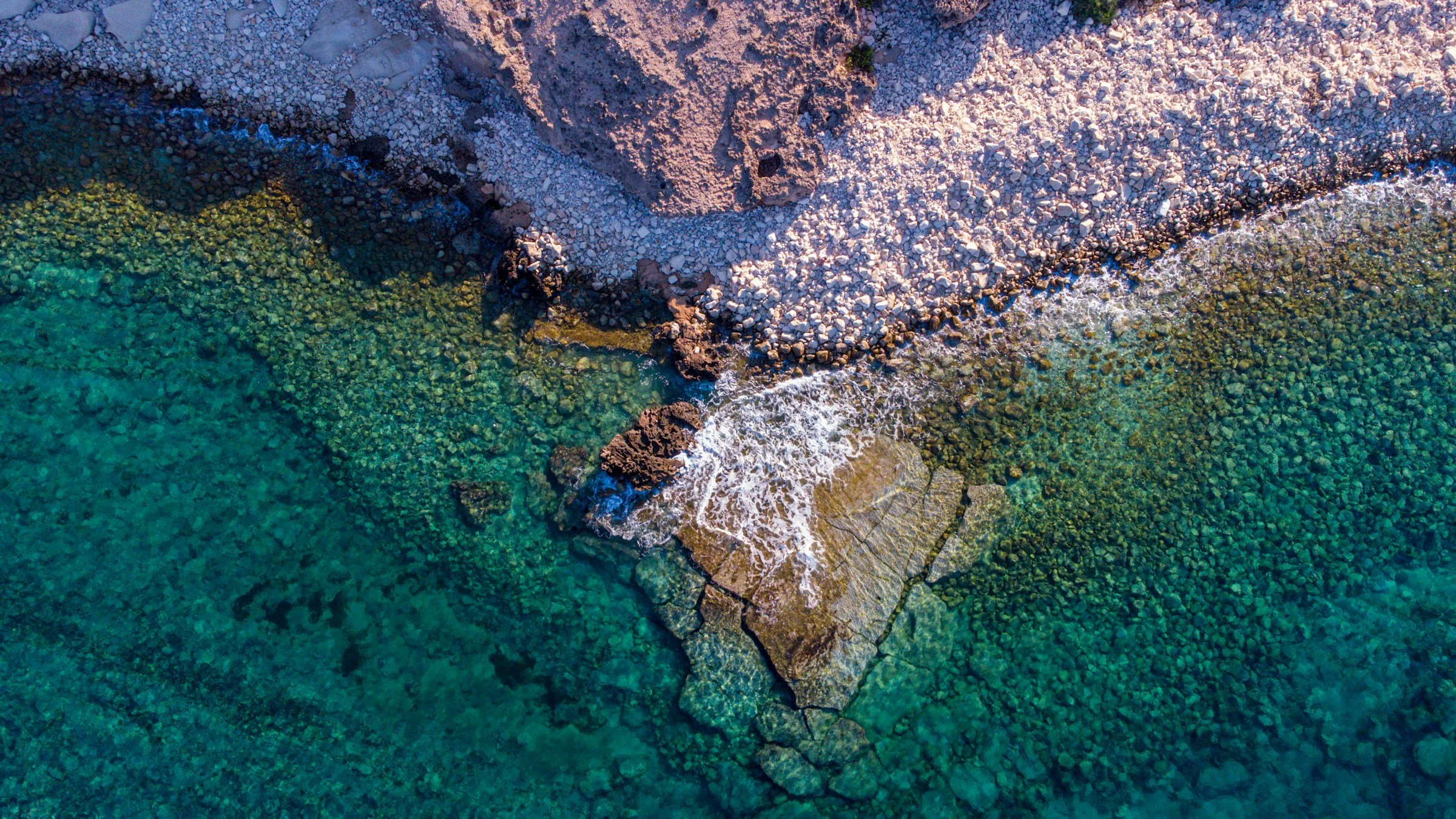
The Red Sea's coral reefs are among the most colourful and accessible in the world — often just steps from the beach
Culture & Vibes
Egypt's Red Sea coast pairs desert mountains with impossibly clear water. Around Hurghada, the purpose-built lagoon town of El Gouna has a marina, boutique hotels and a relaxed, walkable feel, while Soma Bay and Sahl Hasheesh offer polished resorts on quiet bays.
Days are simple: snorkel straight off the beach, take a boat to the Giftun Islands, learn to dive, or head into the desert for a Bedouin dinner under the stars. Divers can explore some of the most celebrated reefs and wrecks in the world.
Food
Fresh grilled seafood, Egyptian mezze and relaxed marina dining are the mainstays. A Bedouin-style dinner in the desert — bread baked in the sand, slow-cooked meats and sweet tea by the fire — is a memorable night out.
Experience Snapshot
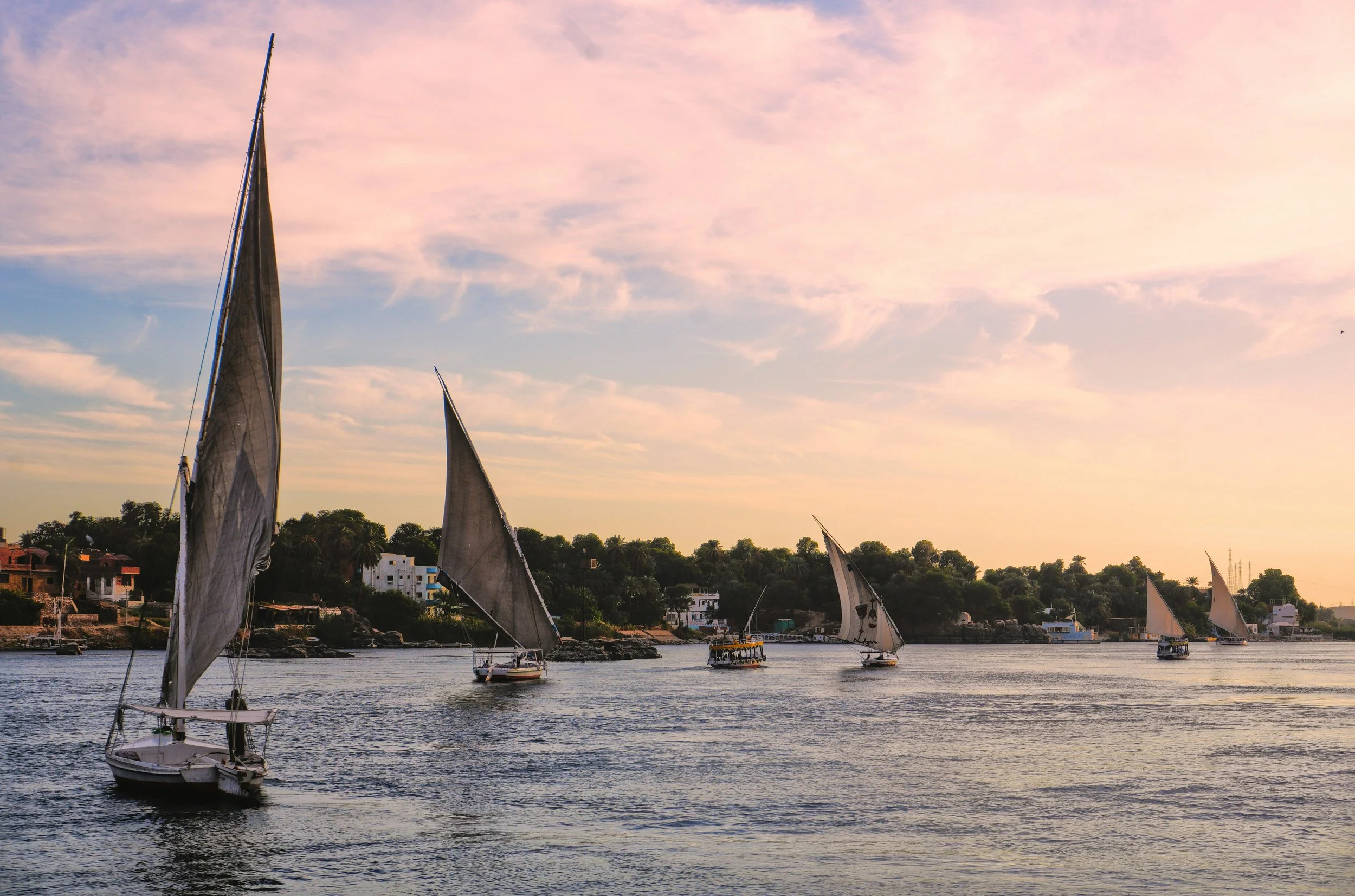
Feluccas on the Nile at Aswan — still the best way to spend a sunset in Egypt
Getting There & Around
Flights: EgyptAir flies nonstop from New York (JFK) to Cairo. Connections through Europe and the Gulf are also easy. Domestic travel: Short flights link Cairo with Luxor, Aswan, Abu Simbel and the Red Sea; the overnight sleeper train is a fun alternative between Cairo and Luxor or Aswan. Private drivers and licensed Egyptologist guides are the norm — and absolutely worth it.
Visas & Entry
US citizens need a visa. Apply for the single-entry e-Visa on Egypt's official portal at least a week before travel (about $30), or purchase a visa on arrival at the airport. Your passport should be valid for at least six months. Fees can change, so confirm before you go.
Health & Safety
Water: Drink bottled water only. Sun and heat: Pace yourself, carry water and a hat, and plan outdoor sightseeing for early morning and late afternoon. Safety: Tourist areas are well policed and welcoming. Check the US State Department advisory before booking, as some remote border regions carry warnings.
Money & Currency
The currency is the Egyptian Pound (EGP). Cards are accepted in hotels and upscale restaurants; carry cash in small notes for tips, markets and taxis. Tipping is woven into daily life — guides, drivers, cruise staff and site guardians all expect a small gratuity.
Culture & Etiquette
Dress modestly — shoulders and knees covered — especially in mosques, churches and traditional neighbourhoods; women should carry a scarf for mosque visits. Ask before photographing people. Photography inside some tombs requires a separate ticket. During Ramadan, avoid eating or drinking in public during daylight hours.
Suggested Itinerary Combinations
7 days: Cairo & Giza (3 nights) + fly to Luxor and cruise to Aswan (4 nights). 10 days: Cairo & Giza (3) + Luxor (2) + Nile cruise to Aswan (4) + Abu Simbel and return to Cairo (1). 14 days: Cairo & Giza (3) + Luxor (2) + dahabiya to Aswan (5) + Abu Simbel (1) + Red Sea (3). Schedule a call and I will build a custom itinerary around your travel style and timeline.
Egypt does not ask you to imagine history.
It puts you inside it — at the foot of the Great Pyramid, in the cool of a painted tomb,
on a sun deck drifting past palm groves that the pharaohs would recognise.
Come for the monuments. Leave with the warmth of its people.